

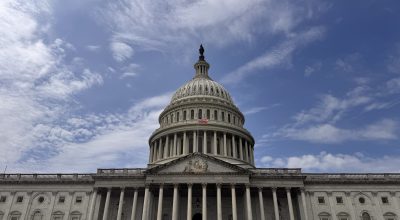




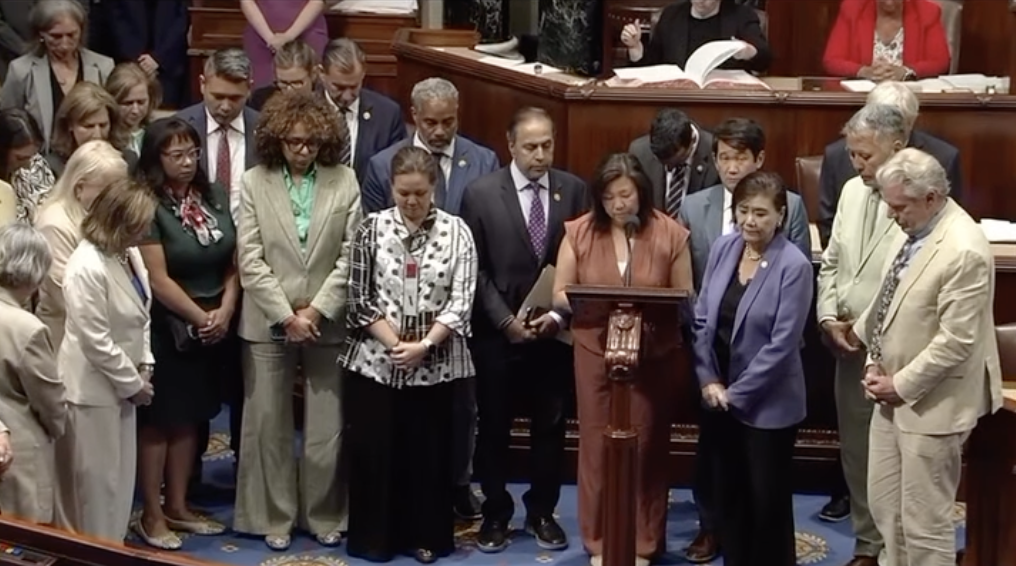
Rep. Grace Meng, Chair of the Congressional Asian Pacific American Caucus, led House members in a moment of silence for victims of devastating floods in Nepal and Tibet, calling the disaster a “heartbreaking” tragedy that has killed over 1,000 people and left thousands missing.
Meng, a New York Democrat whose Queens district includes members of the Nepali- and Tibetan-American communities, delivered her remarks on the House floor in response to flash floods that struck communities near the Nepal-Tibet border on Aug. 26.
Looking for job?
Click here“The scale of destruction is heartbreaking,” Meng said. “This horrific tragedy has taken the lives of nearly one thousand people, destroyed homes and livelihoods, and left families grieving the loss of their loved ones.”
Meng asked colleagues to honor those killed, support survivors, and recognize first responders and recovery workers.
“We pray for the safe recovery of those missing,” Meng said. “We are committed to supporting our Asian American communities across the United States—and especially those who live in my district in Queens, New York—as we navigate this profound tragedy.”
The congresswoman’s office said the observance was intended to honor victims, survivors, and first responders affected by the flooding. In a social media post, Meng said the United States stands with the people of Nepal and Tibet and with Nepali- and Tibetan-American communities nationwide as recovery efforts continue. Her office also stated that she and the caucus are prepared to help affected communities “in any way we can.”
According to Nepal’s latest situation report, issued at 6 p.m. local time Wednesday, official records listed 1,204 deaths, 4,216 people out of contact, and 301 injured.
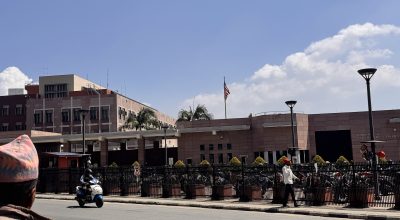
The U.S. Department of State reported that about 80 Americans remained unaccounted for on Monday in the Nepal-China cross-border region, five days after the disaster triggered Nepali-led search-and-rescue operations. Meanwhile, 13 U.S. citizens had reached safety in Nepal.
In a statement to NepYork, the State Department said its embassies in Kathmandu and Beijing were working with local authorities and tour agencies to assist Americans in affected areas. The statement, provided on background and attributed to a State Department spokesperson, emphasized that the administration’s highest priority is the safety and security of Americans.
The State Department noted that the remote and difficult-to-access terrain across the devastated region could slow efforts to verify and share information about individual cases.
“The State Department is aware of approximately 80 Americans unaccounted for in the Nepal/China cross-border region,” the spokesperson said. “We can confirm that 13 American citizens have made their way to safety in Nepal.”
Nepal’s National Disaster Risk Reduction and Management Authority reported that 21,314 security personnel had been deployed and 11,993 people had been rescued, including 4,364 by air. Authorities reported 610 total air operations—80 of which were conducted Wednesday—and noted that 273 foreign nationals and 4,091 Nepali citizens were among those rescued by helicopter.
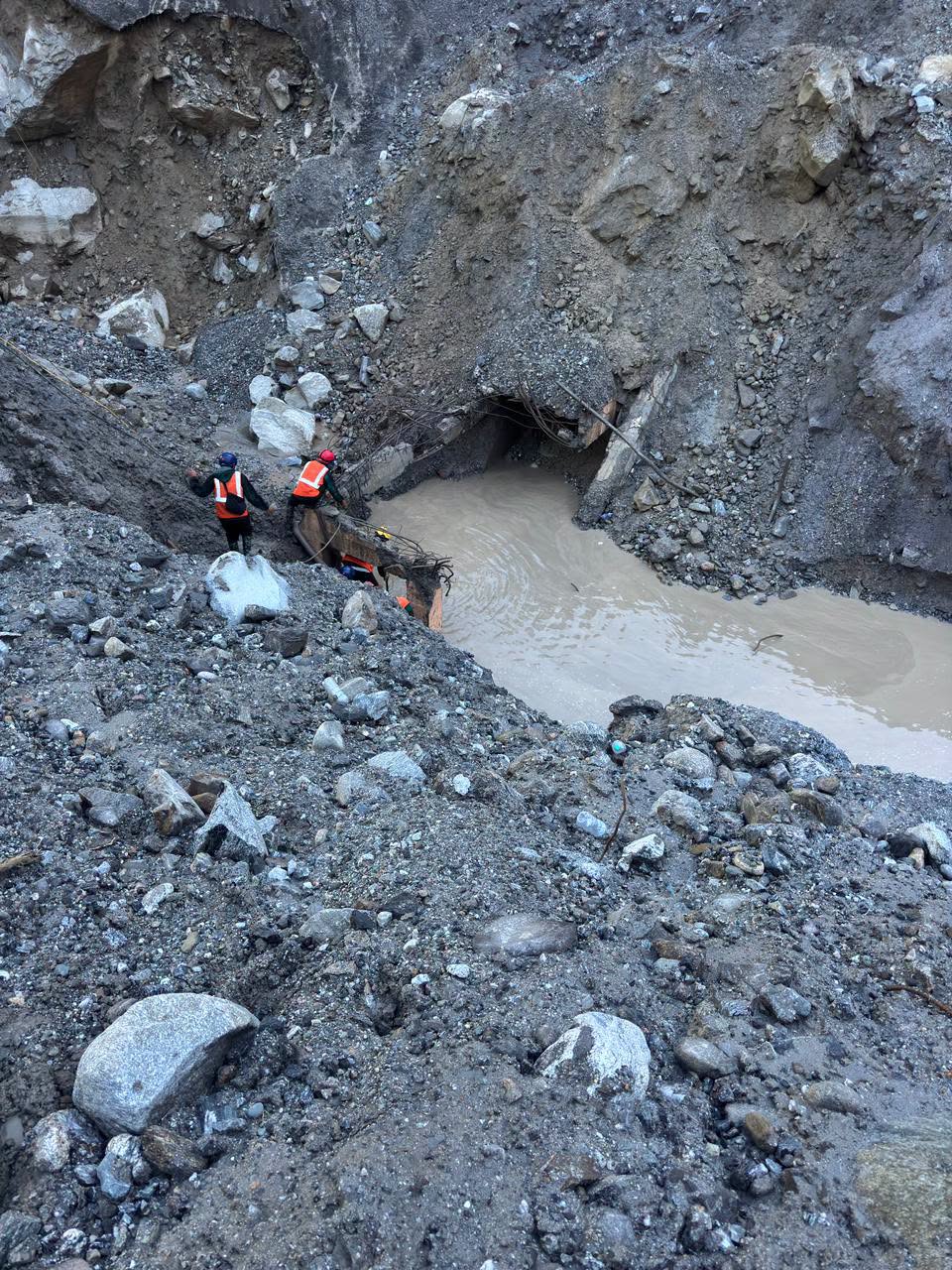
A total of 3,948 displaced people are staying at 34 holding centers in Nuwakot, Rasuwa, Dhading, and Kathmandu, according to the government report. Nuwakot is sheltering the largest number of displaced individuals—2,981 across 24 centers—while 320 people are in five centers in Rasuwa, 260 are in three centers in Dhading, and 387 are in two centers in Kathmandu.
The report noted that recovery and humanitarian operations continued across flood-affected areas, with food and non-food supplies being sent by road and air. Authorities said 28 additional vehicles carrying relief supplies were dispatched Wednesday.
Road access remained severely disrupted in several areas. The Mugling-Malekhu stretch of the Prithvi Highway was fully blocked at Krishna Bhir and Parewa Bhir, though authorities said alternative routes were in use. The Nagdhunga tunnel was reopened to traffic after a landslide blocked the nearby Tribhuvan Highway. Repair work and temporary route preparations were also underway in areas where roads and bridges were damaged or washed away.
Restoring communications and power also remained central to the response effort. Nepal Telecom had restored 115 of its 120 towers, and Ncell had restored 75 of its 78 towers, the report said. Service remained unavailable in several locations, including Timure and parts of the Trishuli corridor. Authorities have distributed solar equipment, including 155 solar power banks intended for areas of Rasuwa where electricity restoration is expected to take longer.
