








NEW YORK — Nepali entrepreneurs entering the U.S. market can build a foundation through their own community, but long-term business growth depends on earning the trust of a wider customer base, jewelry entrepreneur Samir Maharjan said during a panel discussion in New York on Saturday.
Maharjan, owner of Classic Diamond & Jewelry, shared his experience of building a jewelry business from a small operation serving Nepali customers into a company operating in five U.S. states. He emphasized the importance of product knowledge, personal reputation, customer relationships and effective communication in competing in the American marketplace.
Looking for job?
Click here“When we immigrate to a new country and start a business, our community is our foundation,” Maharjan said. “Our first customers are members of our own community.”
He said Nepali entrepreneurs often begin by serving customers who share their cultural background and understand their products. That initial customer base can provide the support needed to establish a business, particularly when expenses such as rent, salaries and other operating costs are fixed from the beginning.
But relying exclusively on the Nepali community can limit a company’s potential, he cautioned.
Business owners must eventually learn how to attract customers from outside their ethnic community and develop strategies to make their products appealing to a broader market, he said.
Maharjan described how he began his jewelry business on a relatively small scale, initially focusing on Nepali customers. Over time, he expanded the business to five states by combining extensive knowledge of the jewelry industry with a deliberate effort to build systems and establish customer confidence.
He said his familiarity with the industry came from years of experience, including working in the jewelry business after completing his schooling.
That expertise, he explained, became particularly important in a competitive market where numerous jewelry stores often sell similar products.

On a typical commercial street, he said, customers might find 25 jewelry stores offering nearly identical merchandise. The challenge for a business owner is to give customers a reason to choose one store over another.
For Maharjan, the answer lies in trust.
Customers need to understand not only the product but also the person and business behind it. Explaining a product’s qualities, sharing the owner’s background and communicating the business’s story can help establish that confidence, he said.
“Your background, your story and your domain knowledge are very important,” he said, emphasizing that entrepreneurs must be able to communicate what makes their businesses different.
He added that building a personal reputation is particularly important in the United States, where established systems and professional ways of introducing oneself can help entrepreneurs demonstrate their credibility.
Maharjan’s comments came during a panel featuring entrepreneurs from several industries who discussed business expansion, investment, wealth creation and opportunities for Nepali businesses in the United States and Nepal.
The discussion also explored the challenges immigrant entrepreneurs face when balancing their responsibilities to their communities with the demands of running profitable businesses.
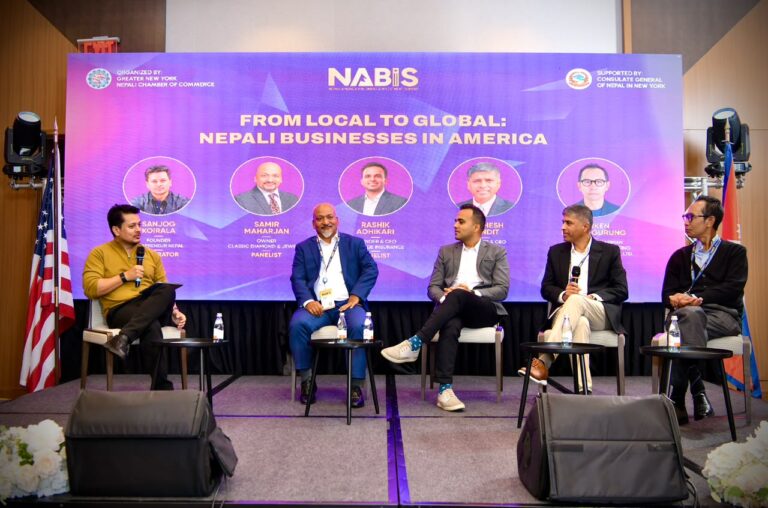
Other panelists included Rashik Adhikari, founder and CEO of Renegade Insurance; Radhesh Pandit, founder and CEO of ALKAPURI; and Karken Kumar Gurung, founder and chairman of Everest Pashmina Knitting & Weaving Industry. Sanjog Koirala moderated the discussion.
The panelists brought perspectives from insurance, investment, real estate, hospitality, manufacturing and retail.
The discussion highlighted a broader challenge for Nepali entrepreneurs: turning community-based businesses into sustainable enterprises capable of competing in larger markets.
