




Nepal: In Flood-Ravaged Devighat, a Dim Tihar — but the Lamps Still Burn

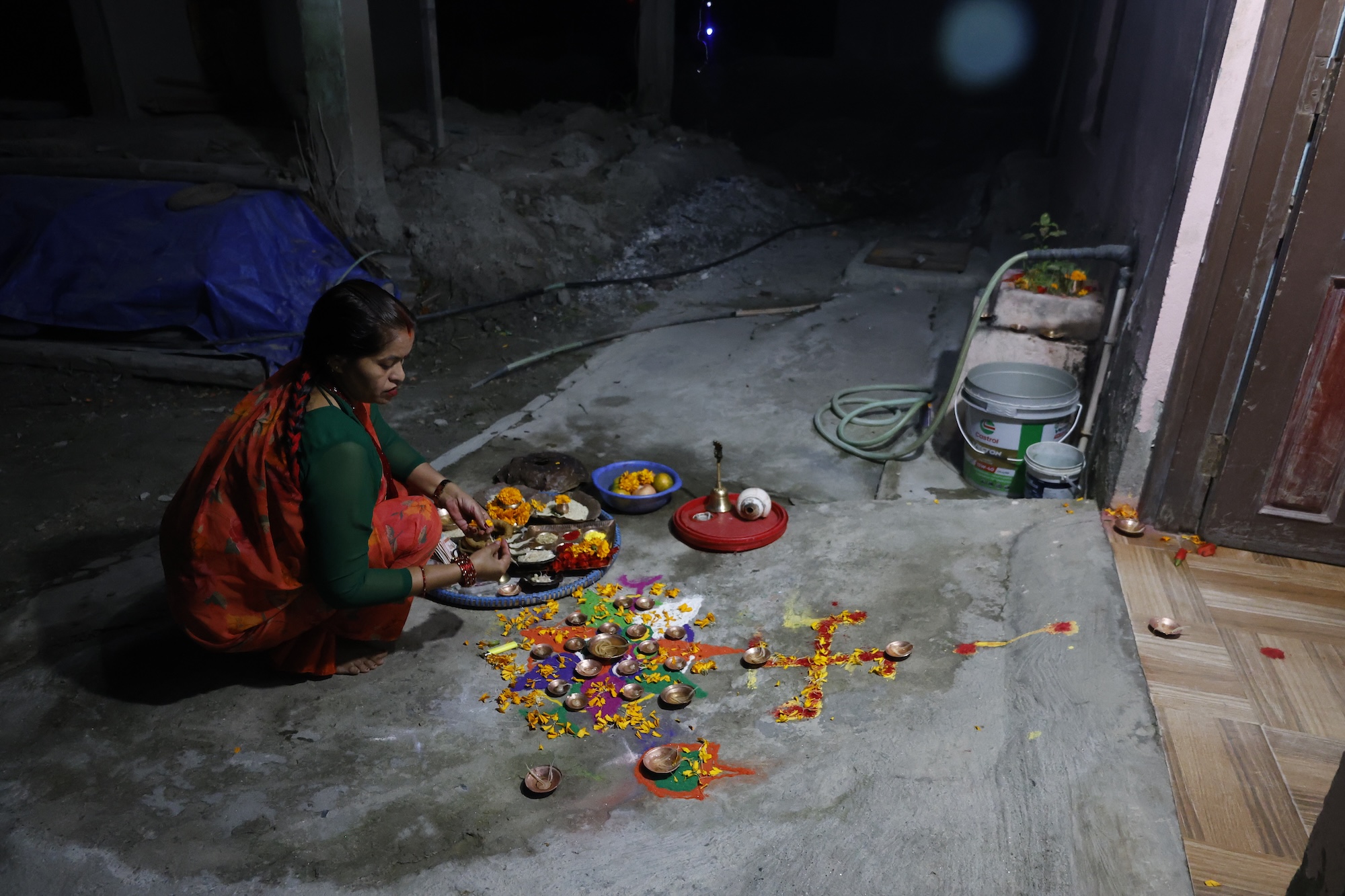
Laxmi Bhandari prepares for Lakshmi Puja amid the debris surrounding her home in Devighat, where the Aug. 26, 2026, floods destroyed much of the neighborhood. Photo: Dipendra Dhungana/NepYork
DEVIGHAT, Nepal — Across Nepal, homes and markets glowed with lights and oil lamps as families celebrated Tihar, the Hindu festival of lights. But in Devighat, a riverside market in Nuwakot district, the festival arrived in near silence.
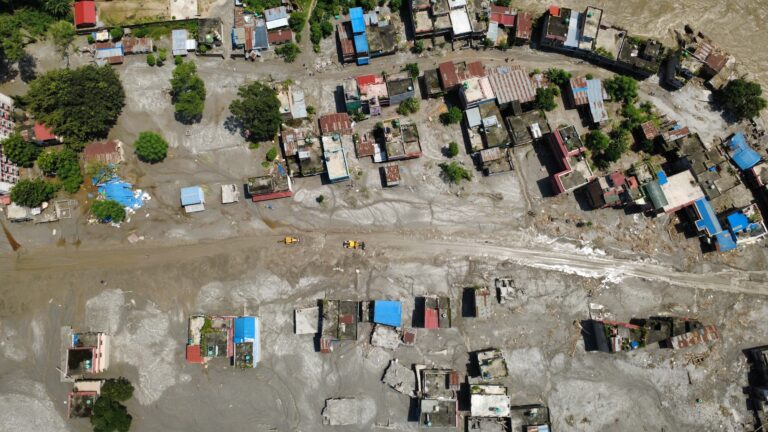
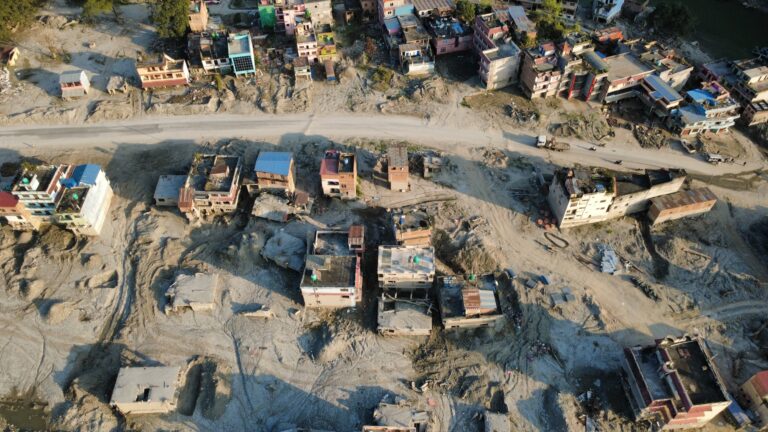
The market, once bustling with shops, residents and visitors, was devastated by flooding on Aug. 26, 2026. Many homes were destroyed or buried under sand and debris. Others remain standing but are too damaged to be inhabited. Streets that once echoed with the sounds of daily commerce are now largely deserted.
The disaster affected communities in Nepal and China’s Tibet Autonomous Region, leaving thousands dead or missing and causing extensive damage to homes, roads, bridges and other infrastructure. Floodwaters carried debris and victims far downstream, with some bodies reportedly reaching India.
For families in Devighat, the flood took more than homes and possessions. It disrupted livelihoods, scattered neighbors and left many uncertain about where they would live.
Of the roughly 200 households that once made up the settlement, only a few dozen homes remain. Many are uninhabitable. Some residents have taken shelter in temporary facilities, while others have returned to damaged homes and are trying to make them livable again. Permanent resettlement remains unresolved.
Yet on the evening of Lakshmi Puja, one of the most important days of Tihar, a small light appeared among the ruins.
Laxmi Bhandari, 42, was preparing to perform the traditional worship at her damaged home. Around her were piles of mud and the remains of buildings destroyed by the flood. Many of her neighbors had left, and the celebrations that once filled the market were absent.
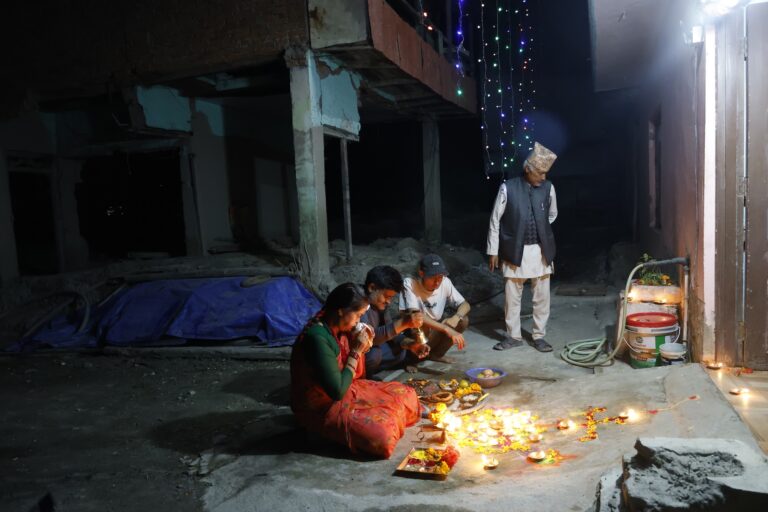
“In previous years, Tihar was celebrated here in Devighat with great joy and enthusiasm,” Bhandari said. “This year, everything has been disrupted. Our neighbors, sisters and friends are no longer here.”
The physical destruction, she said, was extensive, even though the loss of life in the immediate settlement was comparatively limited.
Still, Bhandari decided that her family would observe the festival.
“Why should we abandon the traditions and cultural practices we have followed for years?” she said. “Whatever the circumstances, we have to continue. So we performed the puja and lit the lamps.”
For Bhandari, the decision was also an effort to restore some normalcy to a life that had been abruptly upended.
She remembers the morning of Aug. 26 vividly. She was cooking at home when her husband, who was in Kathmandu, called to warn her that floodwaters were approaching.
At first, she did not believe the water would reach her home.
“I thought it probably wouldn’t rise that high,” she said. But her husband called repeatedly, urging her to leave. She abandoned the cooking and rushed outside.
She escaped through the back of the house rather than the front.
“If I had gone out through the front, I might not have survived,” she said. “I managed to get out through the back.”
Her family spent nearly a month away from home because the damage made it impossible to return immediately. They eventually came back, cleared the debris and began living there again.
Bhandari’s mother is ill, making it difficult for the family to stay elsewhere. They returned around Dashain, another major Hindu festival, and decided to remain in their damaged home.
“God saved us,” she said. “When I saw the house, I immediately felt attached to it. We cleaned it and started living here again.”
The loss of property remains painful, but Bhandari said survival itself was reason enough to keep going.
“It is sad, of course. But even when things are difficult, we have to try to be happy,” she said. “The fact that we are alive is what matters most.”
She also had a message for other families affected by natural disasters.
“I hope no one else has to suffer such destruction,” she said. “I want everyone to be able to earn a living through their own hard work and live happily with their families.”
A Festival Celebrated in Temporary Shelters
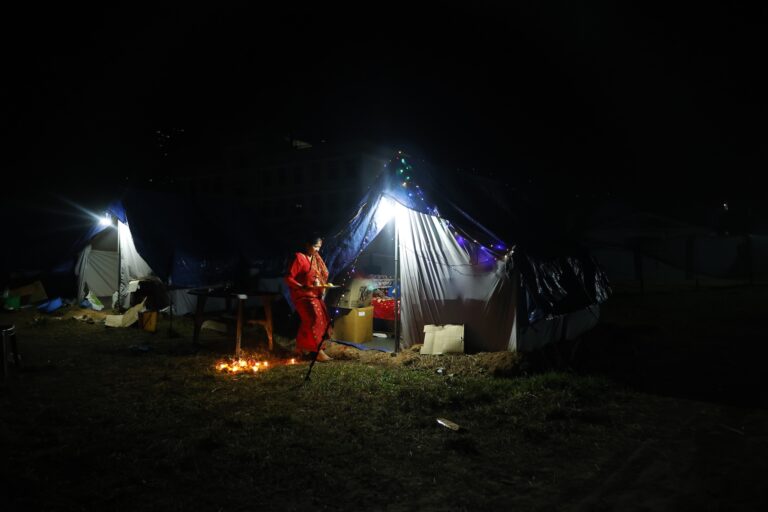
A similar effort to preserve festival traditions was visible at a temporary shelter in Lamibagar, Pipaltar, where families displaced from Devighat have been living in tents.
The shelter has about 25 tents. Although some families have moved elsewhere, most remain there, waiting for a more permanent solution. Government agencies and aid organizations have provided some assistance, but long-term resettlement has yet to take place.
Among those celebrating Lakshmi Puja inside a tent was the family of Sabita Nepali.
For nearly two decades, Nepali’s family had lived in a squatter settlement in Devighat. After years of manual labor and saving money by cutting household expenses, they had finally managed to buy a house in the market.
They had purchased it just two months before the flood.
“We had bought the house only two months earlier,” Nepali said. “We were planning to move in during Dashain.”
The family had hoped to celebrate Dashain and Tihar in its own home for the first time. The flood destroyed that plan before they could settle in.
Now, instead of celebrating in their newly purchased house, they are observing the festival in a temporary tent.
Although they have received some relief assistance from the government and various organizations, no permanent housing arrangement has been made.
For families who lost their homes and belongings, recovery and resettlement remain incomplete. Some are trying to return to their former home sites, while others continue to spend their days in temporary shelters.