






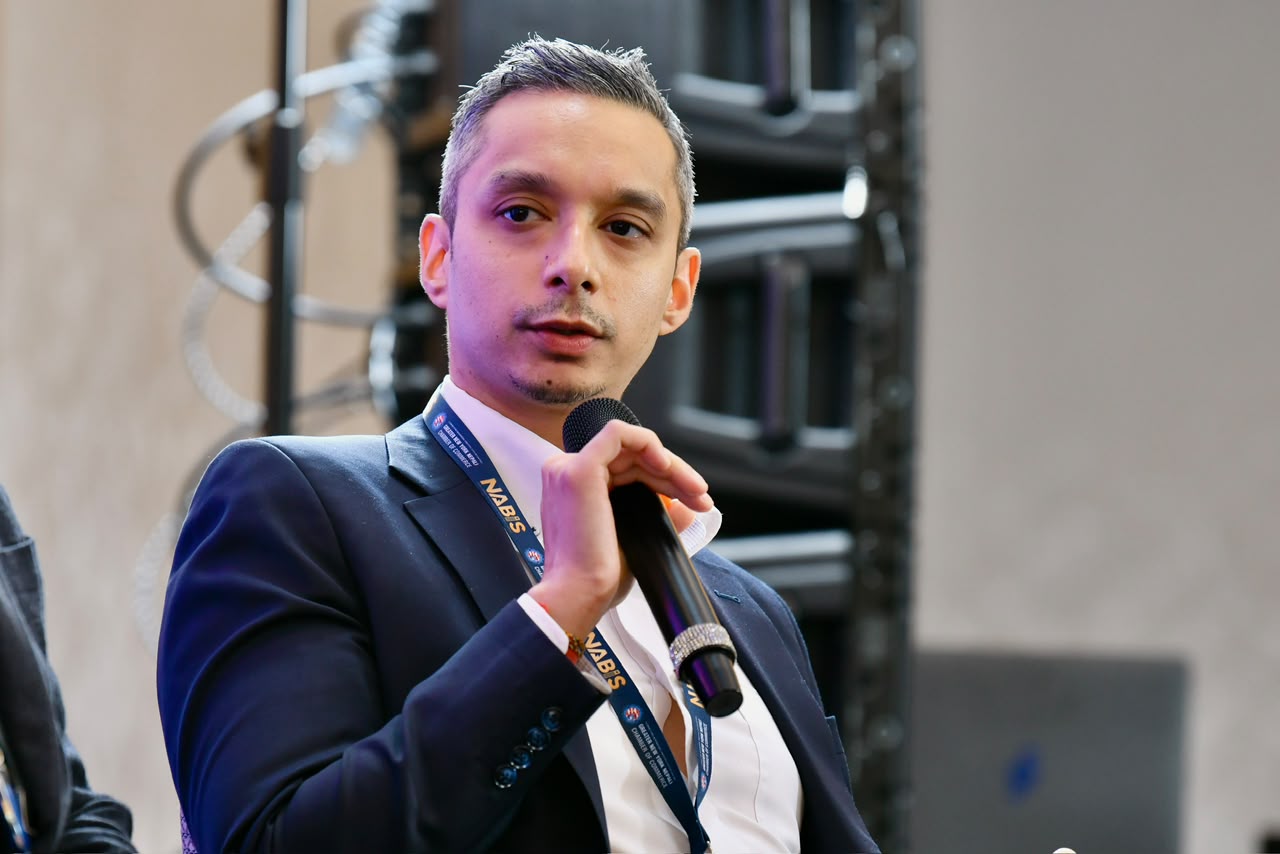
NEW YORK — Nepali American attorney Nevin Chetry said Nepal must strengthen its legal and regulatory framework, improve investment procedures and provide greater assurances to foreign investors if it wants to attract more capital from the United States.
Speaking during a panel discussion in New York on Saturday, Chetry said potential investors, particularly those unfamiliar with Nepal, need assurance that their investments will be protected and that legal remedies will be available if problems arise.
Looking for job?
Click hereChetry, an attorney at Chhetry & Associates, P.C., said investment decisions involve more than identifying profitable opportunities. Investors also want to understand how their investments will be structured, what approvals will be required, whether they can repatriate dividends and profits, and what protections are available if a project encounters difficulties.
“There’s a lot of security-related questions in terms of investment for a lot of the non-Nepali investors,” Chetry said.
He said Nepal’s compliance with international conventions, standards and rules could help reassure foreign investors that disputes can be addressed through established legal mechanisms.
As an example, Chetry referred to his firm’s representation of the Government of Nepal in an international arbitration case involving Ncell and Axiata. He said Nepal’s participation in international arbitration demonstrates that mechanisms exist to address disputes involving foreign investment.
He emphasized that a predictable legal environment and accessible procedures are essential to making Nepal attractive to international investors.
“Part of it is obviously policy,” Chetry said, adding that Nepal’s policies should make it easier for international investors to enter the market.
He also recommended that foreign investors work with reliable local partners who understand Nepal’s business environment, government procedures and regulatory requirements.
Responding to a question from moderator Jenik Radon, an adjunct professor at Columbia University’s School of International and Public Affairs, Chetry said many investment challenges are shared by Nepali diaspora investors and foreign nationals.
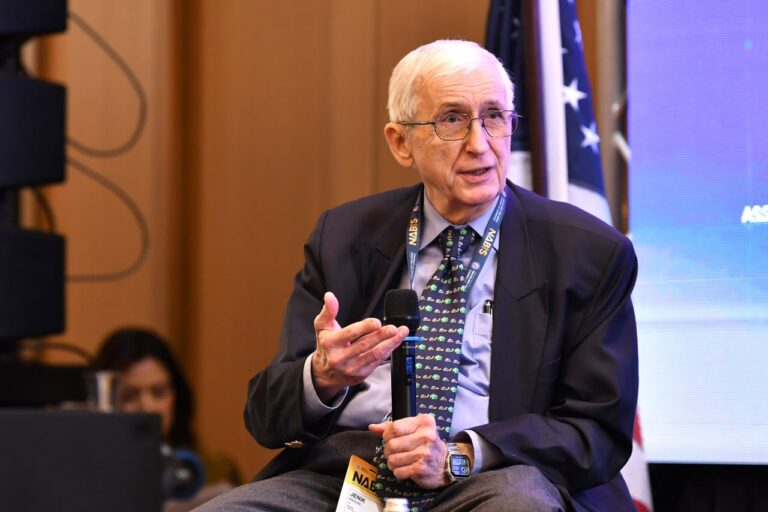
From a legal perspective, he said, foreign direct investment procedures and approval requirements are generally similar regardless of whether the investor is Nepali or non-Nepali.
He identified bureaucratic hurdles, government approvals and project-related clearances as some of the major challenges.
For infrastructure projects, these can include securing government agreements, obtaining power purchase agreements and addressing the interests of communities affected by development.
Chetry noted that relocating an existing village for a project, for example, involves additional considerations that investors must address before proceeding.
He said these complexities can be particularly unfamiliar to investors who have limited experience working in developing countries.
Beyond financial investment, Chetry encouraged Nepali Americans to contribute their professional expertise, knowledge and experience to Nepal’s development.
Connecting his remarks to the moderator’s emphasis on diaspora engagement, he said investment does not necessarily require large amounts of money.
“Investing your skill, your trade, your expertise, your knowledge” can be equally important, Chetry said.
He encouraged people working in technology, finance, hospitality, engineering and medicine to identify ways their professional backgrounds could contribute to specific projects in Nepal.
Even those unable to make substantial financial investments can help by sharing their knowledge, experience and willingness to participate, he said.
The panel also featured Dr. Madan Kumar Uprety, managing director of Infra Nepal Development Fund; Prabudhda Dahal, vice president of transactions at Eastwood Forests; and Thomas A. Broadbent Jr., founder and managing partner of AmNepal.
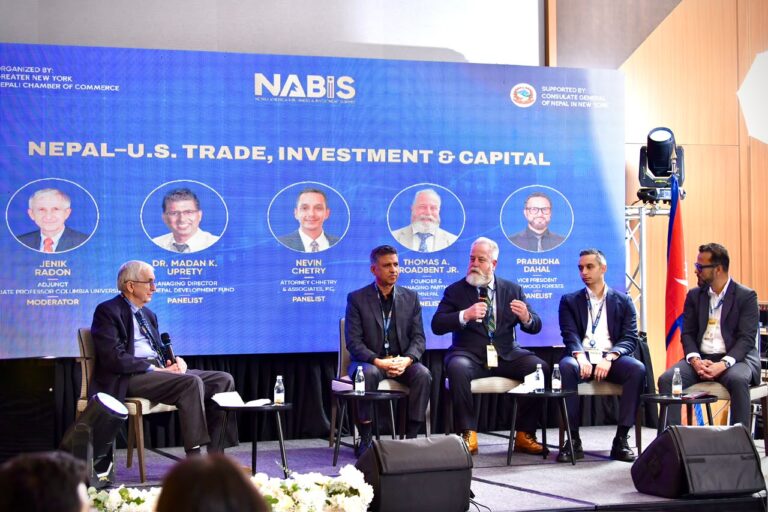
Uprety argued that Nepal should focus on using its hydropower domestically to support industrial development and generate greater economic returns rather than relying heavily on long-term electricity sales to neighboring countries.
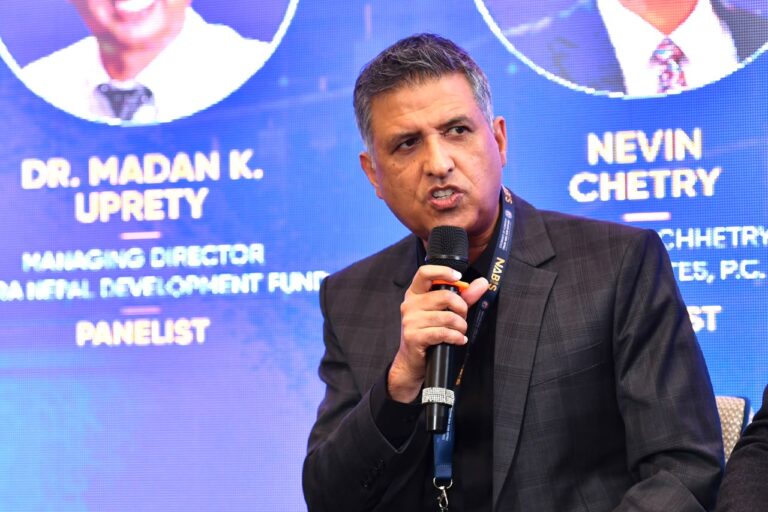
He cautioned against locking Nepal into lengthy power purchase agreements that could limit its ability to use electricity domestically as consumption and industrial capacity expand.

Broadbent, who has more than three decades of experience in global financial markets, emphasized the importance of building relationships between Nepal’s diaspora, domestic private sector and international investors.
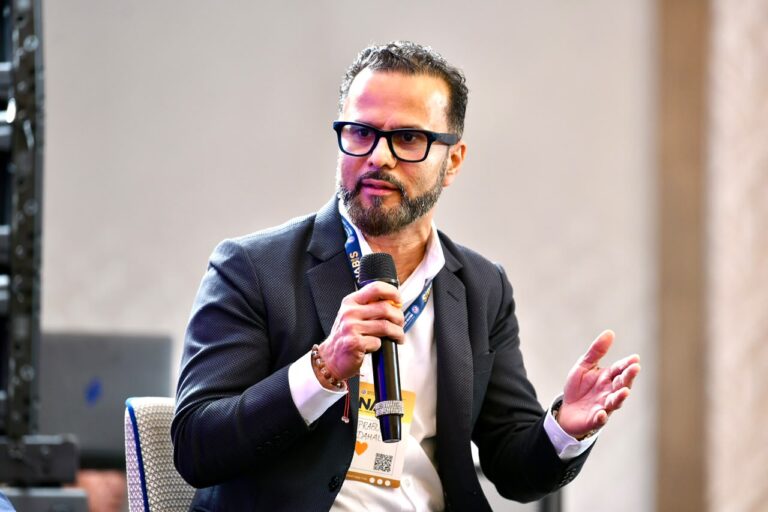
Dahal highlighted climate change as a major investment risk and called for a shift in how Nepal views its natural resources, describing them as “natural capital” that should be preserved, developed and managed to generate long-term economic value.
The discussion also explored Nepal’s international investment image, the role of diaspora networks, political stability, institutional transparency and the need for stronger connections between American and Nepali businesses.
