



Families of Missing Americans Plan Letter to Rubio Urging Expanded U.S. Rescue Effort in Nepal

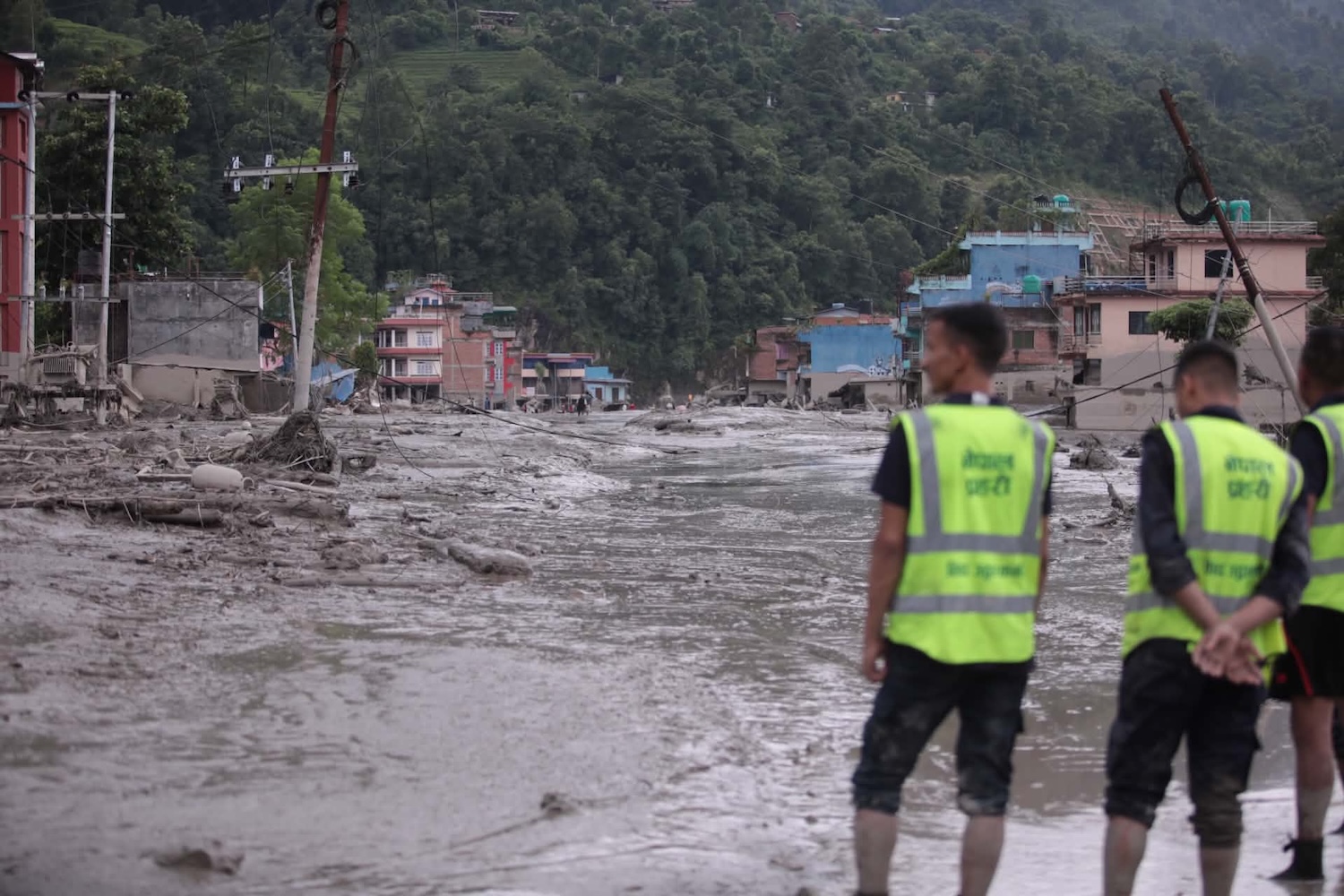
Trishuli in Nuwakot after flooding in the Bhotekoshi River in Rasuwa, Nepal. Photo: Dipendra Dhungana/NepYork
NEW YORK — Families of Americans and other foreign nationals missing after the Aug. 26 flash flood in Nepal’s Rasuwa district plan to send a joint letter to Secretary of State Marco Rubio, members of Congress and other U.S. officials Saturday, demanding a stronger and more visible U.S. rescue response.
The letter, dated Aug. 29, says relatives have been unaccounted for since flooding swept through the Bhotekoshi and Trishuli river valleys in Rasuwa, along a route used by travelers and pilgrims heading to or from Mount Kailash and the Gyirong border crossing with Tibet.
Organizers said the letter had not been sent as of Saturday morning. They planned to collect signatures until 11:45 p.m. Central time Saturday before forwarding the appeal to Rubio and members of Congress. Signatures submitted after the deadline are expected to be included in a subsequent letter and in appeals to other governments.
The petition and full letter are available at RescueOurFamily.org in English, Hindi and Gujarati. Families can add a missing person’s name, last known location and information about the person’s travel group. Organizers said the location data is intended to help search coordinators identify areas where people may still be stranded or missing.
As of 8:17 a.m. Central time Saturday, the letter listed 1,424 family members and friends who had signed on behalf of 58 missing people — 32 Americans and 26 people from other countries. The document said 66 additional signatures were on file but were not displayed because they did not include a full name.
Seven Requests to U.S. Officials
The families asked the United States to turn President Donald Trump’s offer of assistance to Nepal into specific and immediate measures.
The families requested a formal offer of U.S. military high-altitude helicopters, crews, fuel and ground-handling support to Nepal, with aircraft positioned for same-day deployment if Nepal accepts the assistance.
They also requested search-and-rescue drones equipped with thermal and infrared cameras; ground radar capable of detecting signs of life beneath debris; technology to locate mobile phones; temporary cellular coverage in the valley; and other equipment capable of detecting people beneath mud and rock.
The families asked for national and commercial satellite imagery, including radar imagery capable of penetrating cloud cover, covering the corridor from Rasuwagadhi to Trishuli Bazar and Devighat. They asked that the imagery and analysis be shared directly with Nepali Army search coordinators.
The letter also calls for the deployment of a U.S. urban search-and-rescue team to Kathmandu so Nepal could accept the team’s assistance quickly if needed.
The families requested expanded consular operations, including a designated liaison for every family, daily updates, consular officers at a fixed location in Kathmandu, personnel at hospitals receiving survivors, and a forward base in Rasuwa.
They also asked the United States to engage with China to secure access to the Gyirong side of the border, obtain information about foreign nationals found or treated there, and coordinate cross-border search efforts.
The families further called for disaster funding that they said should reflect the scale of the emergency.
The letter also calls for U.S. coordination with Australia, Britain, India and Singapore because citizens of those countries were traveling in the same tour groups as the missing Americans.

Families Describe Gaps in Response
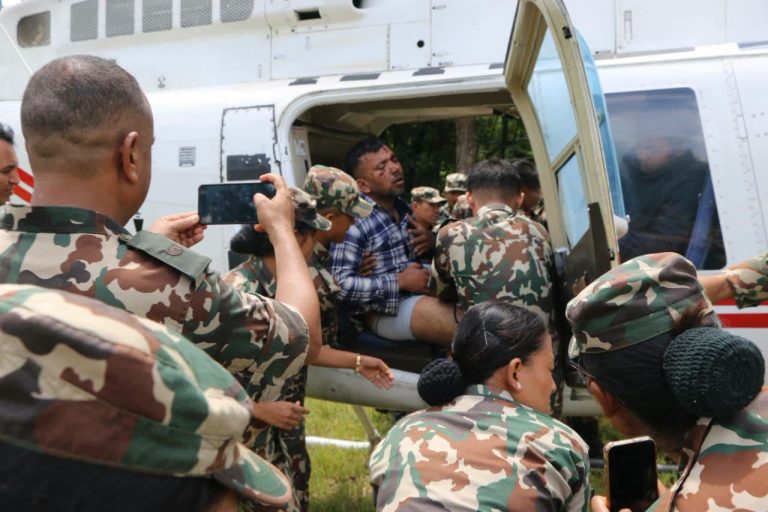
The letter says families appreciate the work of the U.S. Embassy in Kathmandu and Nepal’s soldiers and helicopter crews, who, according to the document, have rescued more than 3,700 people. However, it argues that the search has been constrained by limited access to remote parts of the upper valley, including Syabrubesi and Timure, where helicopters reportedly have been unable to land.
The families said rescue operations were temporarily suspended after a barrier lake above the valley overflowed and later resumed under a flood alert. They said a second lake has since formed, adding to the hazards in the disaster zone.
The letter says Nepal’s Foreign Ministry has stated that it does not need foreign search-and-rescue teams at this time but is open to targeted technical assistance. The families are asking the United States to preposition personnel and equipment so they can be deployed rapidly if Nepal requests or accepts the assistance.
“We are Americans, and we are asking our government to rescue our family members now,” the letter says.
The document says many relatives have traveled to Kathmandu and are working with tour operators and Nepali authorities but have struggled to obtain consolidated information about last known locations, survivors, recovered victims and search operations.
The letter criticizes what it describes as the initial U.S. response — monitoring, a hotline, $500,000 in relief supplies and one disaster-response adviser — as inadequate for a disaster in which, the families say, 90 Americans remain unaccounted for.
The State Department has reported that 90 Americans remain unaccounted for and five Americans have been rescued. However, a separate update from the Nepal Tourism Board provides additional information on foreign tourists affected by the disaster. The Nepal Tourism Board’s country-by-country breakdown lists three U.S. citizens among the 261 tourists identified as rescued.
Publicly reported casualty and missing-person totals have shifted as Nepali and Chinese authorities continue their assessments. The latest Nepal Police update reported 669 recovered bodies and 2,301 people injured or rescued, while the broader number of people still missing continues to change as search and identification efforts proceed.
Missing People and Locations
The list attached to the letter includes U.S. residents and citizens from states including New York, New Jersey, Virginia, Texas, Michigan, California, Arizona, Massachusetts, Maryland, Florida, Illinois, Ohio and Tennessee.
The missing people were reported to have been traveling with several tour operators, including Himalayan Glacier Adventure and Travel, The Trekkers’ Society, Classic Vacations Nepal, Kailash Journeys, Nepal Trekking Planners and others.
According to the letter, 27 of the 58 missing people were last known to be at Hotel Kailash in Timure. Another 13 were last known to be in Kerung, also known as Gyirong, on the Tibet side of the border. Nine were last reported at the Rasuwagadhi border crossing, while five were last known to be in Syabrubesi. The letter lists two possible last-known locations for four additional people.
The group includes people identified as being from the United States, Australia, Canada, Britain, Singapore, South Africa and France. The letter says many were part of the same Mount Kailash tour groups, alongside pilgrims, guides and workers from Nepal, India and more than two dozen other countries.
Among those listed are Poonam Thakkar of Bartlett, Illinois; Akanksha Patel of Midlothian, Virginia; Bina Parikh of Glen Oaks, New York; Neelam Sharma and Ramesh Sharma of Queens, New York; Rashi Shashidharan and Rekha Shashidharan of New York City; and others whose last known locations were near Timure, Rasuwagadhi, Syabrubesi or Gyirong.
Disaster Conditions
The flash flood devastated parts of Rasuwa, a mountainous district on Nepal’s border with Tibet, after a massive flow of mud, rock and water moved through the river valley. The region includes the primary overland route toward Gyirong and Tibet, which is used by Mount Kailash pilgrims and other travelers.
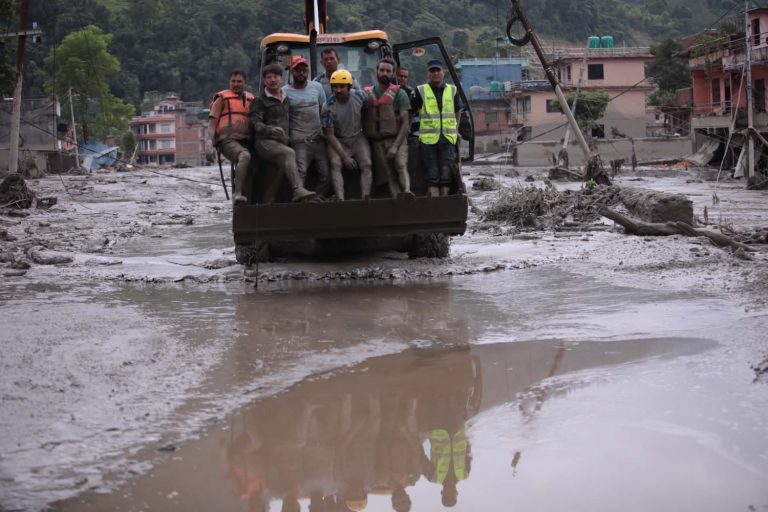
Poor weather, damaged infrastructure, unstable ground and the risk of additional flooding have complicated the search. Rescue operations have continued with Nepali security forces and aircraft, but difficult terrain has limited access to isolated communities and sections of the valley.
The letter is being coordinated by the family of Poonam Thakkar, according to the document. It is addressed to Rubio and copied to the president; senior State Department officials responsible for consular, South and Central Asian, and humanitarian affairs; the U.S. ambassador to Nepal; and the chairs and ranking members of the Senate Foreign Relations Committee and House Foreign Affairs Committee.
669 Bodies Recovered, More Than 2,300 Injured or Rescued
According to the latest update released by Nepal Police at 4 p.m. Saturday local time, 27 police personnel remain out of contact in connection with the Rasuwa-Bhotekoshi flood response, while 8,598 police personnel have been mobilized for search, rescue and relief operations.
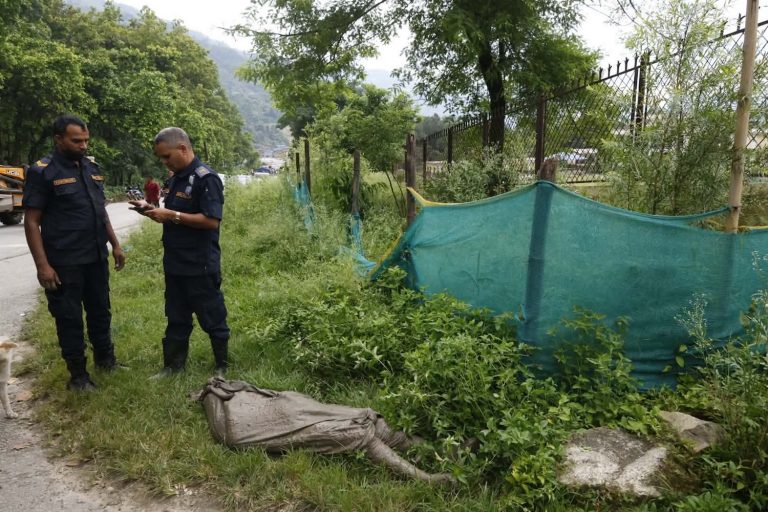
Nepal Police reported that 669 bodies have been recovered so far. The recovered bodies include 13 in Rasuwa, 49 in Dhading, 54 in Gorkha, 158 in Nawalparasi East, 49 in Nuwakot, 248 in Chitwan, 31 in Tanahun and 65 in Nawalparasi West.
The police update also reported 2,301 people injured or rescued. Of that total, 606 were in Rasuwa, 1,692 in Nuwakot and three in Dhading. The update said 140 injured people who had been receiving treatment or had been discharged were being tracked at various hospitals in the Kathmandu Valley.
Additionally, the Nepal Tourism Board said Saturday that search, rescue, evacuation and assistance operations were continuing for tourists and travelers affected by the flood. According to Situation Update–8, issued by the Nepal Tourism Board on Aug. 29, as of 6:00 p.m. local time, 261 tourists had been rescued, three were in contact with authorities and 320 remained out of communication.
An accompanying Nepal Tourism Board breakdown lists 261 rescued tourists from 15 countries. The list includes three U.S. citizens, 167 Indian nationals, 40 Chinese nationals, four Germans, four Maltese, two Italians, two Russians, two Swiss nationals, two Spanish nationals, two Turkish nationals, and one each from Belgium, Bulgaria, Oman, and Portugal. Twenty-one rescued foreign nationals remain unidentified.
The Nepal Tourism Board said it was coordinating with diplomatic missions seeking information and assistance concerning foreign nationals affected by the disaster. The board said representatives of the Singaporean and New Zealand diplomatic missions visited its office on Aug. 28 to seek assistance in tracing their citizens whose whereabouts remained unconfirmed.
The board said it was facilitating information-sharing and coordination with government authorities and tourism stakeholders and would provide assistance as verified information becomes available. It said the safety and whereabouts of affected travelers remained a priority.
The update also said the Kathmandu–Mugling road section was fully operational, allowing normal movement along the route. However, several road sections in Rasuwa, Nuwakot, Dhading and Gorkha remained affected by the floods, while road networks in most other parts of the country were generally operational.
The Nepal Tourism Board advised tourists and travelers to check the latest road and weather conditions before beginning their journeys, particularly when traveling through or toward the affected districts, and to follow the guidance of local authorities and security agencies.
For emergency assistance, the Nepal Tourism Board listed its toll-free number as 1234, the government emergency hotline as 1144 and the Tourist Police number as 9851289445.