





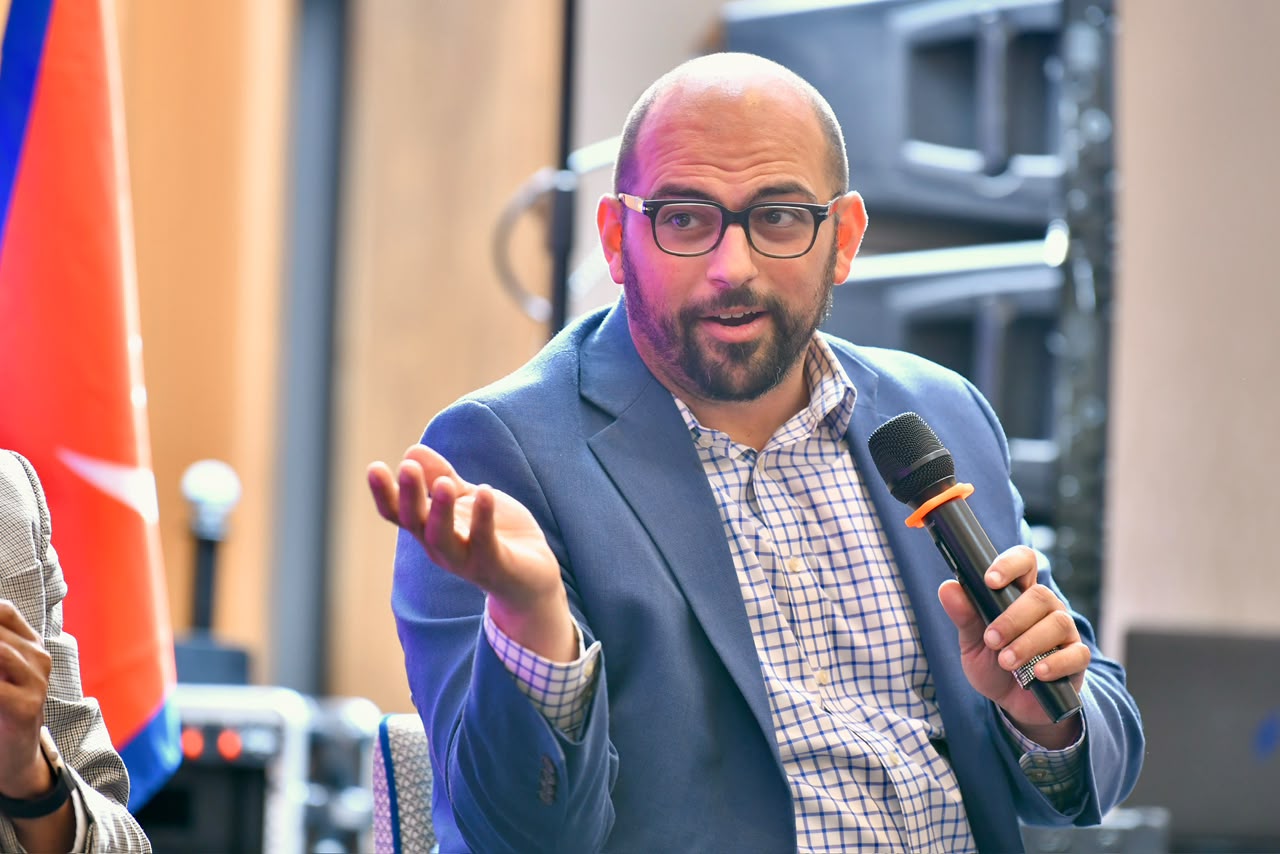
NEW YORK — New York State Assembly Member-elect Patrick Martinez said Saturday that Nepali Americans have strengthened Queens through their cultural contributions, businesses and community engagement, while emphasizing the importance of political stability, effective governance and consensus-building in attracting investment and promoting economic growth.
Speaking during a panel discussion in Queens, Martinez highlighted the Nepali community’s contributions to the borough’s cultural and economic life. He represents the 30th Assembly District, which includes Elmhurst, Jackson Heights, Woodside and Maspeth.
Looking for job?
Click here“The Nepali community in our section of Queens, in New York, New Jersey and the wider area, has benefited in a multitude of ways,” Martinez said. He described the community as an important part of the cultural diversity that makes Queens a gateway to the United States.
He pointed to the growth of Nepali-owned businesses, restaurants and nightlife venues, as well as cultural festivals and events that showcase Nepali music, dance and food.
“These are really shining a spotlight on this community, this culture, this nation to be celebrated,” he said. “We do that in the streets of Queens, New York, every day.”
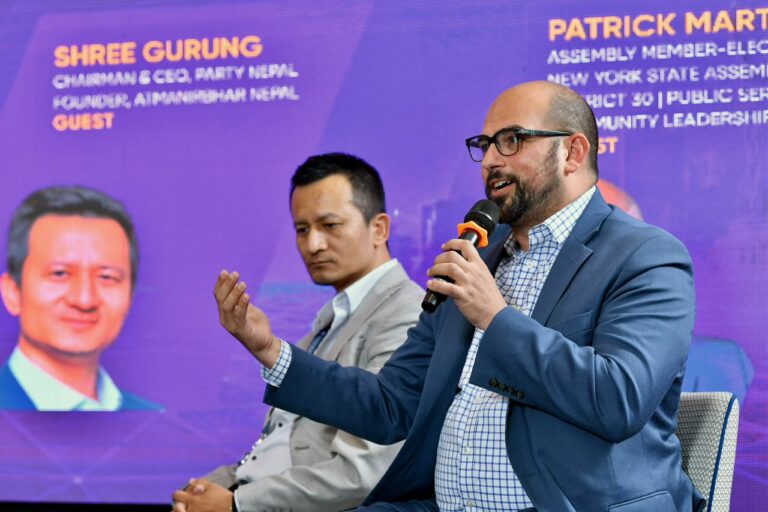
The discussion, moderated by Jenik Radon, an adjunct professor at Columbia University’s School of International and Public Affairs, also examined how the Nepali diaspora could contribute to Nepal’s economic development beyond remittances.
Martinez said Nepali Americans could share lessons from their experiences in the United States, particularly in building inclusive institutions and encouraging cooperation among people with different backgrounds and interests.
He emphasized the importance of creating resilient governance systems that allow communities to work together despite disagreements.
“It’s about promoting a society and government and a system that can be resilient in times of stress, in times of strain, in times of disagreement,” Martinez said.
He added that people from different linguistic, ethnic and professional backgrounds must be able to reach common ground and work toward shared goals.
Asked what skills Nepali Americans could bring back to Nepal beyond financial contributions, Martinez stressed the value of constructive public discourse, collaboration and peaceful resolution of disagreements.
“It’s really about promoting discourse across different languages, different backgrounds, different interests and industries for the greater good,” he said.
The discussion also turned to Nepal’s political stability and its role in attracting foreign investment. Responding to a question about how Nepal could create a more predictable environment for investors, Martinez pointed to the United States as an example of how institutional continuity can build confidence.
The United States has maintained the same Constitution for more than 200 years, he noted, adding that political and institutional stability helps attract investors and creditors.
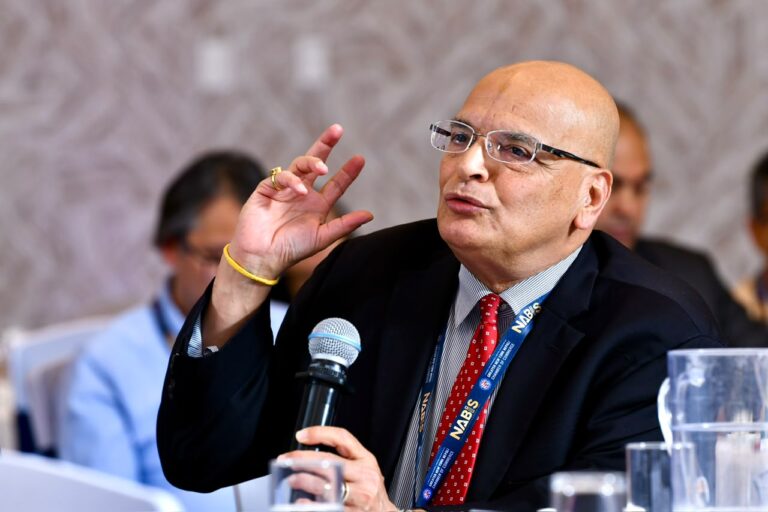
“When you have that stability, that helps inspire investors from abroad,” Martinez said. He added that stable institutions make it easier for countries to secure financing and create opportunities for economic growth.
Drawing a comparison with small businesses, he said that access to funding depends in part on trust and financial credibility.
“If you have better credit, better trustworthiness, then it’s easier to get that funding to get your shop running and get money moving,” he said.
Martinez, who grew up in Elmhurst and lives in Woodside, brings a longstanding connection to the communities in his district. Before entering public office, he worked with small businesses in the digital advertising industry, gained experience with a local nonprofit organization and served for five years on Queens Community Board 2.
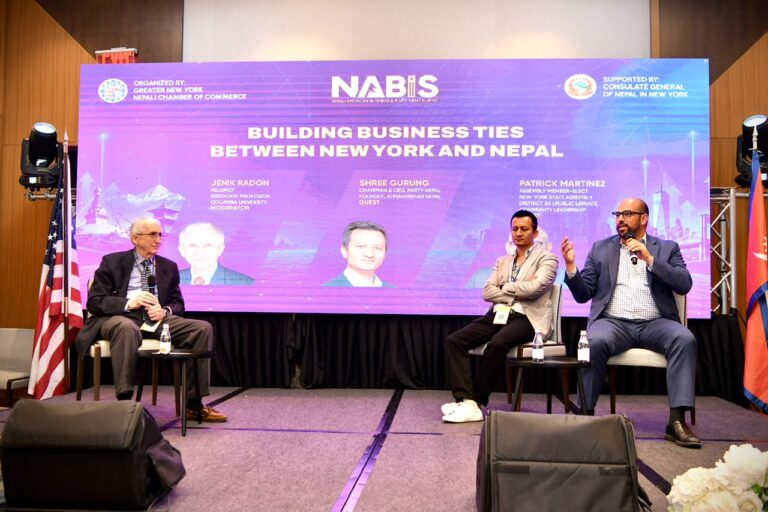
The panel also featured Shree Gurung, chairman and CEO of Party Nepal, who discussed Nepal’s ambition to build a $100 billion economy and the need to channel diaspora resources into productive investments in sectors such as hydropower, tourism, agriculture and technology.
Gurung argued that political stability and government accountability are essential to building investor confidence and turning Nepal’s economic ambitions into reality.
