






NEW YORK — Artificial intelligence could help Nepal expand economic opportunities, prepare more workers for global careers and transform public institutions. But outdated education systems, unequal access to technology and an overreliance on automated tools could limit those gains, technology leaders said during a panel discussion in New York on Saturday.
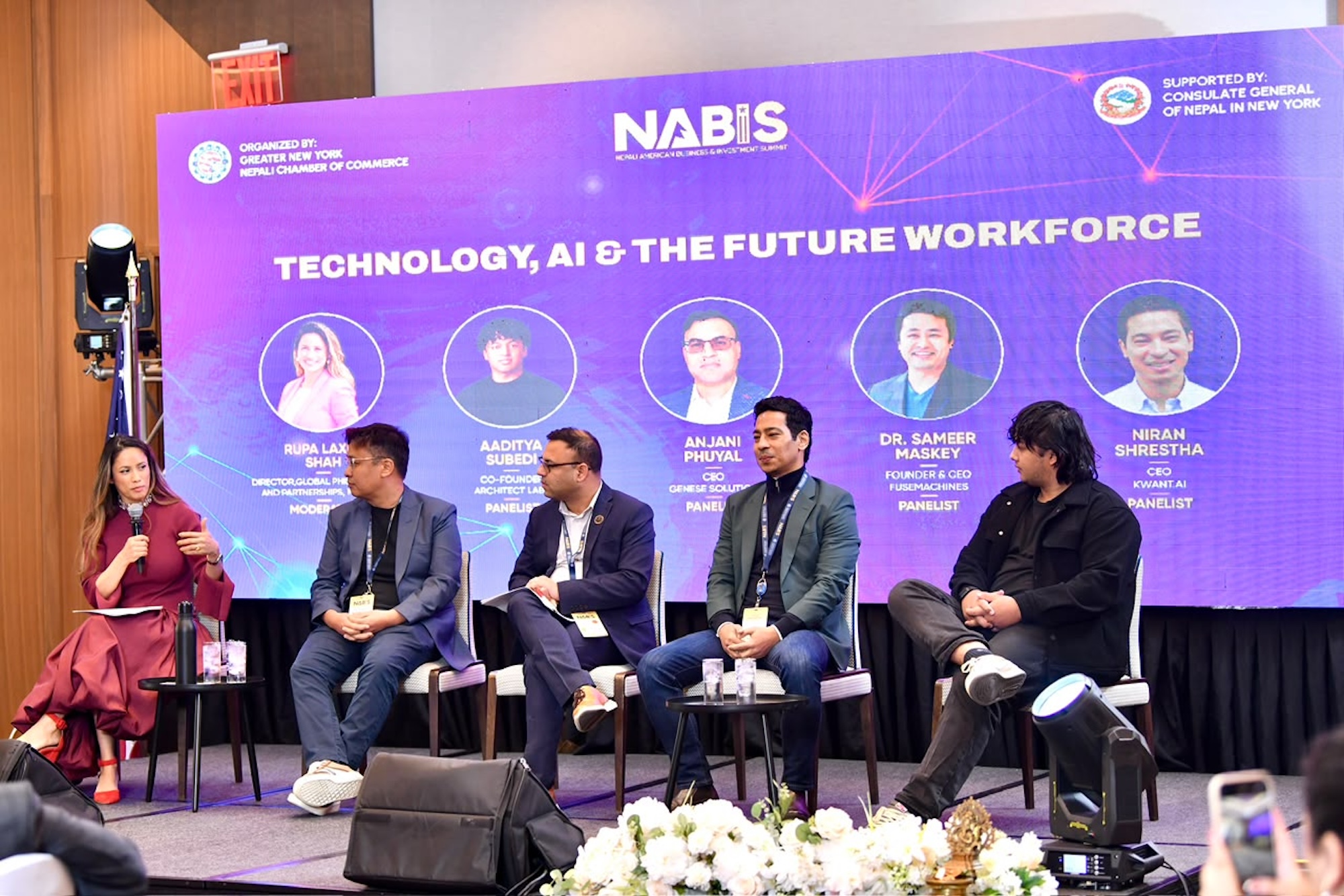
The discussion brought together four Nepali technology entrepreneurs and executives: Aaditya Subedi, co-founder of Architect Labs; Anjani Phuyal, founder and CEO of Genese; Dr. Sameer Maskey, founder and CEO of Fusemachines; and Niran Shrestha, CEO of Kwant AI. Rupa Laxmi Shah, director of global philanthropy and partnerships at MIT RAISE, moderated the conversation.
Looking for job?
Click hereDrawing on their experiences building technology companies, working with international teams and developing AI-powered products, the panelists discussed how Nepal could benefit from the technological transformation while addressing the barriers facing young people and workers.
Their message was that talent alone is not enough. Access to education, infrastructure, mentorship and international opportunities, along with curiosity, ambition and independent thinking, will determine how much Nepal can gain from the AI revolution.
An Opportunity for Young Nepalis to Think Bigger
Subedi, who previously conducted AI research at Stanford University and studied computer science and mathematics at Harvard University before leaving to co-found Architect Labs, said young people today have unprecedented opportunities because technology is changing so rapidly.
Architect Labs is developing AI systems to accelerate semiconductor design and enable custom chips for different AI workloads.
Subedi said his lack of extensive professional experience and a long history in the industry had sometimes worked to his advantage because established practices are being transformed.
He also pointed to the willingness of investors and experienced professionals in Silicon Valley to support young entrepreneurs with ambitious ideas.
Building a company around a difficult, ambitious problem can actually be easier than pursuing a less ambitious idea, he said, because talented people and investors are often drawn to projects that seek to achieve something significant.
He urged young Nepalis not to let the economic and social circumstances in which they grew up determine the limits of their ambitions.
Many young people from Nepal and other developing countries, he said, arrive in the United States with expectations shaped by the limitations they experienced at home. That can prevent them from imagining what might be possible.
“If you have nothing to lose, then why not try to go for everything?” he said.

Subedi said he had been fortunate to experience both the rapid development of artificial intelligence and the difficulties faced by people in remote parts of Nepal who struggle to meet basic needs.
He said he hoped more Nepalis would have opportunities to pursue ambitious careers and build businesses, whether in Nepal or internationally.
He also shared how his own company began. He and his co-founder initially connected through Twitter because they were interested in similar research questions. They later worked together on a research project while interning in California’s Bay Area.
What began as an effort to explore an idea eventually developed into a company.
For young people interested in entrepreneurship, he recommended finding communities of people with similar interests, participating in research projects and building relationships with potential collaborators.
Finding the right co-founder and people to work with, he said, can be as important as the original business idea.
Education, Access and Nepal’s Infrastructure Gap
Shah challenged the panelists to consider how opportunities could reach a young person in rural Nepal with little more than a smartphone, unreliable internet access and no access to mentors, laboratories or advanced equipment.
She asked whether responsibility for creating those opportunities belonged to families, governments, businesses, nonprofit organizations, the diaspora or educational institutions.
Subedi said curiosity must begin early, but the responsibility for nurturing it changes as children grow.
Parents play an important role in providing children with the support and freedom to explore their interests. As students advance, governments and educational institutions must ensure access to basic education and the resources needed to develop their ideas.
Businesses, educators and other leaders also have a responsibility to help young people turn their curiosity into practical projects and businesses, he said.
Phuyal, a British-Nepali technology entrepreneur whose company Genese operates across Asia, Africa and Europe, said Nepal’s education and technology challenges cannot be explained simply by whether someone lives in a city or a rural area.
He recalled growing up in Kathmandu and crossing a river on his way to college, carrying his spare clothes on his back before changing and continuing to his engineering classes.
Even people who grow up in the capital, he said, can face significant barriers to education and opportunity.
Phuyal said he had been involved in efforts to improve Nepal’s education system, including initiatives to change engineering and college curricula.
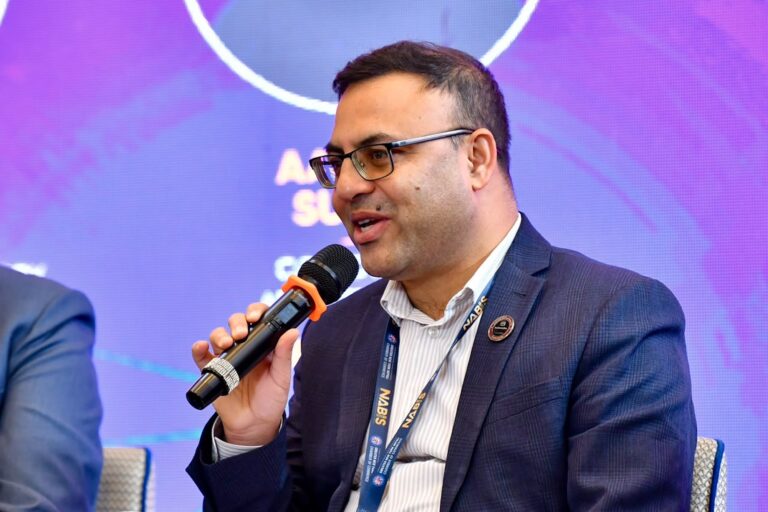
He argued that some colleges in Nepal continue to teach material developed 15 or 20 years ago, even as the technology industry changes almost overnight.
Even highly motivated and talented students will struggle to compete internationally if their education does not prepare them for the technologies and skills employers now require, he said.
He also identified electricity, internet connectivity and access to international technology platforms as significant obstacles.
For example, restrictions on using Nepali debit and credit cards for international payments can prevent students from experimenting with cloud computing services and AI platforms.
He said government policies must address such barriers so students can gain practical experience with the tools being used around the world.
Maskey, a computer scientist, educator and entrepreneur who founded Fusemachines, has also built his career around expanding access to artificial intelligence education.
An adjunct associate professor at Columbia University, where he has taught for more than 12 years, Maskey founded Fusemachines to democratize AI education and opportunities, particularly in underserved communities and countries. The company became publicly listed in 2025.
His work reflects the panel’s broader argument that technological progress must be accompanied by efforts to make education and training more accessible.
Nepali Workers Can Compete Globally
The discussion also turned to differences between the Nepali and American workforces and what employers expect from young Nepalis entering the U.S. job market.
Phuyal challenged the assumption that Nepali workers are less capable than their counterparts in developed countries.
He said workers in Nepal can produce comparable results when they receive similar opportunities, exposure and training.
Technology has created an opportunity to reduce traditional gaps between workers in Nepal and those in the United States and United Kingdom, he said.
He also suggested that growing up in a less privileged environment can develop resilience, determination and a strong instinct for overcoming challenges.
Shrestha said he looks for independence, self-directed learning, communication skills and a willingness to take risks when hiring employees.
Workers should not be afraid to ask questions, make mistakes or approach customers, he said. Employers value people who can think independently and communicate thoughtfully.
“Just take risks, be aggressive, don’t be shy,” he said.
Subedi returned to the importance of ambition, saying many talented Nepalis limit themselves by thinking too small.
He encouraged young people to look beyond the limitations of their immediate circumstances and recognize that they can pursue opportunities in industries that did not exist when they were growing up.
AI Should Enhance Human Thinking, Not Replace It
The panelists also confronted concerns that excessive reliance on artificial intelligence could weaken critical thinking, creativity and patience among young workers.
An audience member with experience hiring employees and building technology teams said employers were increasingly encountering candidates with shorter attention spans, less patience and weaker problem-solving abilities.
The audience member questioned how the next generation could develop the judgment, creativity and persistence needed to build meaningful products rather than simply generate responses through AI tools.
One panelist argued that society should accept AI as an inevitable part of technological progress while focusing on the human abilities that will remain valuable.
He compared the current debate to earlier concerns about Google and Wikipedia, when educators worried that easy access to information would discourage students from reading and conducting independent research.
He said AI would continue to evolve, just as earlier technologies had transformed how people access information.
As a parent, he said, he believes children should be exposed to music, art, poetry and sports, alongside mathematics and artificial intelligence, so they can develop the judgment to make their own choices.
Shah agreed that mentorship and human interaction would become increasingly important. She emphasized the need to preserve creative thinking, collaboration and critical problem-solving skills through education.
Maskey offered a more optimistic perspective on how AI could change the learning process.
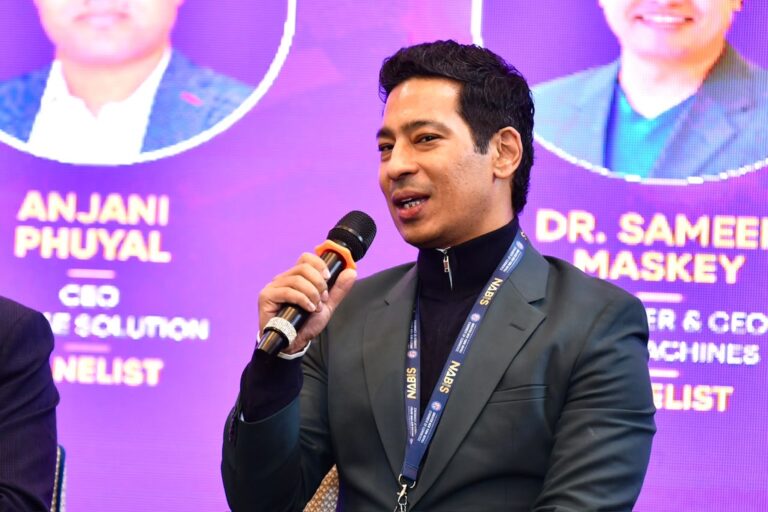
He said people are still in the early stages of adopting the technology and that, although excessive use could initially weaken some skills, AI could eventually improve critical thinking by allowing students to learn through continuous questions and interaction.
Rather than relying only on textbooks or waiting for teachers to answer questions, students can now explore subjects, ask follow-up questions and connect information to their own circumstances, he said.
He expressed hope that education systems would change significantly as AI tools become more widely adopted.
Subedi said the ability to ask the right questions, exercise independent judgment and learn new technologies would become more important than memorizing detailed information in a single field.
He described a colleague who spent months working on a research problem while an AI agent handled much of his routine communication. The colleague was able to devote more time to the central research questions.
As AI capabilities advance, he said, workers will increasingly need to focus on the problems that matter rather than routine tasks that machines can perform.
Making Construction Sites Safer for Nepali Workers
Shrestha discussed how AI and wearable technology can improve conditions for workers in the global construction industry, including Nepalis employed in the Middle East.
His company, Kwant AI, develops an AI-powered workforce management platform used by construction companies working on major projects, including data centers and oil and gas facilities.
The platform helps companies manage thousands of workers, improve productivity, automate payroll and strengthen safety procedures.
Shrestha said he frequently encounters Nepali workers when visiting construction projects in Saudi Arabia and other parts of the Middle East.
He said his company uses wearable devices and cameras to help identify risks and make construction sites safer.
He also recalled the deaths of workers involved in building stadiums for the FIFA World Cup in Qatar, saying technology now offers opportunities to prevent similar tragedies.
His experience working on construction and capital projects across seven countries in Asia, Africa and the Americas has reinforced his interest in using technology to protect workers.
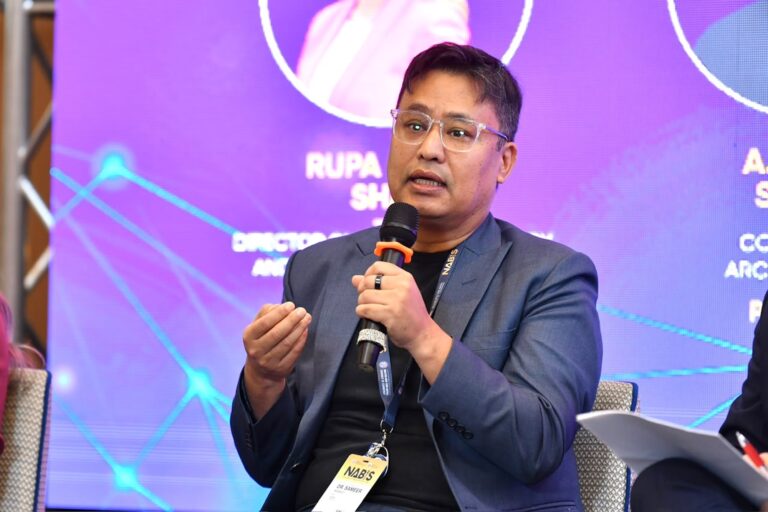
Kwant AI is also deployed on major data center projects involving Microsoft and Oracle and has partnerships with companies including WTW and United Rentals.
For Shrestha, the goal is not simply to introduce new technology but to make sure it delivers practical benefits to the people working on the ground.
Where Nepal Could Benefit From the AI Revolution
An audience member asked the panelists to identify the biggest opportunities artificial intelligence could create for Nepal and the risks that could accompany its adoption.
Phuyal emphasized that businesses should focus on using AI to solve real problems rather than measuring productivity by the amount of code or content generated.
A company should not pay an employee simply for producing thousands or millions of lines of code, he said. The work must create something meaningful that helps the business.
The same principle applies to marketing. Producing a marketing strategy or campaign is not enough unless it attracts customers and delivers measurable results.
He also encouraged young entrepreneurs to remain open to new experiences and opportunities rather than automatically rejecting unfamiliar ideas.
Subedi offered a broader economic perspective, identifying energy, semiconductor chips, computing infrastructure, data centers, AI models, data and applications as interconnected areas of opportunity.
He said Nepal’s renewable energy potential could become an important advantage because electricity is fundamental to AI infrastructure.
The development of chips, computing capacity and data centers could also create opportunities for investment and economic growth.
Nepal’s geographic position between India and China could make locally hosted AI models and computing infrastructure particularly relevant, he said.
He also sees significant potential in using AI to improve government services and institutional operations.
Government agencies, banks and other public institutions in Nepal could become more efficient, faster and more responsive to citizens by adopting AI-powered systems, he said.
He described these areas as opportunities for young entrepreneurs, investors and technology professionals in Nepal and abroad.
Bringing AI Education to Rural Girls
The discussion also highlighted the challenge of bringing AI education to communities that have limited access to technology.
An audience member representing a nonprofit organization that operates community centers in India, Nepal and Bhutan described its work with girls and young women in rural Nepal.
The organization operates 73 centers in 41 districts of Nepal and offers programs for girls and young women ages 13 to 25.
Its courses combine basic computer skills, including PowerPoint and Excel, with leadership training. Participants identify problems in their communities involving agriculture, women’s rights and children, then prepare presentations to advocate for solutions with local government officials.
The representative asked how AI education could be incorporated into the existing curriculum.
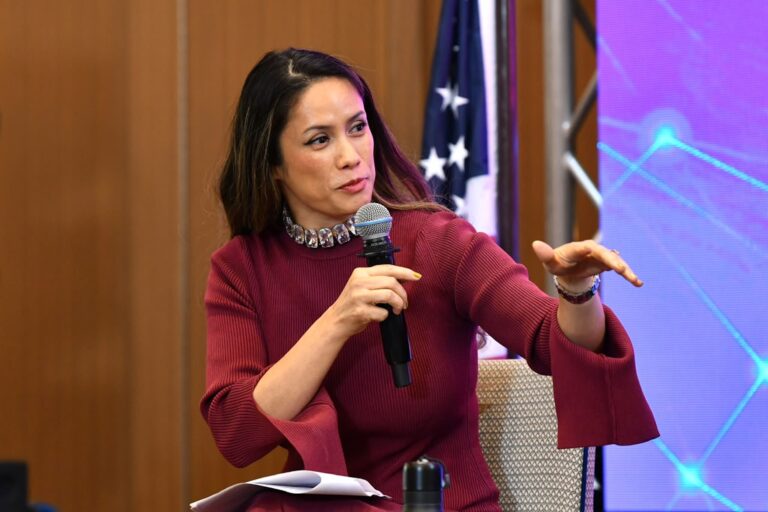
Shah offered to continue the conversation after the panel, pointing to MIT’s free educational resources that could help organizations introduce AI literacy into community-based programs.
Advice for Entrepreneurs: Learn, Connect and Move Fast
In another audience question, an aspiring entrepreneur asked how founders should know when to abandon an idea and pursue a different business direction.
The question focused on the emotional difficulty of leaving behind an idea after investing significant time, energy and resources in it.
One panelist said the greater emotional challenge can be continuing to invest in a product that is unlikely to generate revenue or grow.
In the age of AI, he said, entrepreneurs can build products more quickly than before, making it important to experiment, learn from mistakes and assess results.
He suggested that founders pay attention to whether a product is attracting customers and generating revenue. If it is not producing meaningful results quickly enough, it may be time to reconsider the direction.
Subedi’s earlier advice about finding the right collaborators and building relationships also resonated with the discussion.
He said young entrepreneurs should participate in research communities, clubs and other professional networks where they can meet people who share their interests and ambitions.
Closing the session, Shah encouraged participants to use the gathering to build relationships, seek mentors and help create similar opportunities for others.
“Opportunities are everywhere,” she said. “Connection is not.”
