



Federal Judge Blocks Diversity Visa Pauses, Certifies Nationwide Classes

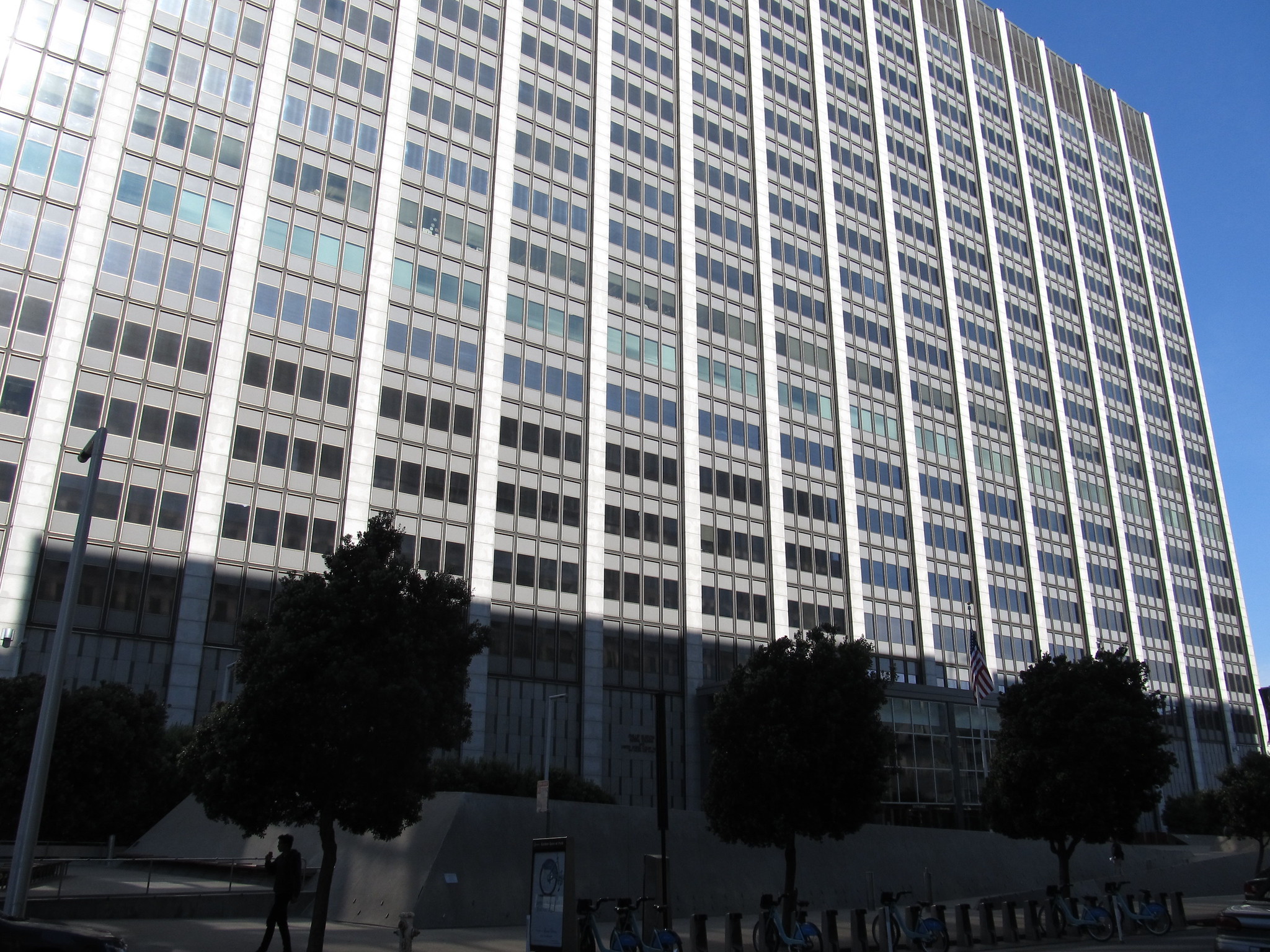
The Phillip Burton Federal Building in San Francisco, California. Photo by Ken Lund, licensed under CC BY-SA 2.0.
A federal judge on Friday temporarily set aside three Trump administration policies that had halted or blocked the processing of fiscal year 2026 Diversity Visa applications, ordering the State Department and U.S. Citizenship and Immigration Services to resume ordinary adjudication for affected applicants where practicable.
U.S. District Judge Edward J. Davila of the Northern District of California also certified three nationwide subclasses of Diversity Visa selectees and their eligible family members in Medani v. Trump, extending the preliminary relief beyond the individual plaintiffs who filed the lawsuit.
The order temporarily vacates a USCIS policy that indefinitely paused final decisions on pending adjustment-of-status applications from Diversity Visa selectees already in the United States. It also vacates the State Department’s pause on issuing Diversity Visas and its separate immigrant-visa approval pause affecting nationals of 75 countries.
The ruling does not guarantee a visa or green card for any applicant. Rather, it requires the agencies to return to their usual individualized processing procedures, subject to visa availability, eligibility requirements and other provisions of immigration law.
Court Orders Renewed Processing
Davila directed the State Department, “to the extent practicable and in good faith,” to take all reasonable steps during the remainder of the Diversity Visa fiscal year to reconsider cases refused solely under the department’s Diversity Visa issuance pause or its 75-country pause. The agency must also resume ordinary adjudication of pending applications.
The judge similarly ordered USCIS to take all reasonable steps to resume ordinary adjudication of pending Diversity Visa adjustment-of-status applications without enforcing its hold policy. The order is especially consequential because the fiscal year for the 2026 Diversity Visa program ends Sept. 30, leaving applicants limited time to complete processing before unused visas expire.
Davila instructed both sides to submit a joint status report by Sept. 18 on the status of adjudications and to propose a schedule for continued litigation.
Three Certified Subclasses
The court did not certify one combined class of all affected applicants. Instead, Davila certified three separate nationwide subclasses: FY 2026 Diversity Visa selectees and derivative beneficiaries subject to the USCIS hold; those subject to the State Department’s Diversity Visa issuance pause; and those affected by the State Department’s 75-country immigrant-visa pause.
The court concluded that each group shared a central legal question: whether the policy affecting it was lawful under the Administrative Procedure Act. Although the three policies involved different agencies and populations of applicants, Davila wrote that the policies collectively prevented remaining FY 2026 Diversity Visa applicants from securing visas.
The order states that the named plaintiffs alone represented nearly 1,500 affected individuals. Davila appointed Curtis Lee Morrison, Jessica T. Arena, Alexander W. Loznak, Hamdy Maher Masri, Zhao Guo, Carolina Solano and Garrett Carter May as class counsel.
Judge Finds Likely APA Violation
Davila found that the plaintiffs were likely to prevail on their claim that the policies were arbitrary and capricious under the Administrative Procedure Act.
The judge said the administration had not offered a sufficiently reasoned explanation for adopting sweeping, categorical pauses that affected all applicants. He said security concerns associated with alleged conduct by a former Diversity Visa beneficiary did not justify stopping processing for thousands of applicants, particularly when immigration law already requires individualized screening.
Davila also found no indication that the agencies had considered alternatives that could address their stated concerns without disrupting the Diversity Visa program created by Congress. He further said the agencies failed to adequately consider the reliance interests of applicants who had spent money and time on medical exams, application fees, interviews, travel and other required steps.
The government argued that the policies were not final agency actions subject to review and that applicants were not entitled to visas simply because they had been selected in the lottery. Davila rejected the first argument, finding that the indefinite holds and blanket moratoria had immediate legal effects by denying applicants the opportunity to have their cases adjudicated.
What the Order Means
The decision is a preliminary ruling, not a final judgment in the lawsuit, and the federal government may continue to litigate or seek appellate review. The order also does not require the government to approve every pending Diversity Visa application.
Applicants must still meet all statutory and procedural requirements, including medical, security and admissibility screening. They must also have a visa number available under the program’s statutory rank-order system. The court stressed that it was reviewing the legality of the blanket pauses, not deciding whether an individual applicant qualifies for a visa.
For FY 2026 selectees whose cases were stopped or refused solely because of the three policies, however, the ruling restores an opportunity for their cases to be processed under ordinary procedures before the Sept. 30 deadline.