




White House Reviewing Fee for International Student Work Authorization, Federal Filing Shows


A proposal to impose a fee connected to Optional Practical Training, a work-authorization program used by international students, is under review at the White House, according to a federal regulatory filing posted Thursday. Some media outlets had reported the proposed fee could be as high as $100,000.
The Office of Information and Regulatory Affairs received the Department of Homeland Security proposal, titled “Optional Practical Training Fees,” on Aug. 20. The listing identifies U.S. Immigration and Customs Enforcement as the responsible agency and classifies the measure as an economically significant proposed rule with international impacts.
The filing is listed under Regulatory Information Number 1653-AB01. It provides no public details about the amount or structure of a potential fee, who would pay it, or when it could take effect.
Any policy changes to OPT would unfold within a massive global student population. According to Student and Exchange Visitor Information System data, there were approximately 1.11 million active international students in the U.S. in August.
India remained the top source country with 333,314 active student records, followed by China with 197,802. South Korea, Brazil and Canada rounded out the top five source countries. Other notable origin countries included Vietnam (29,412), Bangladesh (25,437), Nigeria (21,311), Ghana (13,940) and Japan (11,929).
Nepali scholars represent a key segment of that broader community. SEVIS data shows there were 31,880 active Nepali student records in August—17,914 men and 13,966 women.
Bachelor’s degree programs accounted for the largest share, with 11,229 Nepali students. Master’s programs enrolled 9,458, followed by associate degree programs with 6,338 and doctoral programs with 4,375. Another 220 students were listed in other academic programs, while 200 were enrolled in language training, 51 in flight schools, and nine in secondary schools.
Texas hosts the largest population of active Nepali student records, with 7,226. Ohio follows with 2,252, and New York has 2,132. Other states with sizable Nepali student populations include Kentucky (1,588), Missouri (1,410), Louisiana (1,050), Virginia (987) and Illinois (802).
OPT permits eligible F-1 international students to work temporarily in jobs directly related to their field of study. Students generally may receive up to 12 months of OPT, while qualifying science, technology, engineering and math graduates can seek a 24-month extension.
The White House review is part of the federal process for significant regulations. The listing does not mean a fee has been adopted, and no proposed regulation setting a $100,000 OPT fee has been published.
New York-based immigration attorney Bashu Phulara said the White House listing should not be interpreted as a final policy decision.
“At this stage, the proposal remains under White House regulatory review,” Phulara said. “After the review is completed, the agency may publish a proposed rule for public comment, revise it, or withdraw it. No further details have been released.”
New York-based immigration attorney Keshab Raj Seadie said students and employers should not treat the reported fee as an existing legal requirement.
“There is no proposed rule, no proclamation, and no fee in effect,” Seadie said. “No policy is final until formally announced.”
Seadie said it remains unclear whether a future fee, if pursued, would be paid by students, universities or employers. He noted that DHS separately has listed a broader “Practical Training” rule on its regulatory agenda, expected in February 2027, that could seek changes to OPT and STEM OPT. The agenda item has been described as potentially addressing fraud, national security concerns, worker displacement and federal oversight of student training programs.
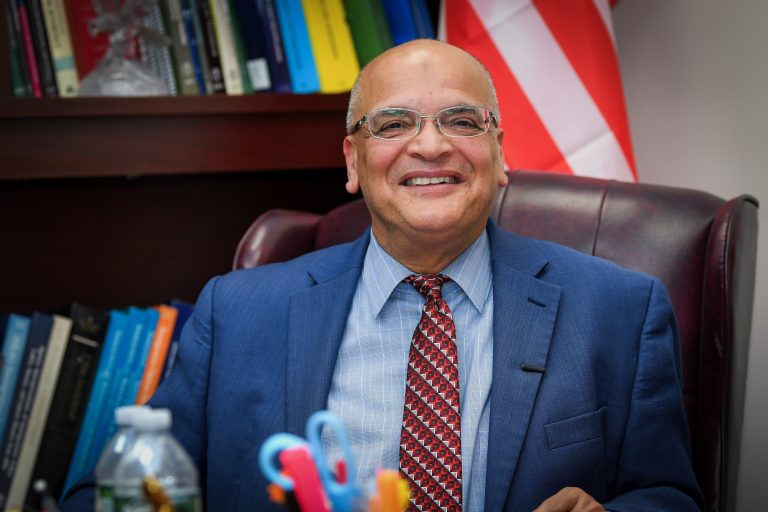
Seadie also pointed to litigation surrounding a separate reported $100,000 H-1B fee as a possible preview of challenges to any OPT fee. He said a Massachusetts federal court struck down the H-1B fee in June and that the 1st U.S. Circuit Court of Appeals declined in July to stay that ruling while the case proceeded.
An OPT fee could face similar legal challenges, Seadie said, although he noted that OPT was created through regulation rather than directly by Congress, potentially giving DHS greater flexibility in changing the program.
“Do not make decisions — declining a job offer, leaving the U.S., abandoning a degree program — based on the reported OPT fee,” Seadie said. “Do make decisions based on the D/S rule, which is real and imminent.”