




Meta’s Monetization Triggers Flood of Misinformation in Nepal Due to Weak Regulations

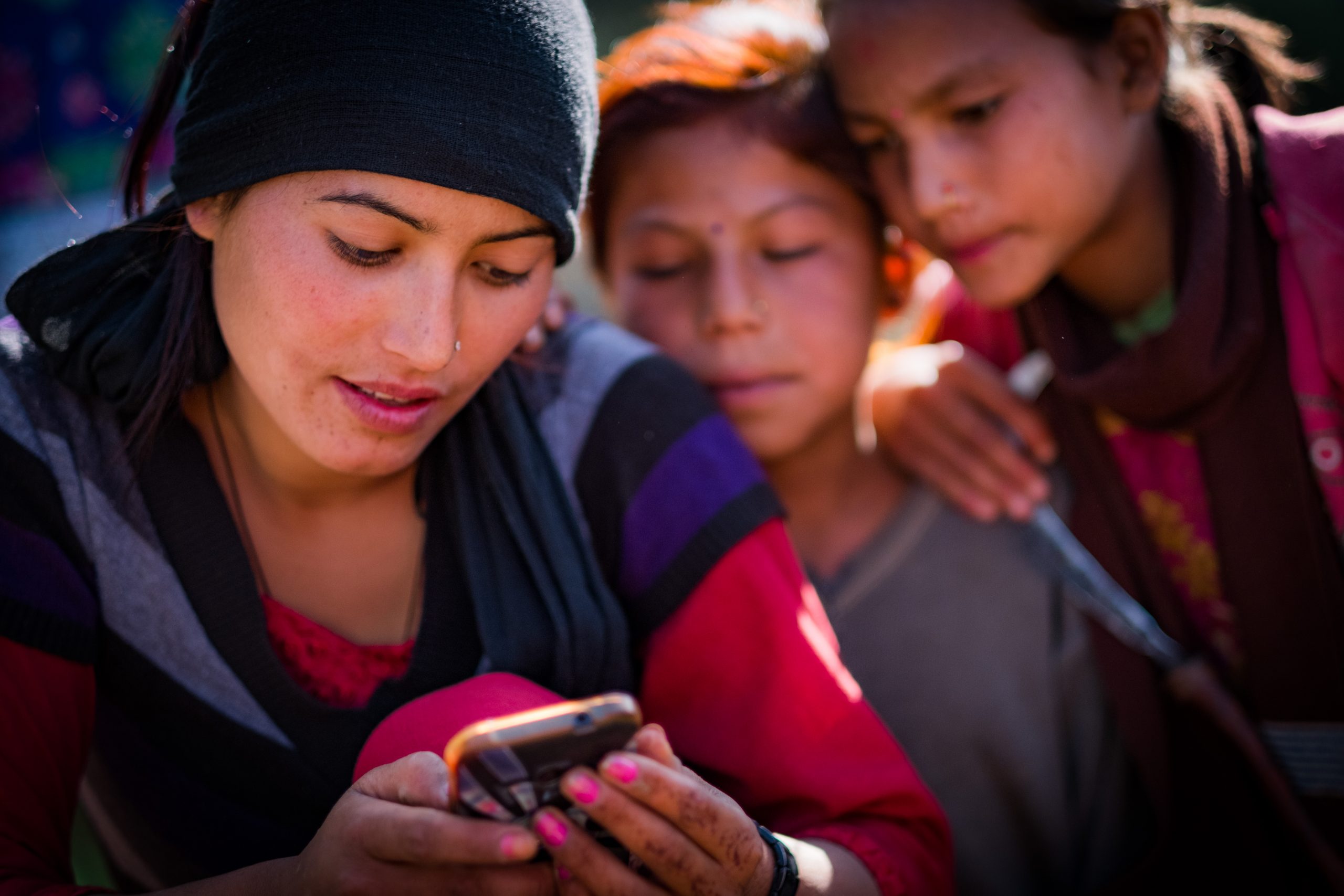
A woman and young girls looking at a mobile phone in Kailash, Bajhang district, Nepal.
Gaining “likes” and “views” on social media is no longer just a matter of popularity—it has become a direct source of income. With the ease of monetization on platforms like Facebook, YouTube, and TikTok, the race to accumulate views has intensified. Globally, the content creator economy was estimated to reach nearly $250 billion in 2025. In Nepal as well, the number of creators earning thousands of dollars monthly from YouTube, TikTok, and Facebook is steadily growing.
Recently, mainstream television, radio, and online media outlets have also turned social media into an additional revenue stream. Facebook formally launched content monetization in Nepal in September 2025. According to Meta, Nepal was officially included in its list of eligible countries on September 1, 2025, bringing the feature to roughly 70 countries and regions, alongside Hong Kong and Puerto Rico. Under this program, Reels, photos, text posts, Stories, and videos can all be monetized, with payout options directly linking to Nepali bank accounts.
However, in the absence of effective regulation, this dollar-earning industry has played a primary role in spreading unchecked misinformation, disinformation, and rumors across Nepal.
Currently, going “viral” has taken priority over adhering to facts. Consequently, not only ordinary users but also politicians holding public office, elected representatives, and community leaders have joined the race to share misleading information without verifying sources. With approximately 16.6 million internet users in Nepal (around 56 percent of the population) spending an average of over 3 hours daily on social media, the issue has deepened significantly.
From Leaders to the General Public: Unverified “Delusions”
Social media has become the most accessible medium for political party leaders and elected representatives to expand their reach to citizens. However, in their rush to broadcast their views and agendas, these leaders have frequently engaged in the irresponsible transmission of false messages.
On July 29, the secretariat of Janamat Party Chairman CK Raut published a post on Facebook regarding an incident in Sunsari. The accompanying image—which claimed that the Nepali Army was aiming guns at civilians from a distance of two meters—was later confirmed by fact-checking organizations, including “NepalFactCheck” and “TechPana,” to be entirely false and AI-generated. Similarly, outdated videos and photos from Rautahat were deceptively circulated in connection with the Sunsari incident, prompting the police to issue an official clarification and warn of legal action.
This is merely one representative case. Today, spreading false information requires minimal effort. Driven by generative AI and deepfake technology, a growing number of individuals can create and post fabricated images or videos within seconds. When one page publishes unverified content and another copies it verbatim, deception can reach hundreds of thousands of people within minutes.
Furthermore, a troubling trend has emerged among political leaders to comment without distinguishing truth from falsehood, only to delete their posts after facing public backlash. Studies show that deepfake content globally has more than doubled through 2025–2026; in Nepal, such incidents have surged following widespread access to consumer AI tools.
Sources of Income and Questions Over Media Accountability
Financial disclosures by elected representatives and government ministers confirm that social media has become a lucrative revenue source. Prime Minister Balendra Shah (Balen) stated in his asset disclosure that he earned nearly $100,000 from social media platforms (Facebook, YouTube, and X/Twitter), illustrating the immense financial potential of digital channels.
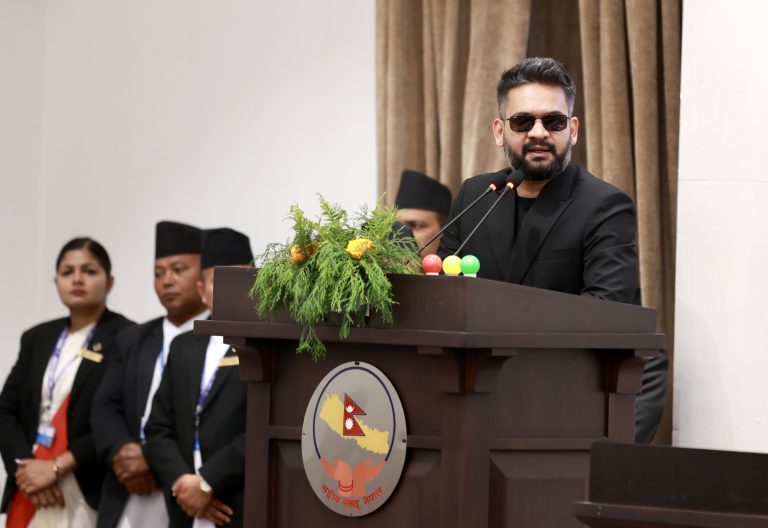
His public asset details from April 2026 show approximately $96,053 USD (14.6 million NPR) deposited in bank accounts, sourced from Facebook, YouTube, TikTok, Spotify, and iTunes. Although the Prime Minister’s official annual salary is roughly $8,400, his digital earnings constitute the majority of his income.
Similarly, Nepal’s Minister for Science, Technology and Innovation, Mahabir Pun, publicly shared that he had covered his monthly personal expenses over the past two years through social media content earnings.
Addressing media personnel, Pun wrote a lengthy status stating that he was forced to generate income online—earning between $131.58 and $197.37 USD in certain months—and that he adopted this path while simultaneously assisting journalists by agreeing to interviews. In the post, he went on to describe certain media figures as “scoundrels” and “ungrateful” after his comments to the press sparked controversy. Pun also publicly disclosed that he had earned $1,233,552.63 USD (187.5 million NPR) solely from the sales of his autobiography.
In recent years, traditional television networks, radio stations, and online portals have increasingly converted social media into a secondary revenue stream. However, this hyper-competitive, monetization-driven environment has systematically overshadowed the ethical and social responsibilities of both media organizations and everyday users.
The View-Boosting “Algorithm” and the Monetization Game
Social media algorithms are engineered to amplify anger, controversy, and sensationalism over standard factual reporting. Because high click rates and views translate directly into ad revenue, the practice of crafting misleading “clickbait” headlines has thrived. Studies indicate that sensational content generates up to six times more engagement than objective reporting.
On Saturday, August 2, 2026, the Cyber Bureau of Nepal Police arrested Janak Bhusal of Arghakhanchi from Butwal on charges of disseminating deceptive information. Aiming to increase followers and monetize his YouTube channel, NepalKhabar TV, Bhusal broadcast exaggerated content designed to disrupt communal harmony, spread rumors, and falsely claim an “attack on the Home Minister.”
A recent monitoring report by Press Council Nepal presents an even more alarming outlook. When instructed to remove content that harmed religious and social harmony following the Kaptanganj incident in Sunsari, the Council reported that several social media pages and channel operators explicitly refused, citing ongoing “financial gains (monetization).”
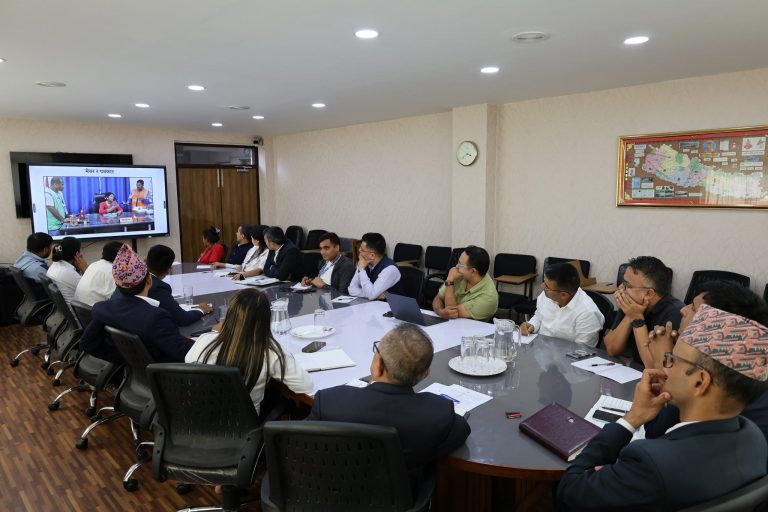
Fact-Checking and Balance Lost Due to Monetization: Press Council Nepal
Ram Sharan Bohara, Co-Administrative Officer and Co-Spokesperson for Press Council Nepal, emphasizes that monetization is one of the chief catalysts driving false information online. He notes that as content creators prioritize negative, provocative, and sensational material to maximize revenue, fundamental commitments to fact-checking and objective reporting are neglected.
“As far as I am concerned, I think the main reason behind the rise in misinformation is monetization itself. Negativity and provocative topics simply generate more revenue,” Bohara said.
He explained that due to a monetization-centric approach, short-form video reels and other quick posts are produced without verifying facts or ensuring balanced coverage. He added that this growing carelessness has significantly compounded the threat of online misinformation.
According to Bohara, many creators and outlets now prioritize only their own perspective when producing content, resulting in biased, one-sided narratives that further mislead the public.
“When news passes through traditional media channels, it must complete an editorial process, maintain balance, and undergo factual verification. However, content published directly to social media tends to be entirely one-sided,” Bohara noted.
Bohara added that Press Council Nepal is actively taking steps to hold unregistered media platforms and individual creators accountable. Initially, non-compliant entities are contacted and reminded to operate responsibly under established standards. However, if platforms fail to respond or refuse to register formally, their cases are referred to the Cyber Bureau for law enforcement action.
207 Content Items Related to the Sunsari Incident Under Council Surveillance; Cyber Bureau Contacted to Investigate 25 Items
According to Press Council Nepal, 207 individual items published across various digital platforms regarding the recent incident in Kaptanganj, Sunsari, were monitored. Among those, 34 media outlets were instructed to immediately remove 45 items found to be in violation of the code of conduct.
Additionally, the Council ordered the removal of two social media posts published by unregistered platforms, according to Monitoring Officer Mahendra Raj Singh. Following these directives, 31 media outlets and two social media accounts complied by deleting the non-compliant material.
Furthermore, the Council formally requested that the Cyber Bureau of Nepal Police investigate and act against 25 severe infractions posted across 18 social media accounts (18 of which were unaffiliated with registered news organizations). Directives were also re-issued to four separate media outlets, Officer Singh reported.
372 Complaints Filed with Press Council in One Year, Mostly Concerning Misleading and Exaggerated Content
In the fiscal year 2082/83 (2025/26), 372 formal complaints regarding media content were registered with Press Council Nepal. Of these, 180 have been settled, while 192 remain under review. The Council noted that 138 pending complaints from FY 2081/82 and three remaining from FY 2080/81 were also successfully resolved during this period.
During the same fiscal year, four media outlets were blacklisted, one was removed from the blacklist, and recommendations were made to suspend the press credentials of two individuals. The Council also logged 24 general public grievances.
By category, the vast majority—229 complaints—involved untruthful, misleading, or exaggerated content. This was followed by 122 complaints regarding character assassination, defamation, and privacy violations. Four complaints concerned threats to social harmony, two involved direct plagiarism, one involved the publication of graphic photos, one addressed improper post deletion, and 13 covered administrative and policy matters.
The Council noted that 126 complaints were filed during the final quarter of the fiscal year alone (Baisakh, Jestha, and Asar)—with 44 in Baisakh, 48 in Jestha, and 35 in Asar. These figures highlight growing public frustration over unverified digital content. By comparison, 163 complaints were logged in the first six months of the previous fiscal year.
3,282 Content Items Examined in One Year
Press Council Nepal formally audited 3,282 media items during FY 2082/83. This included 1,939 items published by registered outlets and 599 broadcast by unregistered, non-media platforms.
Enforcement action was initiated against 2,542 items. The Council secured the removal of 271 items via phone warnings and issued formal written notices to outlets regarding 413 items. Additionally, 92 cases were forwarded to the Cyber Bureau, while 1,796 items were monitored under formal observation. During its internal self-monitoring process between Baisakh and Asar alone, 1,094 individual media items were reviewed.
Mounting Complaints at the Cyber Bureau
Cybercrime reports filed with the Cyber Bureau of Nepal Police have escalated dramatically. While 4,255 complaints were registered in FY 2080/81, that figure grew to 6,740 in FY 2081/82. Recent overall application totals—ranging between 14,000 and 19,000 annually—underscore a rapid surge in digital offenses.
According to the Cyber Bureau, over 70 percent of all complaints involve online financial fraud and OTP theft. Data indicates a sharp spike in scams occurring across digital banking platforms, mobile wallets, and online marketplaces. In FY 2081/82 alone, 18,326 individuals reported falling victim to cyber fraud.
The remaining 20 to 25 percent of complaints involve fake social media profiles, online harassment, defamation, character assassination, and the dissemination of fake news.
The Cyber Bureau identifies Facebook and Messenger as the primary platforms where offenses originate, followed by TikTok, WhatsApp, Instagram, and Telegram.
Legal Action and the Social Monitoring Desk
Police Superintendent Dilip Kumar Giri, Spokesperson and Information Officer for the Cyber Bureau of Nepal Police, confirmed that law enforcement is actively prosecuting individuals who circulate false and misleading information. Offenders face charges under Section 47 of the Electronic Transactions Act.
“Content intended to defame individuals, spread panic, or disrupt public order carries strict legal consequences. For example, after an individual in Butwal spread false claims about an ‘attack on the Home Minister’ to provoke civil unrest, he was promptly arrested and processed under the law,” Giri said.
Giri noted that because social media is universally accessible, almost anyone can set up an online page or YouTube channel under the pretense of being a news organization, which complicates efforts to curb false information.
He added that the Cyber Bureau maintains a dedicated “Social Monitoring” desk specifically tasked with tracking posts that incite violence, recirculate old footage as current events, or utilize deepfakes and AI tools to deceive the public.
“In many instances, illicit content is removed or blocked without prior warning to the creators. For example, we conducted large-scale content removals during recent elections. Sometimes individuals call us asking why their channel or video was taken down; if they are unregistered, we inform them that the content was removed due to non-compliance with national regulations,” he explained.
Negative Impact on Public Psychology
Umesh Chauhan, Group Editor of Himalaya Television Network and Onlinekhabar.com, emphasizes that misinformation and disinformation are global challenges driven by algorithmic design. He notes that digital engineering consistently prioritizes sensational content over accurate reporting, creating effects that are acutely felt in Nepal.
According to Chauhan, because algorithms aim to maximize screen time, sensationalist material naturally receives peak distribution.

“We have developed a habit of listening only to what we want to hear,” Chauhan said. “There is a growing tendency to accept only what aligns with our preexisting views while rejecting opposing facts. This is damaging our public discourse and overall social psychology.”
He argues that content creators are not solely to blame; user demand for confirmation bias plays a major role in sustaining the ecosystem.
“The habit of consuming only what reinforces personal beliefs—and resorting to online abuse the moment alternative facts appear—has become widespread,” Chauhan said. “This degrades healthy social dialogue and ultimately weakens democratic institutions.”
Appetite for Sensationalism and a Gap in Media Literacy
Dr. Rishikesh Dahal, Assistant Professor of Journalism and Mass Communication at Tribhuvan University, points out that Nepal’s low level of media literacy relative to its high rate of social media consumption amplifies the damage caused by false information. Although Nepalis spend considerable time online, many have not yet developed the critical skills needed to distinguish fact from fiction.
“The pattern of social media usage in Nepal differs from many other countries. While Nepalis spend significant time on these platforms, there is a distinct lack of critical awareness regarding content verification,” Dahal noted.
Dahal explained that because media literacy lags behind developed nations, the societal fallout from digital misinformation is particularly severe. While a small fraction of users actively verifies sources, the majority remains vulnerable to manipulation.
He added that algorithms favoring sensationalism over substance aggravate the issue. Objective facts generate low engagement, whereas adding dramatic or sensational angles dramatically expands reach, accelerating the viral spread of false claims.
Why False Information Sells: Algorithmic Engineering
If a user engages with religious content, social media algorithms continuously feed similar posts into their stream. The same applies to politics, comedy, or gaming. Even without clicking “like,” simply pausing on a post or watching a video to completion signals interest to the algorithm, triggering a steady loop of similar material.
Gopal Saud, tech expert and Editor of TechPana, notes that the “For You Page” model pioneered by TikTok fundamentally altered online content consumption. A few years ago, platforms like Facebook primarily showed posts from accounts users explicitly followed. Today, platforms analyze granular user behavior to curate feeds automatically.
“TikTok set a completely new trend in this regard. Its algorithm identifies personal preferences with high accuracy and tailors the feed accordingly,” Saud explained.
He added that platforms monitor not just explicit engagement, but watch duration and screen pauses. Based on these metrics, platforms continually push content focused on high-engagement topics like religion, politics, or controversy.
“Due to intense commercial competition, platforms use these strategies to maximize user screen time without sufficient regard for societal consequences,” Saud stated.
Saud noted that monetization mechanisms differ by platform. While direct ad-monetization on TikTok is not fully active in Nepal, creators and the platform still generate revenue through live streams, virtual gifting, and subscriptions. Meanwhile, Facebook and YouTube offer broad monetization models based on view counts, watch duration, and interaction metrics.
“Content Creators Should Be Supported, Not Discouraged”
Pradip Khatiwada, Executive Director of Youth Innovation Lab, advocates for a national initiative aimed at raising content quality and creator responsibility rather than imposing blanket restrictions.
He stresses that the digital content economy offers real economic benefits by encouraging creative enterprise and enabling new income streams.
“The government should launch a national campaign to foster responsible content creation. People are building legitimate careers and earning livelihoods by producing quality content,” Khatiwada said. “Content creation is a booming market. It should not be stifled through heavy-handed or regressive legislation; instead, creators should be guided toward ethical practices.”
However, Khatiwada acknowledged that some individuals produce misleading or vulgar material simply to go viral or chase short-term payouts. To curb this, he recommends that regulatory authorities and tech platforms collaborate to hold bad actors accountable while protecting responsible creators.
“Those who violate laws or regulations must face enforcement action. However, public policy should focus on supporting and encouraging creators who contribute positively to society,” Khatiwada said.