






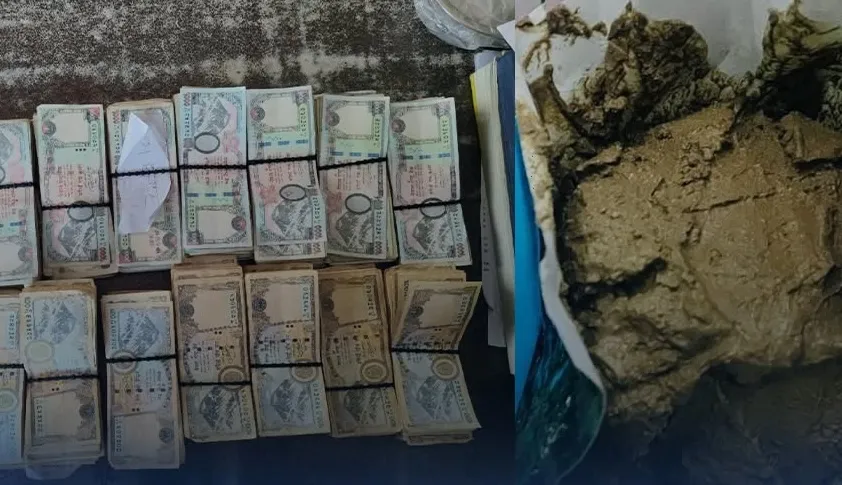
Banke police seized one kilogram of brown sugar over a 15-day period. Recent reports show that hundreds of grams of narcotics have been seized in separate incidents across Banke, though public sources provide limited confirmation of any single large seizure. Two women were arrested in Nepalgunj with 400 grams of brown heroin, while two Indian nationals were detained with narcotics at Sekuwa Corner in Kankai Municipality, Jhapa.
In Kathmandu, the Armed Police Force seized a large quantity of narcotics and detained three people—one Indian national and two Nepalis. In the Dhanusha district of Madhesh Province, police opened fire to arrest an alleged drug trafficker. Meanwhile, in Rupandehi, 46-year-old Iqbal Dewan was arrested at Mangalapur Chowk in possession of brown sugar.
Looking for job?
Click hereThese are only representative cases from the past month involving arrests of individuals allegedly engaged in drug trafficking. Separate operations spanning Jhapa, Siraha, Dhanusha, Dhankuta, Kathmandu, and Rupandehi have resulted in the seizure of large quantities of brown heroin, marijuana, and controlled pharmaceuticals, leading to the arrest of more than a dozen people, including both Nepali and Indian nationals.
Organized trafficking and international transit
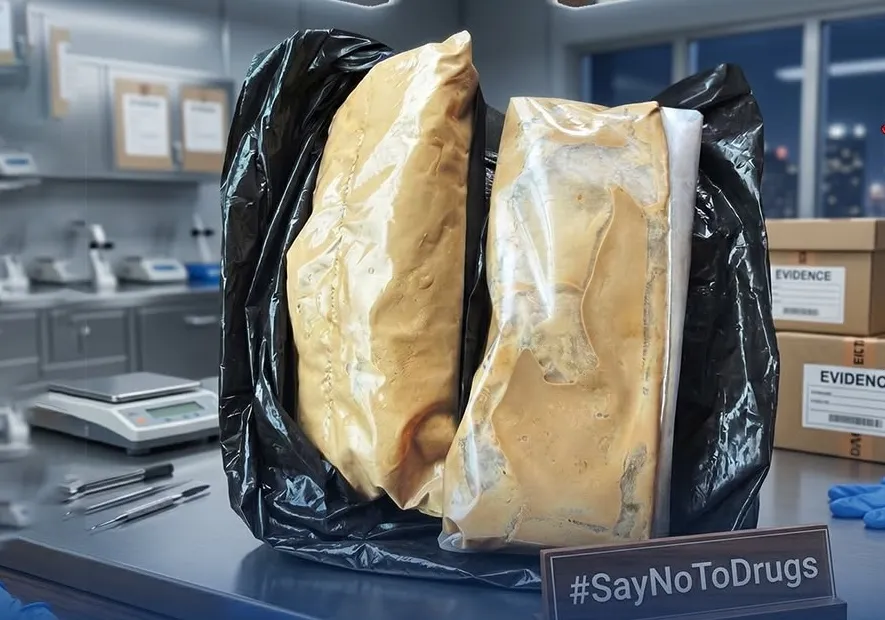
Illegal drug trafficking and trade in Nepal continue to operate through organized networks. According to the Global Organized Crime Index reports for 2023 and 2025, Nepal is increasingly becoming a key transit country, particularly for heroin and cocaine transported from Afghanistan and India toward Hong Kong and East Asia.
Nepal Police data from mid-April through mid-July show that 7,251 absconding defendants across the country were arrested. A significant number of those arrested were allegedly involved in drug trafficking. Police stated that the special campaign targeted defendants convicted by courts of serious crimes—including homicide, narcotics offenses, rape, banking offenses, and fraud—who had remained at large.
The recent operations indicate that police surveillance has tightened against networks seeking to use Nepal as both a transit route and a market for narcotics. The UNODC and regional South Asia analyses have identified South Asia as an important transit region along the southern route for Afghan opiates. They also note that air routes are increasingly being used for cocaine trafficking through new destination and transit points.
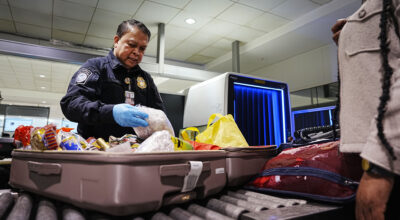
Nepal Police Central Spokesperson Abi Narayan Kafle said security agencies are conducting joint operations to control cross-border movement from districts bordering India, smuggling concealed in fruit and other goods, and drug networks spread across multiple districts.
Narcotics bureau data and air routes
Police operations over the past year have led to seizures of large amounts of several types of narcotics, according to the Narcotics Control Bureau. During fiscal year 2082/83 (mid-July 2023 to mid-July 2024), authorities seized 23 kilograms and 141 grams of brown heroin, 13 kilograms and 347 grams of cocaine, 7 kilograms and 800 grams of white heroin, 43 kilograms of opium and 204 kilograms of marijuana.
The bureau said the estimated international market value of all the seized drugs was about Rs. 857.754 million(approximately $5.68 million USD). The Organized Crime Index and Nepal’s Journal of Drug Control show that cocaine seizures at Tribhuvan International Airport rose from 11.8 kilograms in 2023 to more than 30 kilograms in 2024.
According to the Narcotics Control Bureau, Nepal is increasingly being used not only as a transit route for brown heroin but also for cocaine and white heroin. During the past year, authorities seized 13 kilograms and 347 grams of cocaine and 7 kilograms and 800 grams of white heroin. According to reports, cocaine is mainly brought into Nepal from Latin American countries such as Colombia and Bolivia, routed through African countries including Nigeria and Ethiopia, as well as Doha or Dubai.
Although domestic consumption remains relatively low, Nepal has become an important transit point for India and other countries. In this context, Kathmandu Journal 2026 described Nepal as a “new transit lounge for cocaine smugglers.”
Durga Raj Regmi, spokesperson and information officer at the Narcotics Control Bureau, said marijuana brought from Thailand to Nepal through Tribhuvan International Airport had also been seized. The bureau said it confiscated a total of 13 types of narcotics during the period.
Regmi said illegal drug trafficking is not confined to land routes. On July 15, the arrest of a Colombian woman who arrived in Kathmandu from Colombia via Doha on a Qatar Airways flight with more than 4 kilograms of cocaine revealed that air routes are being used for drug trafficking into Nepal.
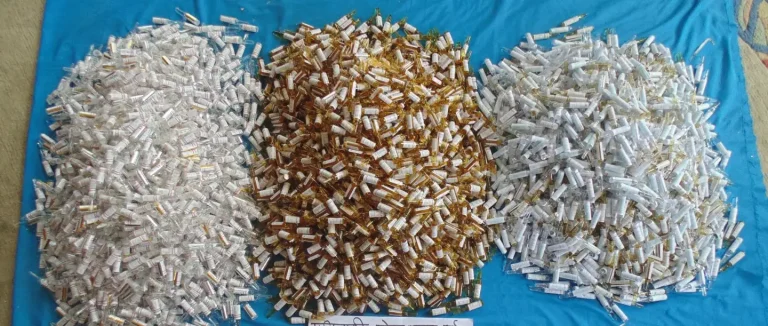
The trade in illegally imported pharmaceutical drugs from border areas is also a growing concern. In a single year, the bureau seized 541,000 tramadol capsules, 34,000 Nitrazepam tablets and 550 grams of amphetamine.
Arrests and legal action
The number of people arrested for drug trafficking increased by 5.55 percent in fiscal year 2082/83 compared with fiscal year 2081/82. The bureau said 1,768 people allegedly involved in narcotics trafficking were arrested over the past year, and 993 cases were filed through government attorneys’ offices.
Of the 1,315 defendants presented before courts, 1,113 were sent to pretrial detention. Nepal’s Narcotic Drugs (Control) Act, 1976 provides for strict punishment for drug-related offenses.
Government Attorney Gokarna Raj Banjade said the law classifies prison terms and fines according to the type and quantity of the substance involved in its production, use, possession, transportation, or sale.
According to Banjade, the personal use of brown heroin, opium, or cocaine can carry a sentence of up to one year in prison, a fine of up to NPR 10,000 (approx. $66 USD), or both. Meanwhile, trafficking or transporting up to 25 grams of heroin, cocaine, or opium may result in five to ten years in prison and fines ranging from NPR 50,000 to NPR 500,000 ($330 to $3,310 USD). Penalties vary depending on the drug and amount involved, with larger quantities carrying significantly heavier sentences.
Public-health impact and impaired drivers
Investigators at the Narcotics Control Bureau stated that the expanding illicit drug network poses a serious public health challenge. Technical assessments suggest that just 1 gram of brown heroin can severely affect the health of up to 10 people; on that basis, 100 grams could potentially harm about 1,000 individuals.
In the past, traffic concerns were primarily focused on drivers operating vehicles under the influence of alcohol. However, police say professional drivers in border areas are now increasingly being caught driving under the influence of narcotics. In the past year, 17 drivers in Rupandehi were arrested after testing positive for illicit drugs.
Pratima Karki, Chief Police Inspector at the Rupandehi District Traffic Police Office, said drivers are now being tested with specialized drug-detection kits to determine whether they are operating under the influence.

Senior physician Dr. Nandu Pathak said drug use gradually weakens individuals mentally and physically, and can ultimately prove fatal. Avoiding drug use and staying away from substance users are the most effective safeguards, he said.
“Cocaine use is a leading cause of heart attacks among young people,” Pathak said, adding that hard drugs can rapidly trigger severe cardiovascular disease. Because drug abuse harms individuals, families, communities, and the nation as a whole, he emphasized that parents must closely monitor their children’s behavior and peer groups.
Awareness efforts and social consequences
Some schools have begun conducting drug-awareness programs on campus. Krishna Prasad Bhusal, principal of Bhaglapur Secondary School in Shuddhodhan Rural Municipality, Rupandehi, said children can be at risk of drug addiction as early as the fifth grade.
Bhusal said the school collaborates with local governments, police, and social organizations—such as the Social Transformation Center—to periodically educate students about the harmful effects of drug use on individuals, families, and society.
Police estimate that if the more than 23 kilograms of brown heroin seized by the bureau over the past year had entered the illicit market, it could have directly threatened the health and lives of over 230,000 individuals. The bureau stated that surveillance along border areas has been increased, special operations are ongoing, and cross-border coordination has been strengthened to curb illegal drug trafficking.

People addicted to narcotics may experience physical, mental, and social changes, including abnormal behavior, isolation, gradual weight loss, declining academic interest, involvement in criminal activities, financial hardship, and deteriorating family and social relationships. The impact is not limited to the individual; it can also drive up crime rates and erode social values and norms.
Causes, history and legal background
According to the Nepal Drug Users Survey 2019 (2076 BS), peer pressure is the primary cause of drug addiction. Other major factors drawing young people toward drugs include curiosity, thrill-seeking, mental stress, family conflict, depression, and academic difficulties.
Prior to 1976 (2033 BS), cannabis products were openly sold and distributed in Nepal. However, after the Narcotic Drugs (Control) Act, 1976 came into force, the production, sale, distribution, and use of such substances were strictly prohibited.
Globally, drug-control efforts gained momentum through United Nations initiatives. The Single Convention on Narcotic Drugs, adopted in 1961 under the UN Economic and Social Council, established a unified international legal framework for narcotics control. Since then, nations worldwide have enacted their own laws and enforcement programs to curb drug trafficking, treat addiction, and raise public awareness.
