





New Congress to Include Record 23 Asian American and Pacific Islander Lawmakers

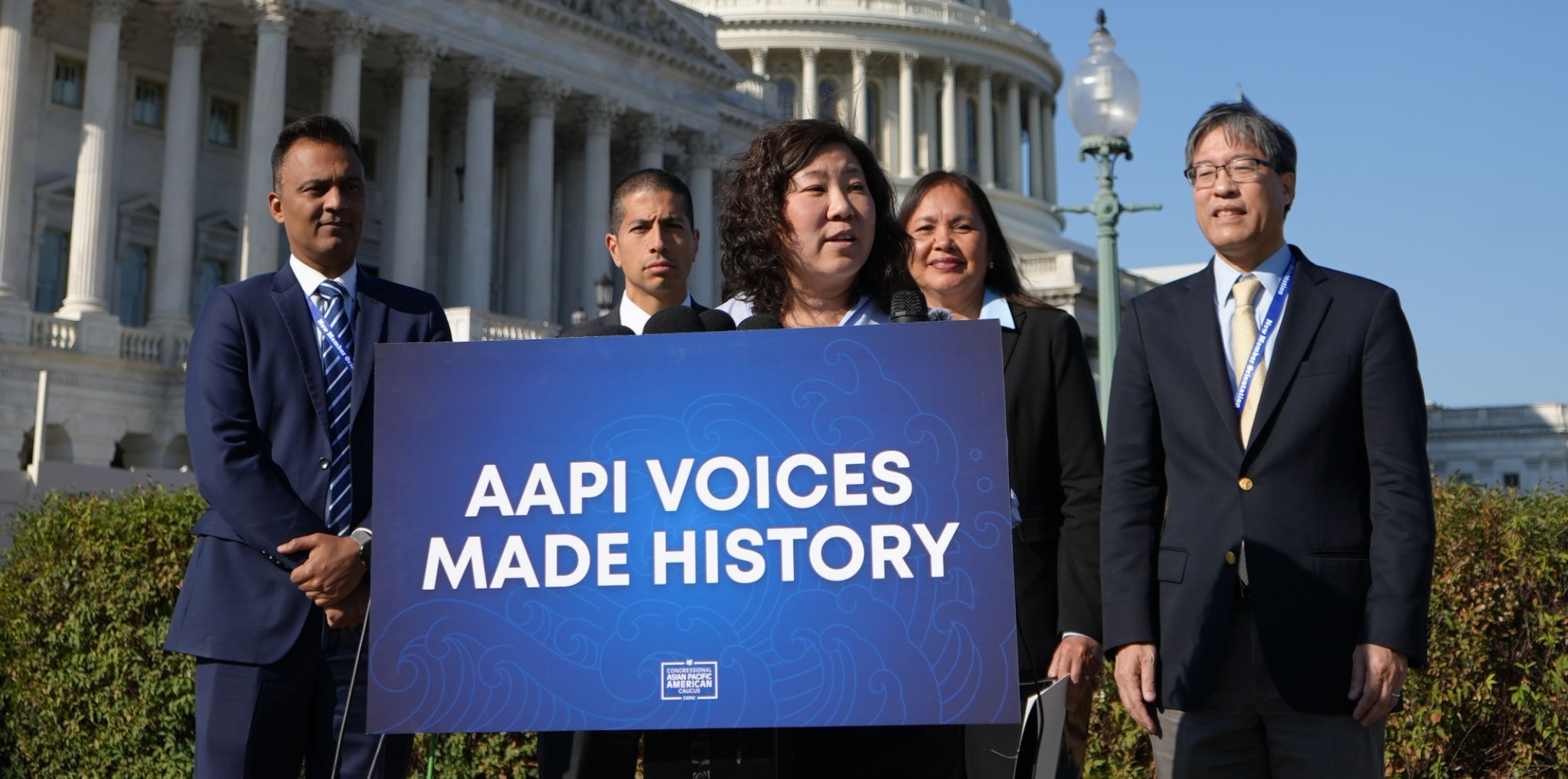
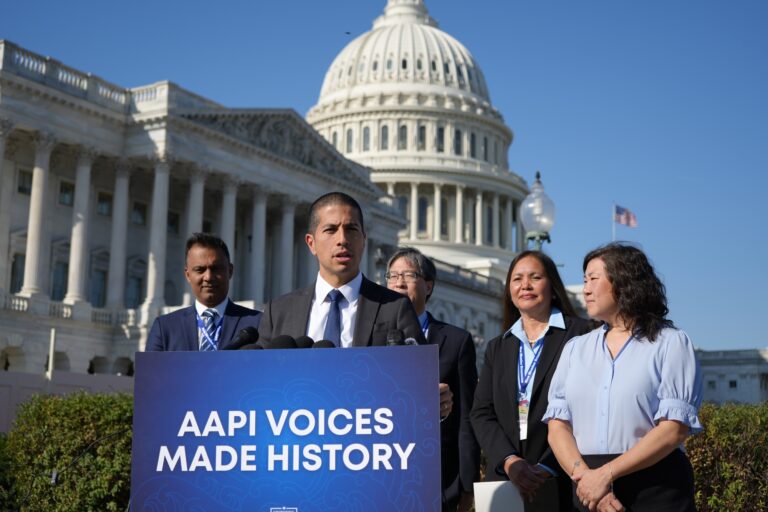
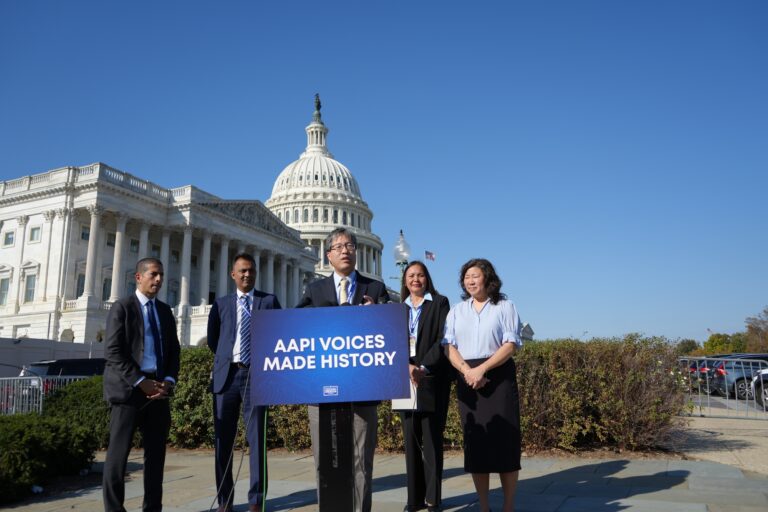
Newly elected members of the Congressional Asian Pacific American Caucus (CAPAC) join caucus Chair Rep. Grace Meng at a news conference in Washington, D.C., where they outlined priorities for the next Congress. CAPAC is expected to include a record 23 Asian American and Pacific Islander (AAPI) members next year. Photo courtesy of the Congressional Asian Pacific American Caucus (CAPAC).
The Congressional Asian Pacific American Caucus welcomed newly elected members of the House on Friday, outlining priorities that include lowering living costs, expanding access to health care and securing more equitable treatment for U.S. territories.
Rep. Grace Meng of New York, the caucus chair, joined incoming lawmakers Alicia Garrido Limtiaco of Guam, Dan Koh of Massachusetts, Richard Pan of California and Amish Shah of Arizona at a news conference. The caucus said it expects to have 23 Asian American and Pacific Islander members of Congress next year, the largest membership in its history.
Looking for job?
Click hereMeng said the election reflected growing political engagement among Asian American, Native Hawaiian and Pacific Islander communities. She said one in eight voters from those communities cast ballots for the first time, with inflation, jobs, the economy and health care costs among their top concerns.
“As we head into this next Congress, CAPAC is laser-focused on delivering affordability and accountability and ensuring AANHPIs can thrive,” Meng said.
Shah, a physician elected to represent Arizona’s 1st Congressional District, said rising health insurance premiums, gaps in coverage and the state’s water crisis require urgent attention.
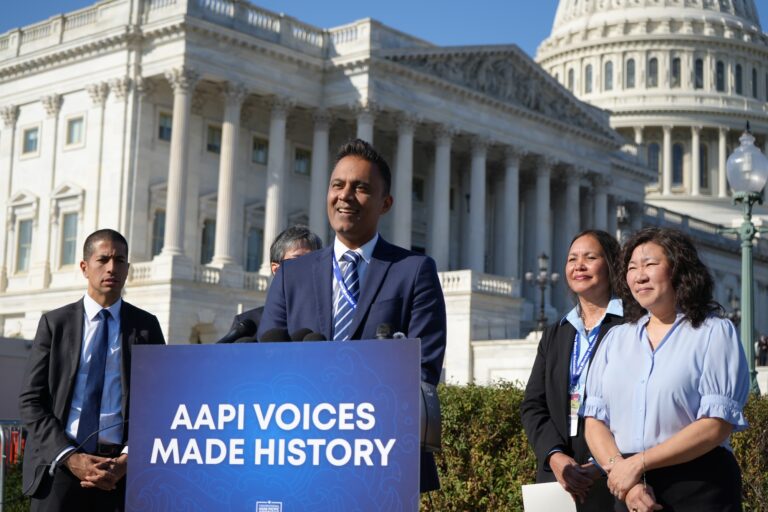
“These problems need urgent attention. And our job as members of Congress is to respond to that call for help,” Shah said. “As we say in the emergency department, stop the hemorrhage.”
Limtiaco, Guam’s delegate-elect, said she would push to extend Supplemental Security Income benefits to eligible residents of the U.S. territory. Guam is excluded from the program, even though eligible residents of the neighboring Northern Mariana Islands can receive benefits, she said.
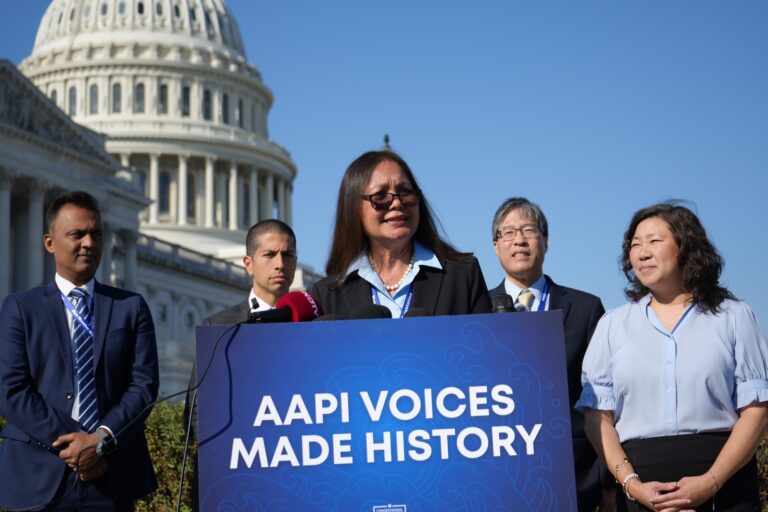
She also called for extending the provisions of the Radiation Exposure Compensation Act to Guam residents exposed to fallout from nuclear testing.
“As Guam’s Delegate, I will fight for Guam’s priorities to ensure federal equity and fair treatment and work alongside other delegates to advance the interests and rights of communities in the territories,” Limtiaco said.
Koh, elected to represent Massachusetts’ 6th Congressional District, criticized the president’s handling of the economy, saying rising costs were making life increasingly difficult, particularly for people of color.
“I look forward to working with Chair Meng and the entire AAPI community to help deliver for our country,” Koh said.
Pan, a physician elected to represent California’s 6th Congressional District, called for addressing rising insurance premiums, protecting access to health care and ensuring the availability of interpreter services. He also criticized the administration’s immigration policies.
“We’ve got to address the cost-of-living crisis. People are struggling, including Asian American families,” Pan said.
The caucus said the incoming lawmakers would make history in several ways. Limtiaco will become the first Chamorro woman to represent Guam in Congress, while Koh will become the first Asian American and the first Arab American to represent Massachusetts.
Pan will be the first Chinese American elected to represent California’s 6th Congressional District, and Shah will be the first South Asian American to represent Arizona in Congress, according to the caucus.
The caucus also recognized Pia Dandiya, who it said will become the first South Asian American to represent Florida in Congress.