






Mamdani Signs Law Giving Nonprofits First Shot at Buying Some NYC Buildings

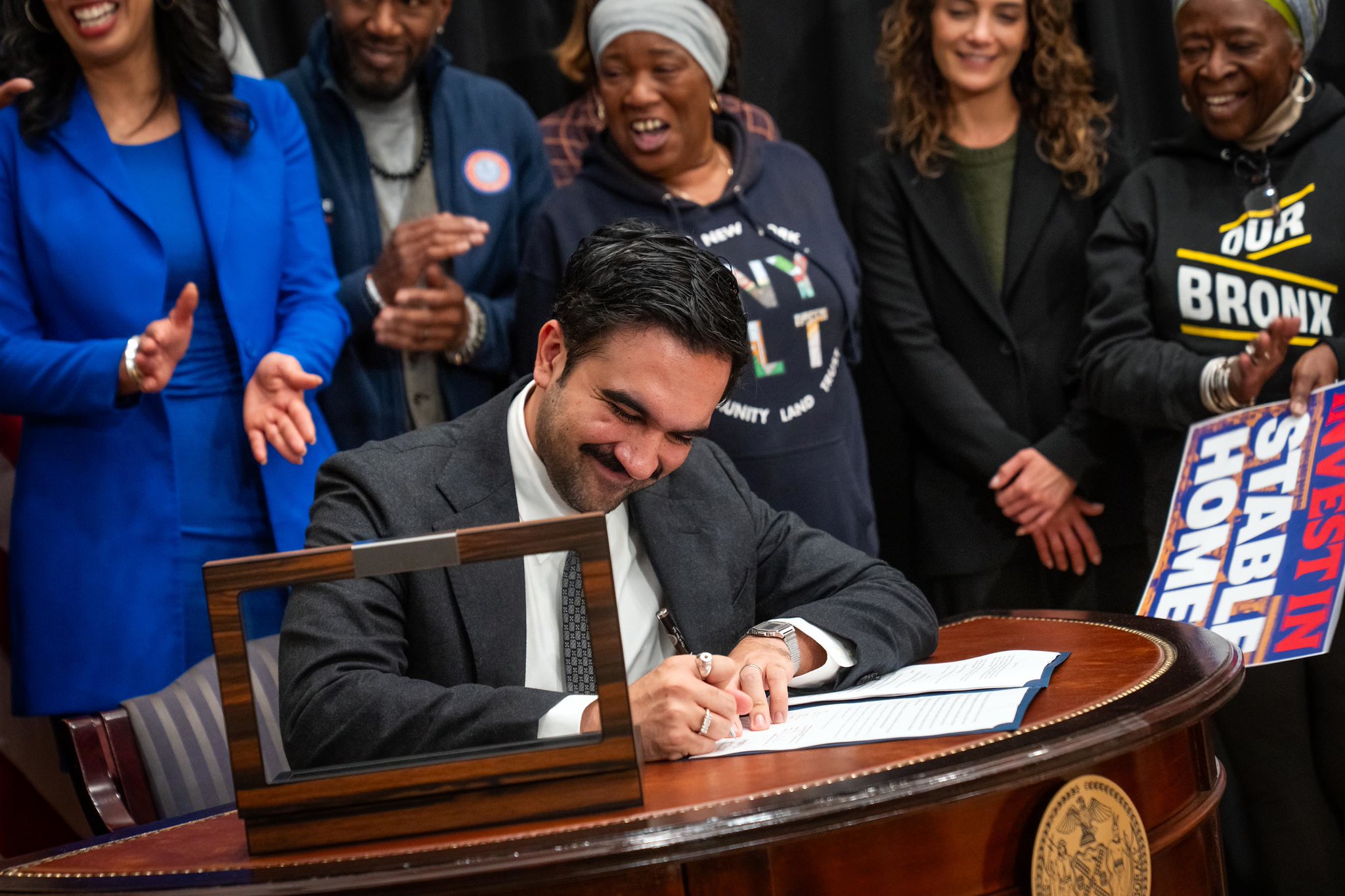
Mayor Zohran Kwame Mamdani signs the Community Opportunity to Purchase Act (COPA), landmark legislation that will give qualified nonprofits and community groups the first opportunity to purchase certain multifamily buildings before they hit the private market. 276 Chestnut St, Brooklyn. Tuesday, November 10, 2026. Credit: Ed Reed/Mayoral Photography Office.
NEW YORK — Mayor Zohran Mamdani on Tuesday signed a law giving qualified nonprofit and community organizations the first opportunity to purchase certain apartment buildings before they are offered on the open market, a move intended to preserve affordable housing and protect tenants from displacement.
The Community Opportunity to Purchase Act, known as COPA, gives eligible organizations, including community land trusts and nonprofit housing groups, an opportunity to make offers on qualifying multifamily properties before private investors can buy them.
The law is intended to address a pattern that housing advocates say has contributed to New York’s affordability crisis: apartment buildings changing hands among investors, while tenants contend with deteriorating conditions, neglected repairs and rising rents.
“When the buildings they call home are sold to for-profit buyers who are just looking to flip the properties or to extract as much rent as possible without making repairs,” Mamdani said, “tenants have been pushed out of affordable homes.”
Under the new law, when an owner of an eligible building decides to sell, qualified organizations must receive notice before the property is offered on the open market. They will have 20 days to notify the owner and the city’s Department of Housing Preservation and Development that they intend to pursue a purchase, followed by 70 days to submit a competitive offer.
If no qualified organization expresses interest within the initial period, or if the owner rejects all offers, the property can be listed on the open market.
The legislation also provides qualified organizations an opportunity to match the highest and best offer from another prospective buyer. If an owner decides not to sell, the process would begin again if the property is put up for sale within the next 12 months.
Mamdani signed the legislation at Chestnut Commons, an affordable housing development operated by Cypress Hills Local Development Corporation in East New York, Brooklyn. He said COPA would give community-based organizations a tool to keep affordable properties in the hands of groups with a long-term stake in their neighborhoods.
The law is part of the administration’s broader housing agenda, which includes a commitment to preserve 200,000 affordable homes over the next decade, in addition to creating another 200,000.
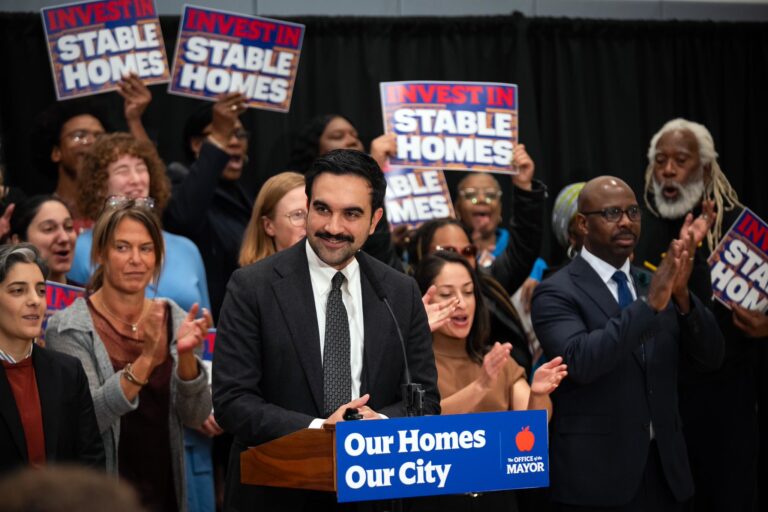
Council Member Sandy Nurse, the bill’s sponsor, described its passage as the culmination of six years of organizing, four legislative introductions and efforts spanning three mayoral administrations. The City Council passed the measure twice, but it was previously vetoed.
“This is the largest opportunity-to-purchase program in the country,” Nurse said.
She said the law could help prevent distressed buildings from passing from one negligent landlord to another, allowing community organizations to make repairs and keep existing tenants in their homes.
The legislation was supported by a coalition of more than 200 tenant, community and affordable housing organizations. Deyanira Del Rio, executive director of the New Economy Project, which helped lead the campaign, said advocates had spent years organizing tenants, holding public meetings and pressing successive administrations to adopt the measure.
The next challenge, she said, would be ensuring that tenants and community organizations understand how to use the law.
For some organizations, the legislation builds on work already underway. Debra Ack, a founding member of the East New York Community Land Trust, described the group’s acquisition of a 20-unit rent-stabilized building at 248 Arlington Avenue in 2024.
The building is undergoing renovations and is expected to become a cooperative in which tenants collectively own and manage the property, while the land trust retains ownership of the land to help ensure permanent affordability.
COPA, Ack said, could make similar acquisitions easier for community organizations and tenants.
Michael Johnson, executive director of Cypress Hills Local Development Corporation, said nonprofits often struggle to compete with investors who can make offers beyond their financial reach. The new law, he said, would give community organizations more time to negotiate before a property enters the broader market.
But having the first opportunity to make an offer does not guarantee that a nonprofit will acquire a building. Johnson said organizations would still need acquisition financing, preservation funding and technical assistance to compete successfully.
Mamdani acknowledged that COPA would not, by itself, resolve the city’s housing crisis. He described it as one part of a broader effort to encourage community ownership and preserve affordable housing.
Deputy Mayor for Housing and Planning Leila Bozorg said the measure would add another tool to the city’s social housing strategy, alongside community land trusts, nonprofit developments and the Public Housing Preservation Trust.
The administration also plans to dedicate more than $2 billion over two years to affordable housing preservation, said Cea Weaver, director of the Mayor’s Office to Protect Tenants.
At the news conference, Mamdani also addressed concerns about the city’s planned tax lien sale, which can put homeowners at risk of foreclosure over unpaid property taxes and other charges. He said the administration had suspended the sale for six months to investigate its effects and was working toward establishing a city land bank.
He said the city would pursue reforms to ensure homeowners receive adequate notice and have opportunities to enter payment plans before their properties are affected.
The mayor said the goal was to protect homeowners, particularly those who have held properties for generations, while allowing the city to collect revenue needed to fund public services.