


Queens Borough President Donovan Richards Hosts Diwali Celebration, Honors Six Community Leaders

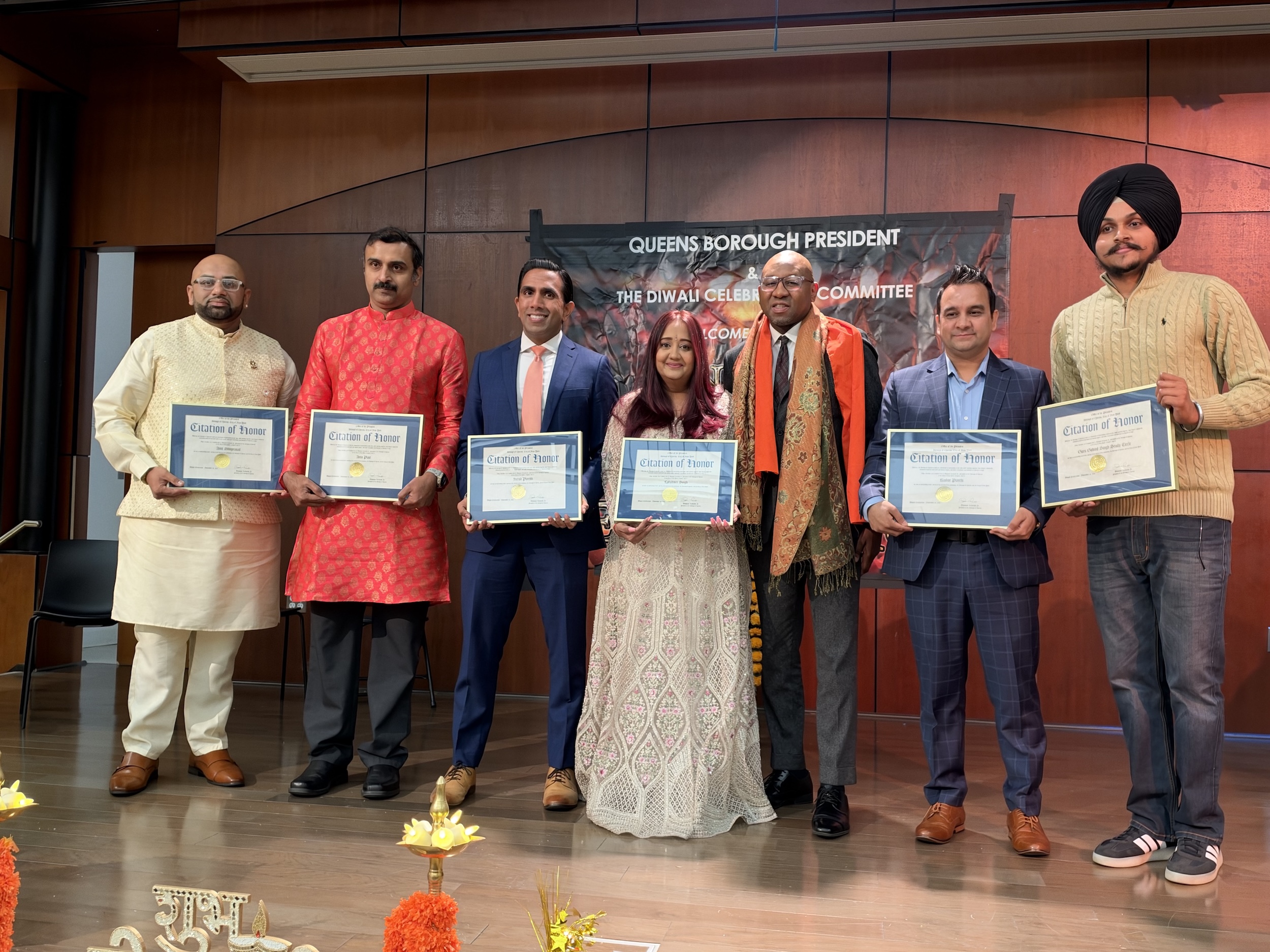
Queens Borough President Donovan Richards poses with the six honorees at the borough’s annual Diwali celebration at Queens Borough Hall on Nov. 10, 2026. The honorees were recognized for their contributions to their communities and public service. Photo: Amit Pratap Shah for NepYork.
NEW YORK — Queens Borough President Donovan Richards brought together elected officials, community leaders, cultural performers and residents Tuesday evening to celebrate Diwali, using the annual gathering to highlight the borough’s diversity and the importance of ensuring that immigrant and minority communities feel represented and included.
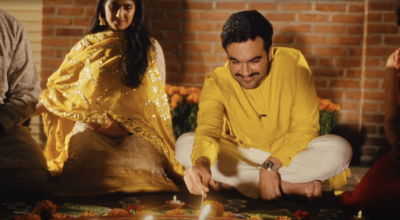
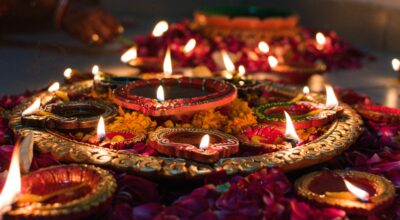
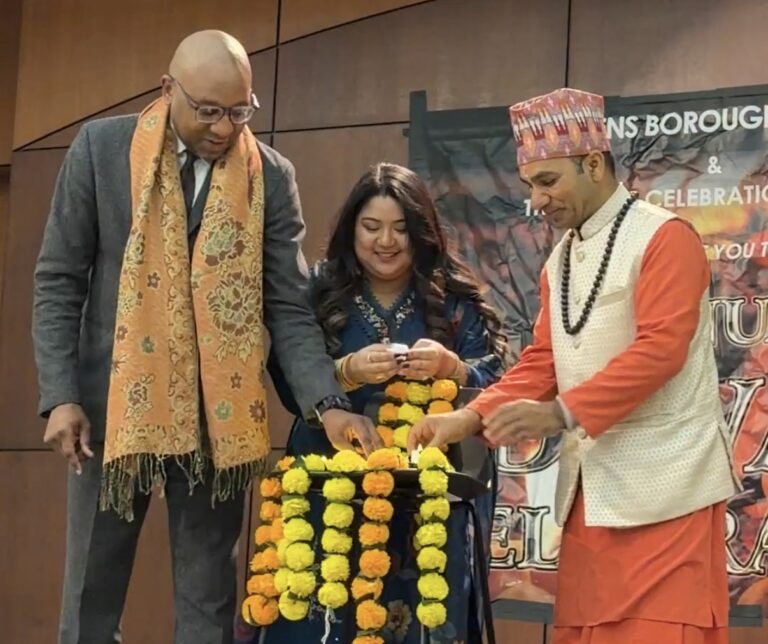
The celebration, hosted by the Office of the Queens Borough President at Queens Borough Hall on Nov. 10, featured traditional prayers, the ceremonial lighting of diyas, cultural performances and recognition of six individuals and organizations for their contributions to the community.
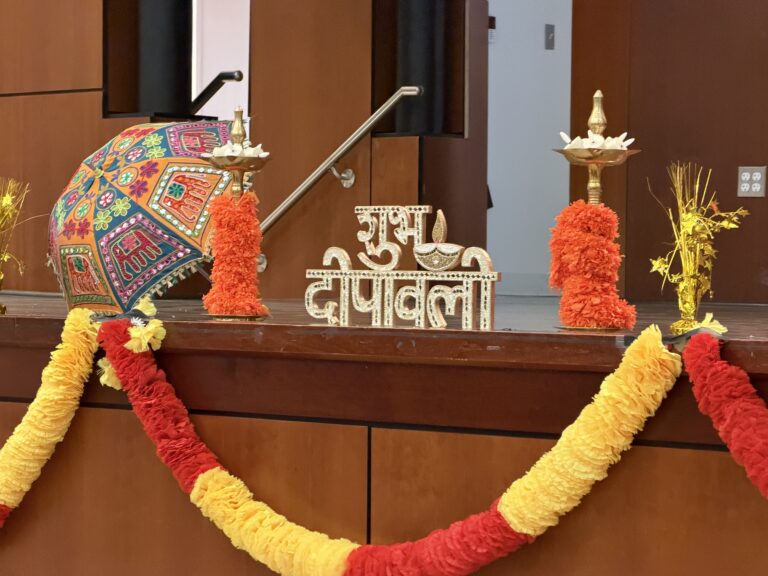
Richards described Diwali as more than a religious or cultural observance, saying the festival’s message of light overcoming darkness offered a reminder of the values that bring Queens residents together across differences in faith, background and tradition.
“This is what diversity looks like in our borough,” Richards told the gathering, encouraging residents to continue celebrating one another’s cultural and religious occasions.
He said Diwali brings families and communities together and reflects something distinctive about Queens: a borough where residents make an effort to recognize and respect traditions beyond their own.
“In this borough, we celebrate each other’s holidays, no matter our faith or our background,” Richards said. “We respect each other’s cultures and traditions. We take the time to learn about others’ customs and histories.”
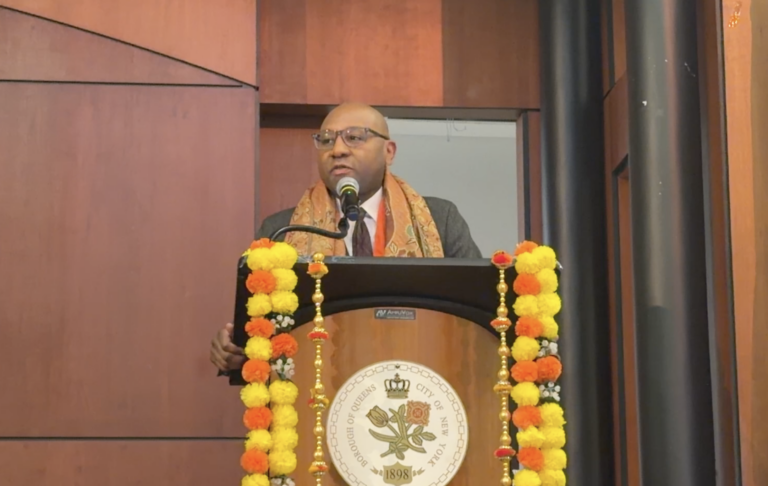
Richards also highlighted the significance of Diwali becoming a New York City public school holiday, an achievement that followed years of advocacy by South Asian communities and their supporters.
“No family should ever have to choose between their education and their faith,” he said, crediting community advocates for helping secure the holiday.
Although Diwali fell on a Sunday this year, Richards said its recognition as a school holiday remained an important step toward religious inclusion and cultural understanding.
Richards Calls for Continued Defense of Diversity
Richards connected Diwali’s symbolism to the broader political climate, referring to the recent election results and the public’s desire for change in Washington.
Drawing on the festival’s traditional themes of the victory of light over darkness, knowledge over ignorance and good over evil, he urged residents to remain engaged in defending diversity and inclusion.
“Just like Diwali is the victory of light over darkness, knowledge over ignorance, and good over evil, we must continue to make sure light overshines darkness,” he said.
“And my friends, we are the light. Believe it or not, we are the knowledge. We are the good.”
Richards said diversity, equity and inclusion were worth defending, describing them as central to the principles on which the United States was founded.
The borough president also emphasized the contributions of immigrants, identifying himself as the son of an immigrant.
“We know that immigrants are what make this nation great in this world,” he said.
Richards called on residents to continue living peacefully alongside one another, strengthening Queens and empowering communities to help shape the borough and the world they want to see.
A Nepali American Perspective on Belonging
For Shreeya Tuladhar, the evening carried a personal significance beyond the celebration itself.
A 1.5-generation Nepali American, Tuladhar serves as executive director of the Minority Empowerment Network, a South Asian mental health organization; director of youth initiatives for the World Newah Organization’s USA chapter; and an advisory council member representing New York’s 30th Assembly District.
As master of ceremonies, Tuladhar reflected on the experience of growing up between cultures, describing how cultural differences could sometimes make young people feel invisible even when they were physically present in a community.
She recalled attending school during Diwali with a red tika on her forehead and feeling that others did not understand the significance of the occasion.
For a long time, she said, she struggled with a sense of invisibility.
“I understand why I would go to school with a red dot in my head during Diwali, right?” she said, recalling her childhood experience.
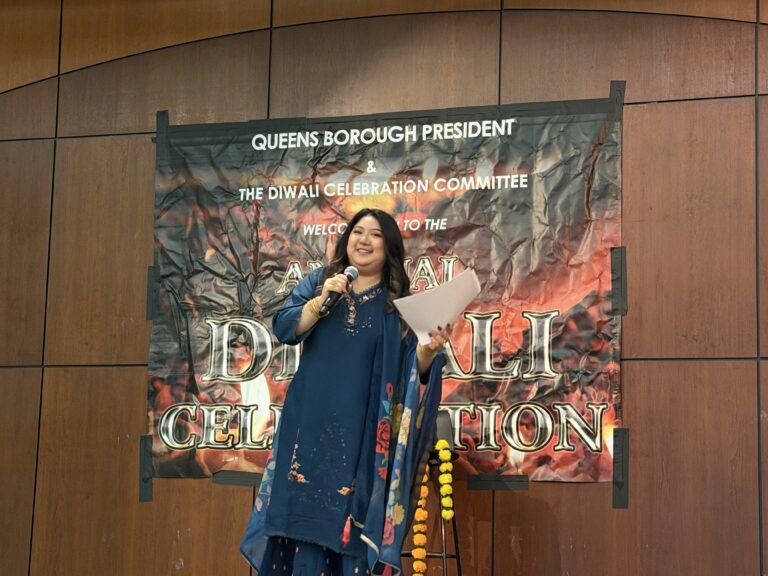
She described the feeling of being in a room without feeling that one belonged, having a voice without feeling heard, and carrying an entire culture and history that people around her did not understand.
Tuladhar said she shared the experience because she knew it was not unique to her. Others in the room might have experienced similar feelings of cultural isolation.
“Being in a room but not feeling like you belong there. Feeling like you have a voice but not feeling heard,” she said. “And carrying an entire culture and history that no one around you seems to understand.”
Events like Diwali, she added, give smaller communities the visibility and representation they deserve in a large and diverse city.
She thanked Richards and his staff for their commitment to organizing the celebration and creating opportunities for communities to share their cultures.
Proud to call Queens home, Tuladhar described it as the best borough in New York City, saying its diversity and welcoming atmosphere made it especially meaningful to immigrant families.
Weprin Recalls Decades of Advocacy for Diwali Recognition
State Assemblymember David Weprin, who represents the 24th Assembly District, used his remarks to reflect on his longstanding efforts to secure official recognition for Diwali in New York City, dating back to his years in the City Council.
Weprin recalled his early advocacy for suspending alternate-side parking regulations on Diwali, an accommodation that allowed families observing the festival to avoid parking restrictions.
After joining the City Council in 2002, Weprin and then-Councilmember John Liu co-sponsored legislation to suspend alternate-side parking rules for Diwali. The effort culminated in the passage of Local Law 103 of 2005, introduced as Int. 0420-2004, which added the day of Lakshmi Puja, the main day of Diwali, to the city’s annual list of alternate-side parking holidays.
The legislation was one of the early municipal recognitions of the festival in New York City. Weprin later described the parking measure as an important milestone in a broader effort to secure recognition for Diwali.
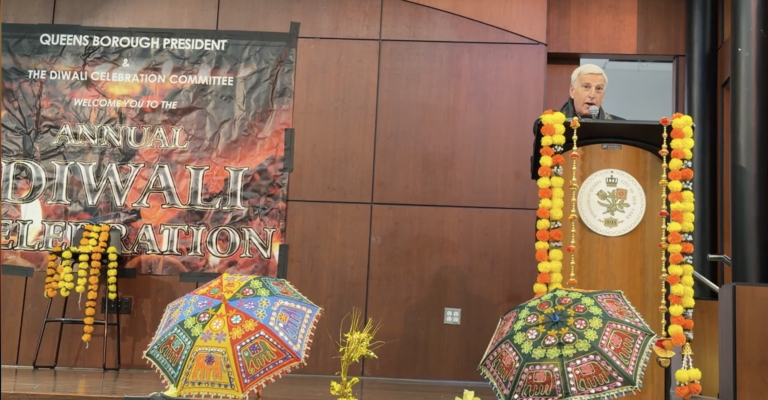
His advocacy continued after he moved to the State Assembly. Weprin co-sponsored state legislation supporting the designation of Diwali as a New York City public school holiday. The measure, sponsored by Assemblymember Jenifer Rajkumar, passed the Legislature and was signed into law by Gov. Kathy Hochul on Nov. 14, 2023.
At Tuesday’s celebration, Weprin praised Richards for continuing to recognize Diwali and other cultural occasions through annual gatherings in Queens, which he described as the world’s most diverse borough.
He said the school holiday was particularly important because children should not have to choose between their religious traditions and their education.
Weprin also acknowledged that Diwali fell on a Sunday this year, meaning students did not receive an additional weekday off, but emphasized the importance of making the festival’s meaning known to people beyond the communities that celebrate it.
“It is very important for people that don’t celebrate Diwali to see and learn about the meaning of Diwali,” he said.
Weprin described the festival as a celebration of values that extend beyond religious boundaries, including faith, family, service, cooperation and community.
“Diwali teaches us a profound and timeless truth that light will always overcome darkness, hope will overcome despair, and goodness will always triumph over evil,” Weprin said.
“In a world that can often seem divided, Diwali reminds us that our greatest strength is not what makes us different, but it’s what makes us together.”
He also highlighted the contributions of Hindu and Indian American communities through education, public service, generosity and faith, saying those contributions had strengthened the nation.
Prayers Extend Diwali Wishes Beyond One Community
The evening began with an invocation by Pandit Uddab Shastri, who offered traditional Sanskrit prayers invoking peace, health, prosperity and well-being.
Among the prayers he recited was the widely known Sanskrit mantra, “Sarve Bhavantu Sukhinah,” a wish that all people be happy, healthy and free from suffering.
Sashtri explained the meaning of the prayer to the audience, emphasizing that its message was not limited to one individual, religion or community.
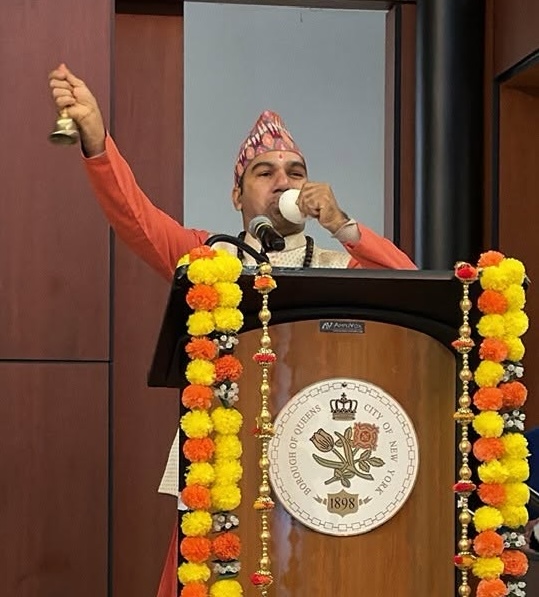
Pandit Uddab Shastri blows a shankha (conch shell) and plays traditional ritual instruments during the invocation at the Queens Borough President’s annual Diwali celebration at Queens Borough Hall on Nov. 10, 2026. Photo: Amit Pratap Shah for NepYork.
“May everyone be happy. May everyone be healthy and free from illness. May everyone see what is good, and may no one suffer,” he explained.
He described the mantra as a prayer for peace and well-being throughout the world and expressed hope that Diwali would bring happiness and peace to everyone.
“May this Diwali bring peace and happiness in the world,” he said.
The invocation reinforced the broader message of the celebration: that the festival of lights is also an occasion to wish for the well-being of people beyond one’s own community.
Six Recognized for Contributions to Queens Communities
A central part of the celebration was the recognition of six individuals and organizations for their leadership, professional contributions and service to Queens communities.
The honorees included Kishor Panthi, founder and editor-in-chief of Khasokhas and NepYork, recognized for amplifying the stories, experiences and achievements of Nepali American communities across the United States; Amit Shivprasad, chairperson of the Land Use and Environmental Committee of Community Board 12; Anto Paul, a health nurse with Catholic Health Services of Long Island and treasurer of the Indian Nurses Association of New York; and Hersh Parekh, deputy chief of intergovernmental affairs at the Port Authority of New York and New Jersey.
Also recognized were Lakshmee Singh, a talk show host, actress and public speaker who organizes the Diwali Motorcade and hosts Let’s Talk with Lakshmee, and the Guru Gobind Singh Study Circle for its educational work with young people.
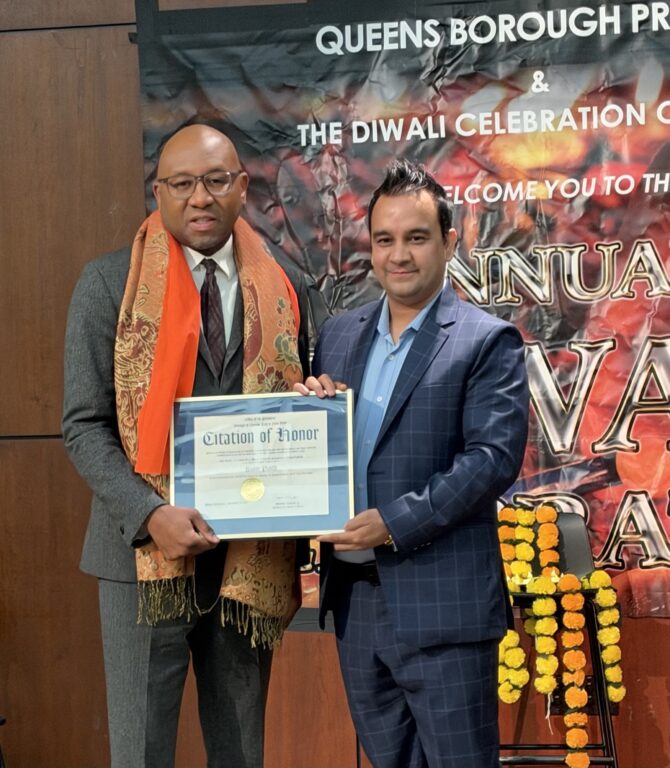
Introducing Panthi, the master of ceremonies described him as the founder and editor-in-chief of two major Nepali American journalism platforms.
“Through his journalism, he has spent years amplifying the stories, experiences and achievements of Nepali American communities across the United States,” the introduction said.
His work, the introduction added, has helped create platforms where community members can stay informed and reinforced the importance of ensuring that every community has an opportunity to be heard.
“His work reminds us that visibility matters and every community deserves to have their voice heard,” the introduction said.
Performances Draw on South Asian Traditions
The program also featured performances reflecting the range of artistic traditions associated with Diwali and South Asian culture.
The Aurobindo Dance Troupe presented a dance and storytelling performance exploring different Diwali traditions and their significance.
Randy “Recklez” Ramdin performed a Diwali medley, while the Tandavas Dance Group presented “From Darkness to Light,” combining Indian classical, Bollywood and folk dance.
Neela Dance Academy also performed a cultural dance, and India Home contributed a musical performance commemorating the festival.
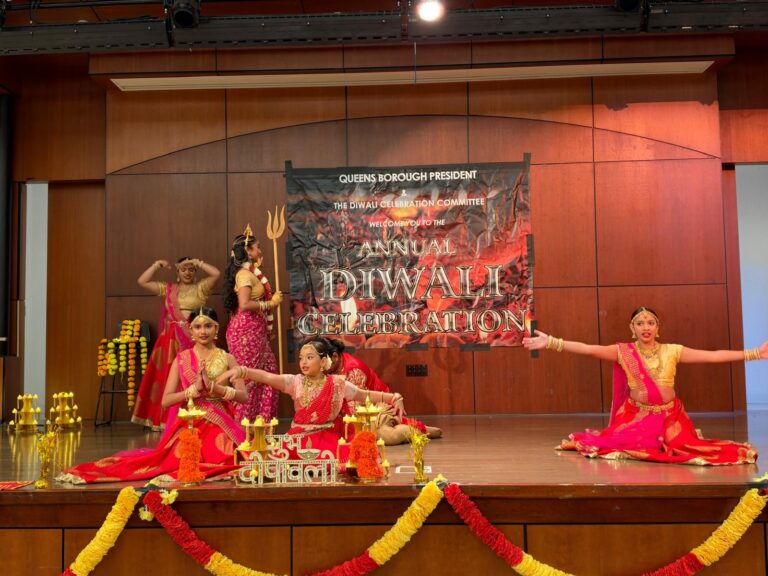
Artists perform traditional dances during the Queens Borough President’s annual Diwali celebration at Queens Borough Hall on Nov. 10, 2026. Photo: Urgen Sherpa for NepYork.
Representatives of supporting organizations also addressed the gathering, including Dunesh Kaur of LiveOnNY, Dr. Mariam Singh of the NYPD Desi Society and Rohan Naraine of Chhaya CDC.
The celebration brought together people from different backgrounds around a shared message of cultural understanding, inclusion and community service.
For Tuladhar, that message could be understood through the image of a single diya.
A diya does not have to illuminate the entire world, she told the audience. It only needs to make the spaces around it a little brighter.
Looking around the room, she said, she saw people doing exactly that by showing up for their communities.