A new U.S. Citizenship and Immigration Services (USCIS) policy memo that could expand the use of overseas consular processing for green card applicants is raising concerns among Nepali immigrants who rely on adjusting their status from within the United States. However, federal immigration data suggests that the impact may vary sharply depending on the immigration category, with Nepali asylees appearing largely protected from the policy shift.
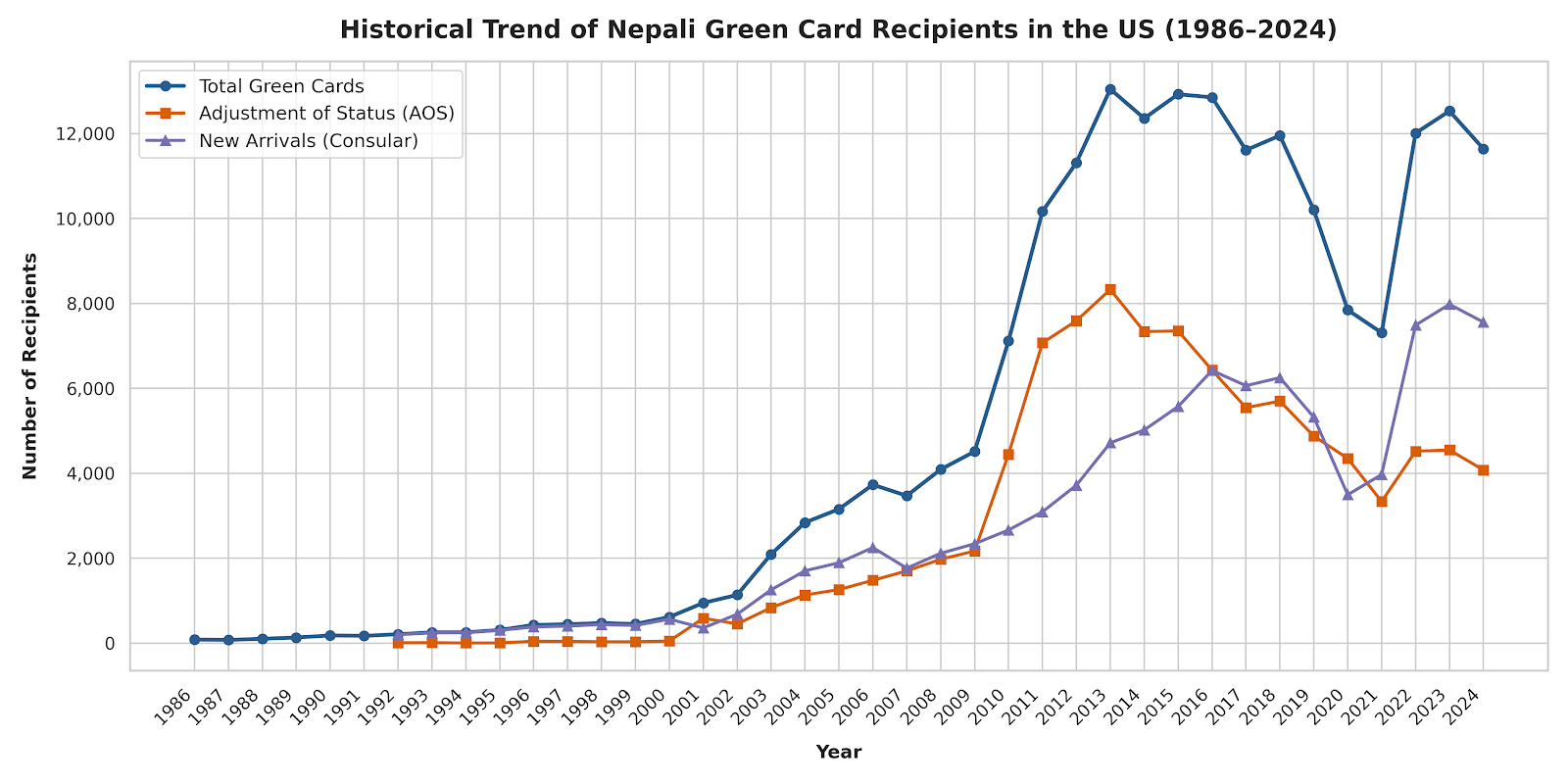
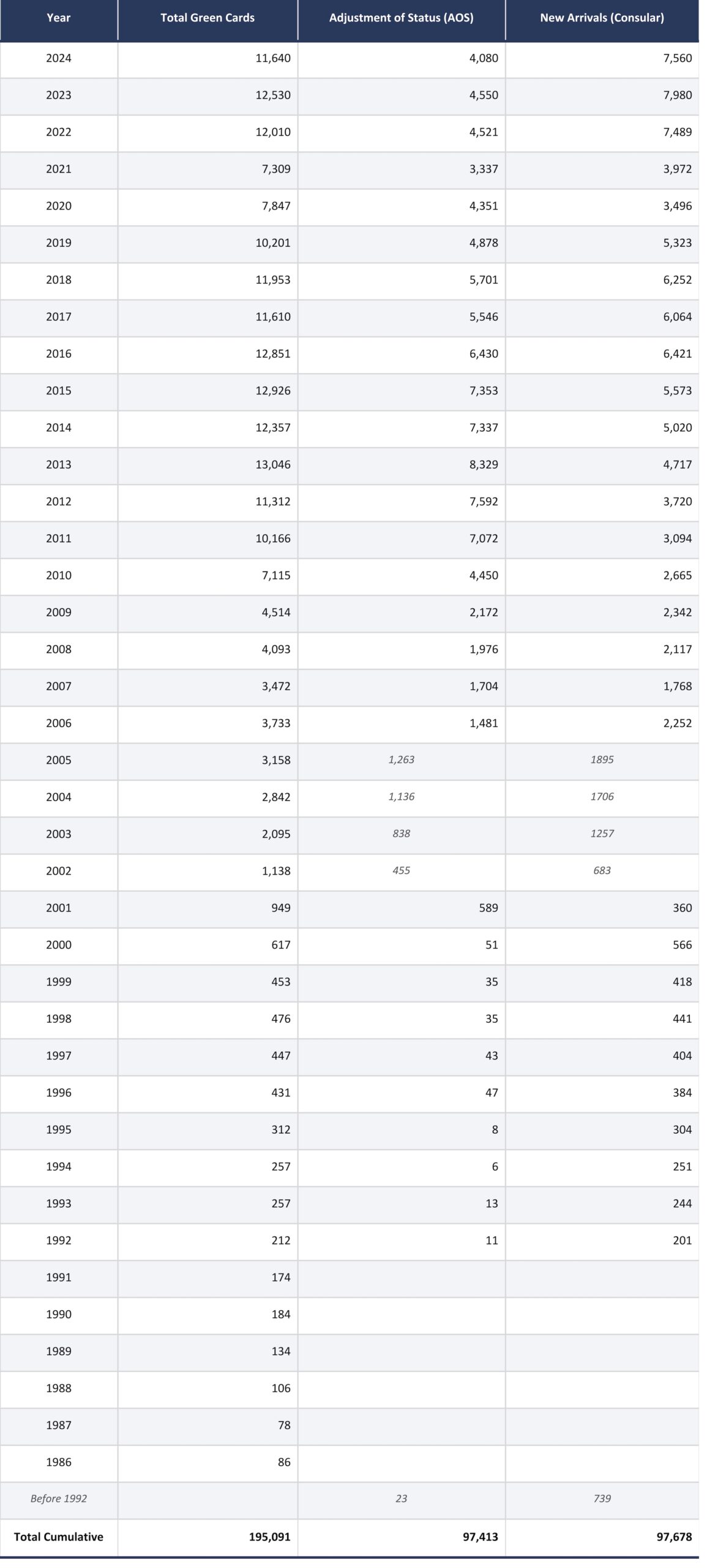
Data from the Department of Homeland Security, compiled by NepYork, shows that Nepalis have heavily depended on “adjustment of status” — the process of applying for permanent residency while already in the United States. Between 1986 and 2024, Nepalis received 97,413 green cards through adjustment of status, nearly matching the 97,678 immigrant visas issued through consular processing abroad during the same period. Combined, the two pathways accounted for 195,091 green cards issued to Nepali nationals over nearly four decades.
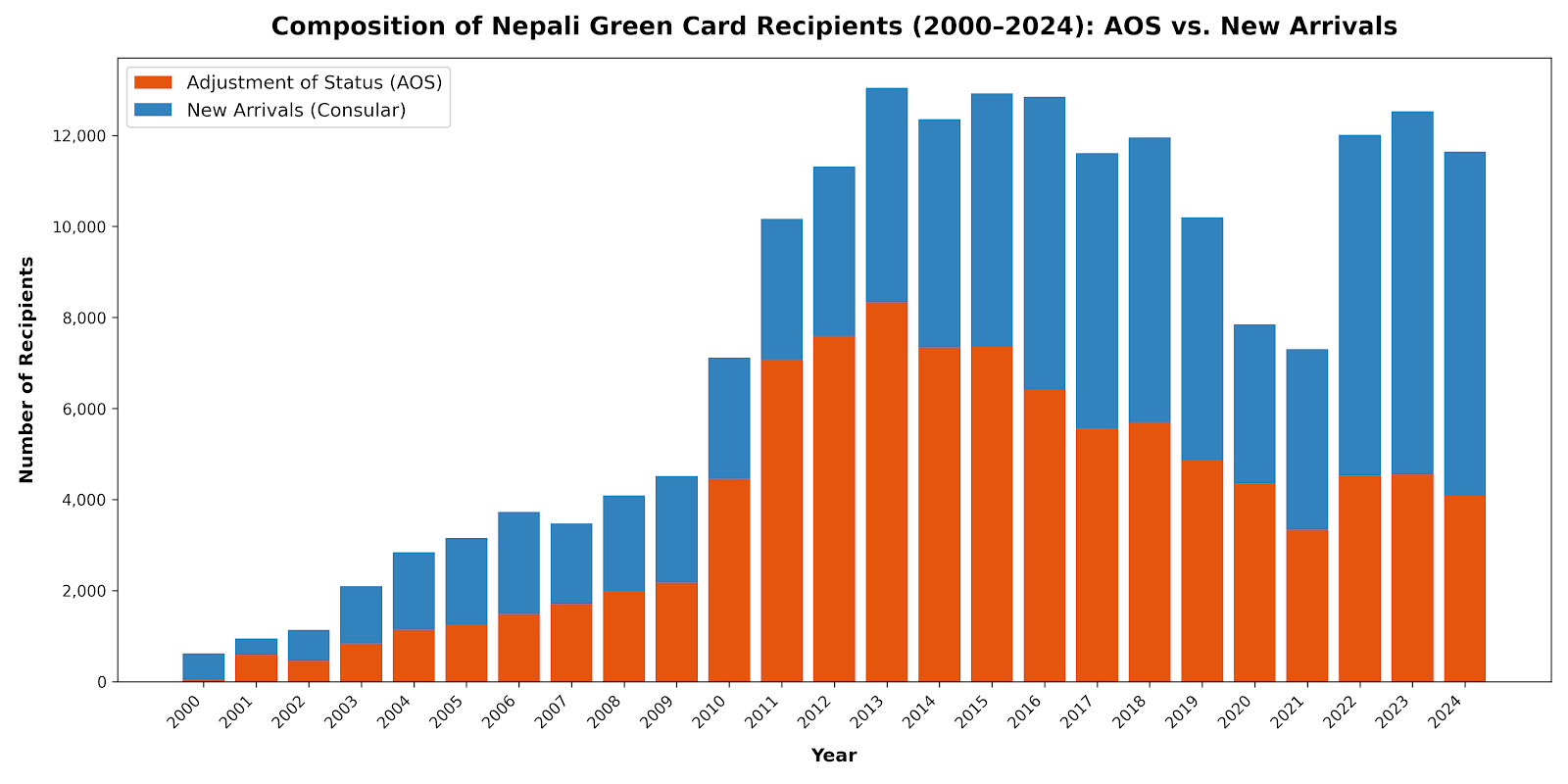
The trend has continued in recent years. From 2020 through 2023, U.S. immigration authorities approved 16,759 adjustment of status applications for Nepalis: 4,351 in 2020; 3,337 in 2021; 4,521 in 2022; and 4,550 in 2023. In 2024, an additional 4,080 Nepalis adjusted status inside the United States, while 7,560 entered as new immigrants through consular processing.
New York-based immigration attorney Keshab Raj Seadie said the new USCIS policy memo creates a clearer distinction between immigrants who may continue adjusting status in the United States and those who could be forced to complete the process abroad. Seadie noted that refugees and asylees remain eligible to apply for adjustment of status through Form I-485 after receiving asylum approval. Applicants under the Violence Against Women Act (VAWA), including abused spouses and children, are also expected to remain protected, he said.
Asylum-based adjustments represented a significant portion of recent Nepali adjustment cases. Between 2020 and 2023, asylees accounted for 4,136 of the 16,759 total adjustments, or about 25%. Annual figures show asylum-based Nepali adjustments declining from 1,616 in 2020 to 518 in 2021, before rising to 1,262 in 2022 and falling to 740 in 2023. Because asylum claims are based on a fear of persecution in a person’s home country, asylees are generally shielded from policies that would require applicants to return abroad for consular interviews.
However, Seadie warned that immigrants who entered the United States on nonimmigrant visas — including B-1/B-2 visitor visas, F-1 student visas, J-1 exchange visas, H-2A and H-2B work visas, TN visas, and E-3 visas — could face increased restrictions if they attempt to pursue permanent residency from inside the country. He said the administration appears to be taking a stricter view toward applicants who entered on visas requiring nonimmigrant intent. Filing for a green card from within the United States could potentially create immigration complications or jeopardize underlying visa status, he added.
Seadie also mentioned that even some immigrants in traditionally dual-intent visa categories, such as H-1B and L-1 visa holders, may increasingly be directed toward consular processing unless they qualify for extraordinary exceptions. Consular processing could significantly lengthen wait times for applicants already facing immigration backlogs. After labor certification and I-140 approval, applicants must still wait for visa priority dates to become current before proceeding through the National Visa Center and overseas interviews.
For many Nepali immigrants who have already spent years navigating the immigration system, the policy shift threatens to add new uncertainty to the final stages of obtaining permanent residency. Historically, adjustment of status has played a critical role in the Nepali immigrant community. The number of in-country green card approvals peaked at 8,329 in 2013, following 7,592 approvals in 2012. Another major increase came in 2015, when 7,353 Nepalis adjusted status inside the United States.
Nepali Green Card Recipients in the United States
Historical Breakdown: Total Green Cards vs. Adjustment of Status

Kishor Panthi
View More PostsKishor Panthi is the founder and editor-in-chief of Khasokhas and NepYork. He is the author of three books, “Kampan,” "UNTRANSLATABLE" and “Zero Mile.” He writes about social issues, immigration, and politics.