More than half of Nepali nationals deported from the United States in the first nine months of 2025 came from districts in western Nepal heavily affected by the Maoist insurgency, according to a report released by Nepal’s National Human Rights Commission. The report highlighted that 57% of deportees came from five former conflict zones: Dang, Rukum West, Rukum East, Rolpa and Salyan.
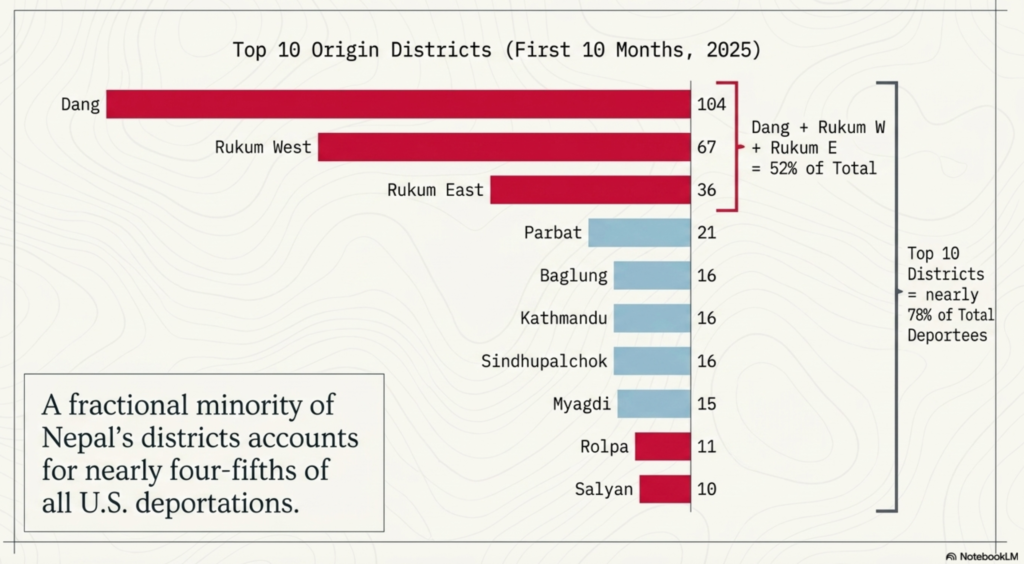
The commission’s 2026 national report on anti-trafficking rights says 52% of the Nepalis deported from the U.S. in January through September 2025 were from Dang, Rukum West and Rukum East. Those three districts, along with Rolpa and Salyan, were among the areas most affected by Nepal’s 1996-2006 Maoist armed conflict, which turned parts of western Nepal into insurgency strongholds.
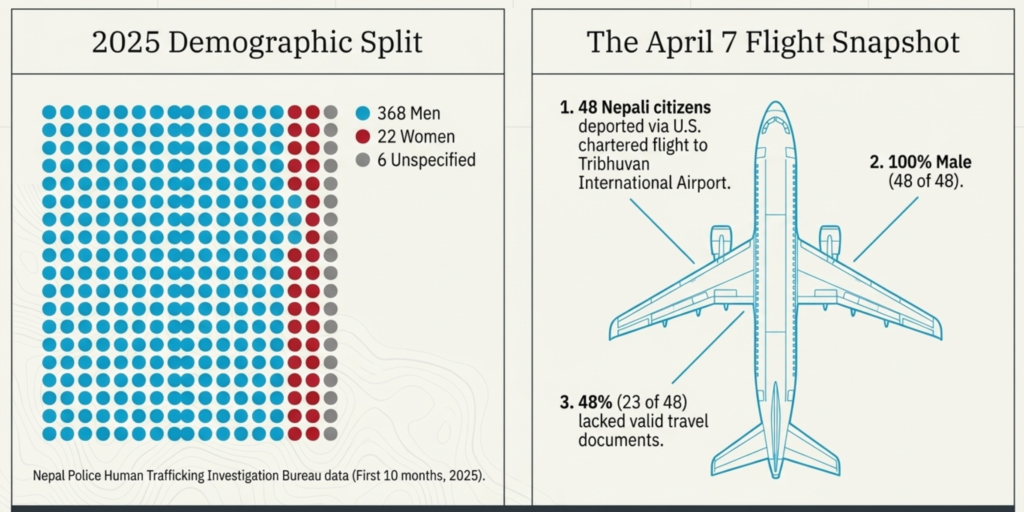
The report said 396 Nepali citizens were deported from the United States during the first 10 months of 2025, according to figures from Nepal Police’s Human Trafficking Investigation Bureau. Of them, 368 were men and 22 were women, the bureau’s data showed.
Dang topped the list with 104 deportees in that period. Rukum West had 67, Rukum East 36, Parbat 21, Sindhupalchok 16, Myagdi 15, Baglung 16, Kathmandu 16, Rolpa 11 and Salyan 10. Another 88 deportees came from other districts. Together, the 10 highest-origin districts accounted for nearly 78% of all deportees, while the top three districts alone made up 52%, according to the report.
The commission said the pattern may reflect long-running migration networks from the conflict-era districts, where many families were displaced, moved for work or later followed social and family ties abroad. Dang and the two Rukum districts also have deep links to the Maoist insurgency, which helped shape migration and recruitment patterns in the region.
The report also showed a sharp rise in deportations in recent years. It said six Nepalis were deported from the U.S. in 2022, 19 in 2023 and 139 in 2024.
Separate reporting shows the pace accelerated further under President Donald Trump’s second term. Since Trump’s second inauguration in January 2025, more than 800 Nepalis have been deported from the U.S., according to recent Nepali media reports and immigration figures. In the first two months of 2026 alone, 231 Nepalis were deported, including 130 in February and 101 in January.
On April 7, U.S. authorities deported 48 Nepali citizens on a chartered flight to Tribhuvan International Airport. All 48 were men, and immigration sources said 23 of them did not have valid travel documents.
West Nepal’s Dang, Rukum and Rolpa districts were among the strongest Maoist bases during the insurgency, which reshaped local livelihoods, displacement patterns and migration routes. That history is relevant because many migrant-smuggling and labor-migration networks later spread through the same communities, creating pathways that have continued to affect departures to the U.S. and elsewhere.

Suraj Ghimire
View More PostsSuraj Ghimire is a Nepali journalist based in Kathmandu. He focuses on political, social, migration, and international issues. He has also worked with various national television networks in Nepal.