
On Saturday, two musical events featuring Nepali music were held simultaneously in Queens, New York, and both venues were packed with enthusiastic audiences. At the Melrose Ballroom, a large crowd, mostly young fans, gathered to enjoy performances by singer Purna Rai.
Meanwhile, at Gulshan Terrace in Queens, a diverse audience of all ages, from elderly to youth, came together to listen to popular Nepali singers Badri Pangeni, Pratap Das, Eleena Chauhan, and Kala Lamsal.The performances by Badri Pangeni, Pratap Das, Eleena Chauhan, and Kala Lamsal kept the audience engaged and dancing from the start, with the vibrant atmosphere continuing well past midnight.

This event, part of the “Now Sings America” series, featured both new and classic songs, delighting New York’s Nepali community. The program was coordinated by singer Nisha Sunar and hosted by singers Bimal Dangi and Sangeeta Thapa Magar. Organized by Fly Nepa Travels, the event is part of a planned tour across over 18 locations in the United States, according to Fly Nepa Travels’ Binod Adhikari.

The event also saw the participation of renowned Nepali singer Sapana Shree and New York-based artist Basanti Rai, along with other local Nepali performers. The atmosphere was electrified by performances, including a dance by world record-breaker Parker Dinesh Sunar and a closing song by Sapana Shree, making the night unforgettable for attendees.

Fly Nepa Travels has been organizing various events in the United States since last year. In the previous year, under the “Now Laughs America” series, Nepali comedians were brought to the U.S. for performances. Following that, programs like “Now Dances America” and “Now Listens America” were also held, showcasing a range of Nepali talent.

According to the U.S. Department of State’s Bureau of Consular Affairs, in fiscal year 2024, 67 Nepali individuals received P-category visas for performances, a significant increase compared to previous years. In fiscal year 2023, only 13 Nepalis received P-category visas, while in 2022, the number was 7. No P-category visas were issued to Nepalis in 2021, and only one was issued in 2020, largely due to the COVID-19 pandemic, which halted Nepali artists’ programs in the U.S. during those years.

In contrast, 14 Nepalis received P-category visas in 2019, none in 2018, 42 in 2017, and 32 in 2016. The numbers for earlier years were 32 in 2015, 17 in 2014, 6 in 2013, and 16 in 2012, with 21 issued in 2011. In the first eight months of the current fiscal year, 14 Nepalis have received P-category visas, with the highest number, 8, receiving P-3 visas in December. Data for June and July is not included in these figures.
According to USCIS, P-category visas are divided into several classifications. The P-1A classification applies to individuals coming temporarily to the U.S. to perform at a specific athletic competition as an individual athlete or part of a group/team at an internationally recognized level, a professional athlete, or an athlete/coach part of a U.S.-based team or foreign league. It also covers professional or amateur athletes performing in a specific theatrical ice skating production or tour.

The P-1B classification is for members of an entertainment group established for at least one year and recognized internationally as outstanding for a sustained period. The P-2 classification applies to artists or entertainers performing under a reciprocal exchange program between a U.S. organization and one in another country.
The P-3 classification, relevant to the Nepali artists in this event, applies to those coming temporarily to perform, teach, or coach as artists or entertainers, individually or as a group, under a culturally unique program. P-3 visas are specifically required for professional artists who wish to perform for payment in the U.S., with a validity period of up to one year and the possibility of a one-year extension.
Regular visitor visas, categorized as B1/B2, are not intended for paid performances. While B1/B2 visas may allow for limited amateur performances, they do not permit artists to perform for compensation. There have been instances where well-known Nepali artists attempting to enter the U.S. on visitor visas for the purpose of performing at musical events were denied entry at the airport and sent back.
U.S. Customs and Border Protection (CBP) has the authority to deny entry to artists with B1/B2 visas if they suspect plans for paid performances, considering factors such as the visa application, the artist’s social media activity, and their background. Performing without a valid work visa, such as a P-3 visa, can lead to serious consequences, including the revocation of the visitor visa, difficulty obtaining future visas, and, in extreme cases, fines or detention.

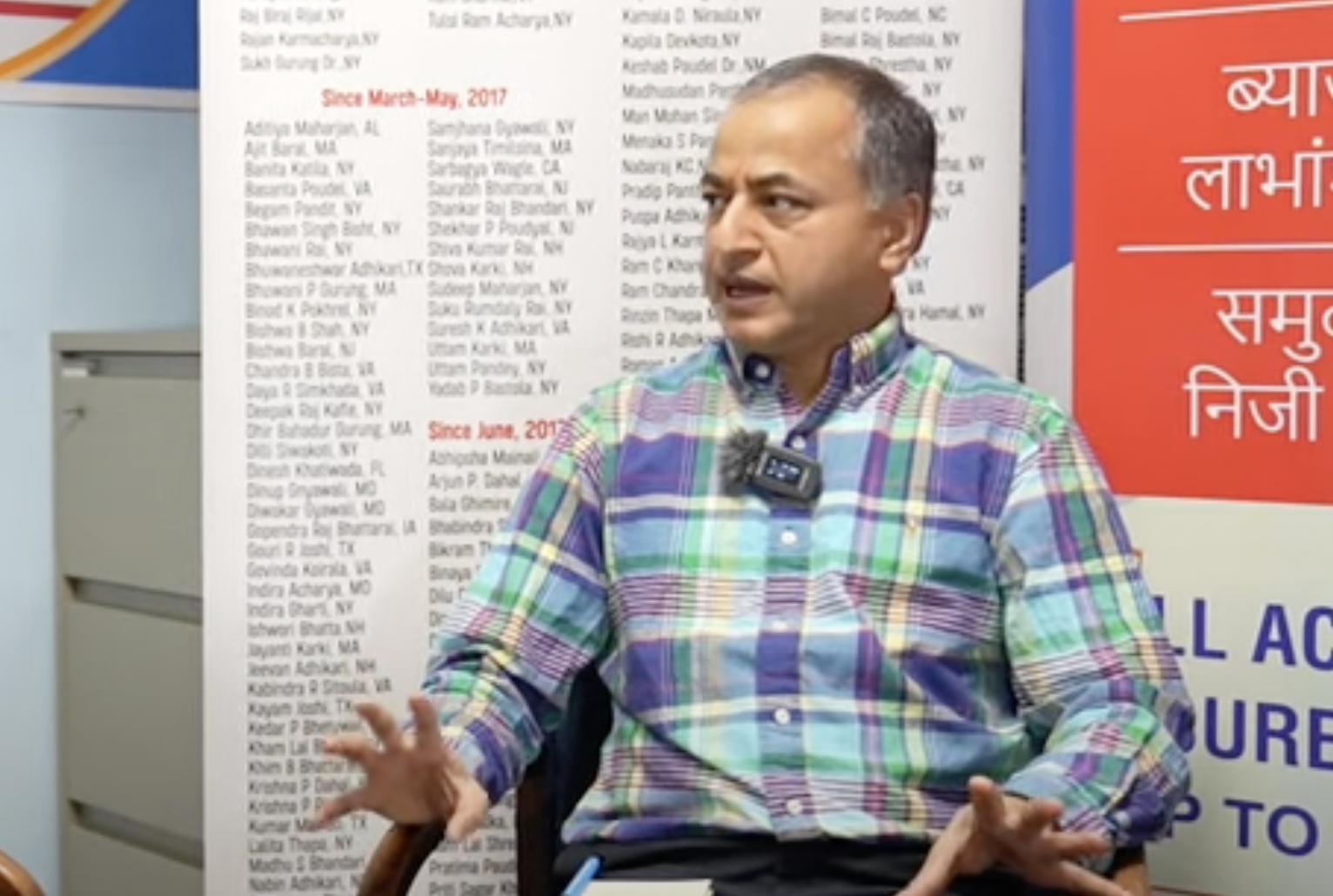
According to New York-based CPA Biraj Rijal, artists performing in the U.S. under a P-3 visa must pay taxes on their income to comply with visa regulations. However, if artists stay in the U.S. for less than six months and earn up to $3,000, they are not required to report the income for tax purposes. Typically, event organizers withhold 30% of the artist’s payment under Form 1042-S, and artists can file Form 1040-NR to claim a refund for any excess withheld taxes.
P-3 visa holders are eligible to apply for a Social Security Number, but if they do not have one, they must obtain a Taxpayer Identification Number to file taxes. For those staying longer than six months, even income below $3,000 must be reported, and taxes must be filed using the regular Form 1040 instead of Form 1040-NR. Rijal emphasized that P-3 visa holders earn 1099 income and can file taxes online even after returning to Nepal.
Failure to pay taxes can result in visa violations, potentially causing complications for future U.S. visits. The IRS clarifies that artists performing in the U.S. must pay U.S. income tax and file a federal income tax return to report such income. Payments to non-resident artists are subject to special withholding rules.

Deepak Pariyar
View More PostsJournalist Deepak Pariyar is the editor of Khasokhas, a publication amplifying the voices of the Nepali diaspora in the USA since 2012. A champion against discrimination, he has held leadership roles in journalist organizations.

