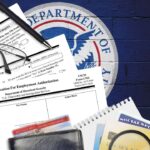
Today, E-Verify, an official U.S. Department of Homeland Security (DHS) website that allows employers to electronically confirm employees’ work eligibility, issued a notice confirming DHS’s compliance with a district court-issued stay, which postpones the termination of Temporary Protected Status (TPS) for Nepal, Honduras, and Nicaragua until November 18, 2025.
More than two weeks after the court’s ruling, the notice clarifies that Employment Authorization Documents (EADs) with category codes A12 or C19 issued to TPS beneficiaries from Nepal, Honduras, and Nicaragua remain valid through November 18, 2025.
“On July 31, 2025, the U.S. District Court for the Northern District of California issued a stay to postpone the termination of Temporary Protected Status (TPS) for Nepal, Honduras, and Nicaragua until Nov. 18, 2025. This means that Employment Authorization Documents (EADs) for employees with TPS from these countries, with category A12 or C19, are valid through Nov. 18, 2025,” the E-Verify notice reads.
Following a federal court’s decision to halt the termination of Temporary Protected Status (TPS) for Honduras, Nepal, and Nicaragua until November 18, 2025, U.S. Citizenship and Immigration Services (USCIS) had issued an alert clarifying that Nepali, Honduran, and Nicaraguan TPS holders do not need to file any application to extend their stay or work authorization.
USCIS updated its TPS webpage on August 4, confirming that TPS for Honduras, Nepal, and Nicaragua will continue through November 18, 2025. Work permits (EADs) that were previously set to expire are now automatically extended until November 18, 2025. TPS holders can continue using their existing EADs as valid proof of work eligibility without submitting any renewal forms.
Employers and government agencies may accept TPS-related EADs and a copy of the Federal Register notice announcing the automatic extension to verify employment authorization and immigration status. While USCIS has not yet published the formal notice in the Federal Register, it is expected to do so soon.
“However, on July 31, 2025, a single judge in the U.S. District Court for the Northern District of California issued a stay in National TPS Alliance v. Noem, No. 25-cv-05687 (N.D. Cal.), which postponed the termination until November 18, 2025. The judge did so even though the Department of Homeland Security recently prevailed 8-1 in the U.S. Supreme Court in a similar case. The Department of Homeland Security vehemently disagrees with this ruling and is working to determine next steps,” DHS stated in its alert. While DHS did not specify what actions it might take, it made clear its intent to challenge the ruling.
The federal court ruling came on July 31, 2025, when Judge Trina L. Thompson issued an injunction blocking the termination of TPS for Nepal, Honduras, and Nicaragua. The decision was part of a lawsuit filed on July 7, 2025, by the National TPS Alliance and seven individual plaintiffs, challenging the Trump administration’s move to end TPS for these countries.
The plaintiffs argue that the termination violated the Administrative Procedure Act, was motivated by racial bias, and failed to provide a proper transition period. Among the Nepali plaintiffs are S.K., a 33-year-old theater worker in San Francisco who is married to a U.S. citizen, and Sandhya Lama, a 43-year-old Virginian who is the sole caregiver to her three U.S. citizen children, one of whom requires specialized medical care.
Despite the court’s ruling, the Department of Homeland Security (DHS) strongly opposed the decision, accusing Judge Trina Thompson of being an “activist judge” and the ruling of being “a New York Times opinion piece.”
“Restoring integrity to our immigration system to keep our homeland and its people safe. That is all we—and the American people who elected President Trump in a landslide—seek. TPS was never meant to be a de facto asylum system, yet that is how previous administrations have used it for decades. This is yet another example of how out-of-control judges are race-baiting to distract from the facts and the president’s constitutionally vested powers under Article II. We will appeal, and we expect a higher court to vindicate us,” Assistant Secretary Tricia McLaughlin argued.
“For decades, TPS has been abused as a de facto amnesty program to allow unvetted aliens to remain in the U.S. indefinitely. Too often, these programs have been exploited to allow criminal aliens to come to our country and terrorize American citizens. When child abusers and other violent criminals can hide behind a humanitarian designation, the system is broken,” DHS argued in a statement. However, TPS law already disqualifies applicants with criminal backgrounds.
The Temporary Protected Status (TPS) law disqualifies applicants with certain criminal backgrounds. According to the Immigration and Nationality Act (INA), specifically INA § 244(c)(2)(B), individuals are ineligible for TPS if they have been convicted of certain crimes, including any felony or two or more misdemeanors committed in the United States. Certain other criminal grounds of inadmissibility under INA § 212(a) also apply, such as crimes involving moral turpitude, controlled substance violations, or other specified offenses, unless a waiver is available and granted.
This is further detailed in the U.S. Code of Federal Regulations, 8 CFR § 244.4, which outlines ineligibility criteria for TPS, stating that an individual is not eligible if they are inadmissible under applicable provisions of INA § 212(a) related to criminal and security-related grounds, among others, unless a waiver is applicable.
Additionally, the U.S. Citizenship and Immigration Services (USCIS) website explicitly notes that TPS applicants must not be inadmissible under criminal grounds or other specified bars, as outlined in their TPS eligibility criteria.
The court has scheduled the initial case management conference for August 14, 2025; a follow-up conference for October 9, 2025; and a preliminary injunction hearing for November 18, 2025, at 2 PM. The court also noted that the TPS termination could be further delayed depending on the outcome of the November hearing.
In the meantime, immigration attorneys advise TPS holders to rely on the court’s decision and USCIS’s alert as the legal basis for their continued stay and employment in the U.S.

Kishor Panthi
View More PostsKishor Panthi is the founder and editor-in-chief of Khasokhas and NepYork. He is the author of three books, “Kampan,” "UNTRANSLATABLE" and “Zero Mile.” He writes about social issues, immigration, and politics.