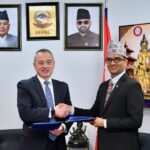
Nepali American Del. Harry Bhandari won the Democratic primary in Maryland’s District 8, according to preliminary results, putting him on track to seek a third term in the state legislature.
Bhandari, an incumbent in the Maryland House of Delegates, received 4,128 votes to finish first in the Democratic primary. The results are not yet final, with mail-in ballots still to be counted and official certification pending.
Out of respect for the ongoing count, Bhandari said he would not declare victory until all ballots are tallied.
“This district was highly competitive,” Bhandari told Khasokhas. “Over the past 12 years, I have worked hard to flip it and build strong connections with voters. I am grateful to voters, volunteers, my family and the Nepali American community for their support. However, I will wait for the final count before making any formal declaration.”
Bhandari is expected to face a Republican candidate in the November general election. If reelected, he would serve a third term representing District 8.
First elected in 2018, Bhandari made history as the first Nepali American elected to a state legislature in Maryland. During his tenure, he has focused on education reform, expanding access to health care and advocating for working families.
He described his primary performance as a reflection of broader community support beyond the relatively small Nepali population in the district.
“This is not just my victory,” he said. “It represents the strength of the community, the contributions of immigrants and a shared commitment to public service. Although the Nepali community here is small, I have received support from across the district.”
Bhandari also emphasized the importance of civic engagement among Nepali Americans, whom he described as one of the fastest-growing immigrant groups in the United States.
“Becoming part of America means participating in its democratic process,” he said. “When we vote, organize, volunteer and run for office, our presence is recognized and our voices are heard. Issues such as education, small business, immigration, health care, public safety, housing and language access directly affect our daily lives.”
He underscored the role of political representation in shaping public policy and allocating resources, noting that he has secured significant funding for his district.
According to Bhandari, he helped bring approximately $950,000 in funding for the Nepali community in the Baltimore area and more than $150 million in total funding for District 8.
“Mainstream politics is where laws, budgets and policies are determined,” he said. “If we want our community’s needs to be recognized, we must fully participate.”
Bhandari also reflected on the growing political participation of Nepali Americans, saying representation at the local level is increasing and serving as inspiration for future generations.
“I remember when I first ran for office — it was very challenging,” he said. “But over time, through education, legal understanding, language skills and political engagement, progress became possible. Today, more members of our community are stepping forward to serve. Representation matters, and role models are important.”
Born in Nepal’s Parbat district to a farming family, Bhandari spent his early years in rural surroundings and attended public schools. He later moved to Pokhara for higher education, studying English literature, and went on to earn a master’s degree from Tribhuvan University in Kathmandu.
He spent about 13 years in Nepal’s education sector, including serving as a principal at two private schools, where he also supported access to education for underprivileged students.
Bhandari moved to the United States in 2005. In his early years, he worked overnight shifts at a gas station while navigating the process of building a new life. Using online resources, he prepared for and passed U.S. teaching licensure exams and later began teaching English at American colleges.
He became a U.S. citizen in 2011 and soon turned to politics, motivated by a belief that immigrant communities must engage in the political process to protect their rights, language, culture and identity.
After an initial electoral defeat, Bhandari continued grassroots outreach and was elected in 2018 to the Maryland House of Delegates from District 8, becoming the first Nepali American to serve in a U.S. state legislature.
When he took the oath of office, Bhandari used the Hindu scripture Vedas, reflecting his cultural and religious heritage.
He said he remains committed to public service and to supporting Nepali communities both in the United States and abroad.
“We are not just guests in this country,” Bhandari said. “We are taxpayers, parents, workers, educators, entrepreneurs and public servants. Wherever Nepalis are, we share a bond, and I remain committed to supporting them in times of need.”

Kishor Panthi
View More PostsKishor Panthi is the founder and editor-in-chief of Khasokhas and NepYork. He is the author of three books, “Kampan,” "UNTRANSLATABLE" and “Zero Mile.” He writes about social issues, immigration, and politics.