At least 1,294 Nepali migrant workers have died abroad in the first 10 months of the current fiscal year, underscoring the persistent risks faced by laborers leaving home in search of work.
Data from Nepal’s Foreign Employment Board show that 153 deaths were recorded between April 14 and May 14. The figures highlight a continuing trend of labor migration driven by limited job opportunities in Nepal, where thousands of youths depart daily for destinations such as the Gulf countries and Malaysia.
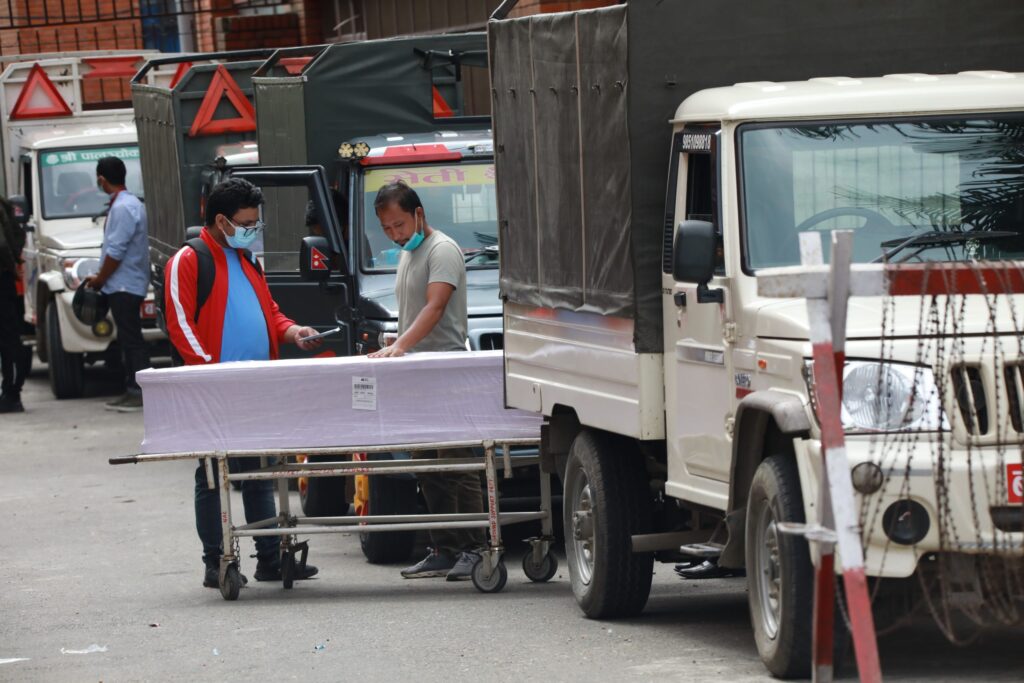
While some migrants achieve financial stability, many others never return alive. Families increasingly face the grim reality of receiving loved ones either alive or in coffins.
Long-term trend
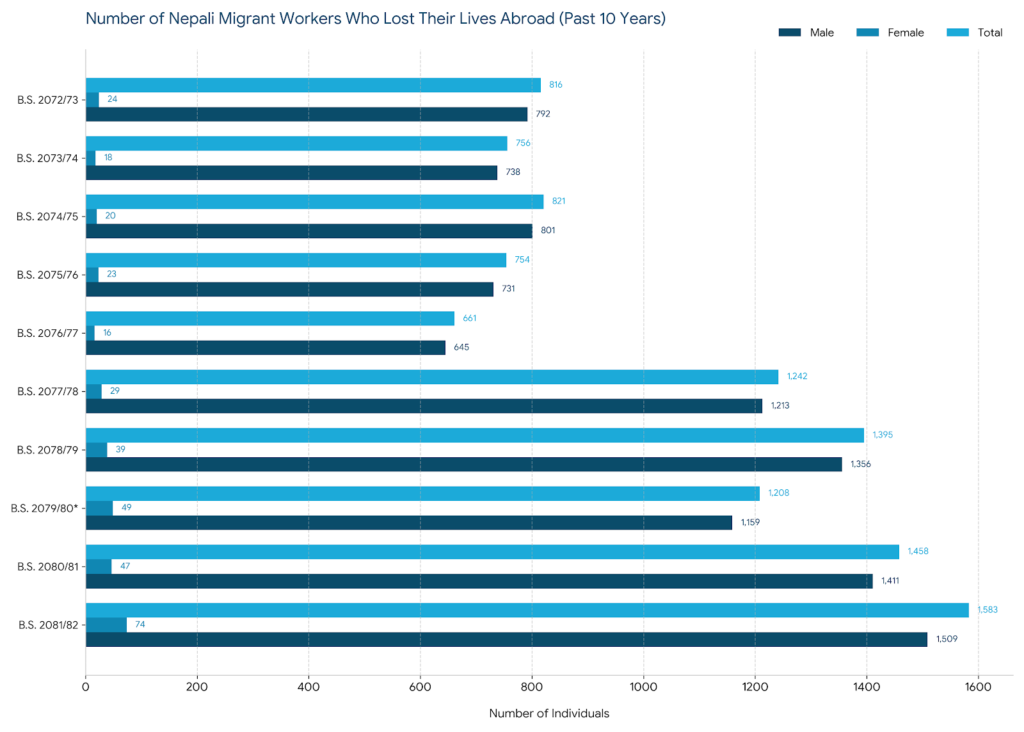
Over the past 10 years and 10 months, a total of 11,988 Nepali workers have died overseas, according to government data. In the last fiscal year alone, 1,583 deaths were recorded, including 1,509 men and 74 women.
Malaysia, Saudi Arabia and Qatar remain among the top destinations for Nepali workers and also account for a significant share of deaths.

Causes and concerns
Official documents from host countries often attribute deaths to “natural causes,” cardiac arrest or suicide. Bhupendra Sapkota, director and spokesperson for the Foreign Employment Board, said natural causes, along with kidney disease, cancer and road accidents, are commonly cited.
However, labor and migration experts question these explanations, particularly in cases involving young, medically cleared workers.
Nilambar Badal, a migration expert with the National Network for Safe Migration, said the frequent classification of deaths as “natural” warrants scrutiny.
“It is difficult to accept that healthy young workers who passed medical tests in Nepal die of ‘natural causes’ shortly after arriving abroad,” Badal said.
Experts point to extreme heat, physically demanding labor and poor working conditions as likely contributing factors. Workers in Gulf countries often endure temperatures approaching 50 degrees Celsius, sometimes with limited access to water and sanitation, increasing the risk of heat stress and kidney failure.
Rapid transitions between intense outdoor heat and air-conditioned indoor environments may also contribute to health complications, Badal said, describing the effect as a “breakdown” of the body’s ability to adapt.
Lack of investigation
Another challenge is the absence of follow-up examinations in Nepal. Authorities rely on postmortem reports conducted in the country where the death occurred, and no “double autopsy” is performed after the body is repatriated.
Experts say this limits the ability to determine the true causes of death, especially in countries where autopsies may be restricted for cultural or religious reasons.
“As a result, we lack scientific evidence and must rely largely on circumstantial analysis,” Badal said.
Compensation framework
Families of migrant workers who die abroad are eligible for financial assistance, provided the worker had obtained official labor approval before departure.
The Foreign Employment Board provides a lump sum of about $6,500 from its welfare fund, along with additional insurance payouts. The government also covers the cost of repatriating remains and may provide scholarships for children and medical support for families.
In cases of workplace or traffic-related deaths, families may receive additional compensation under the host country’s laws. However, companies are generally not obligated to compensate for deaths attributed to natural causes or pre-existing conditions.
Workers who migrate through informal channels — such as on visit visas or without valid labor permits — are not eligible for compensation from either the government or insurance providers.

Suraj Ghimire
View More PostsSuraj Ghimire is a Nepali journalist based in Kathmandu. He focuses on political, social, migration, and international issues. He has also worked with various national television networks in Nepal.