Minority Empowerment Network’s Second Annual Mental Health for Minorities Matter event at Elmhurst Hospital
When life gets hard, and you do not know where to turn, who do you call?
The Minority Empowerment Network’s second annual community wellness summit was held at Elmhurst Hospital in Queens on June 5, 2026, for South Asian, Nepali, and immigrant communities in Queens. Friday night’s event was designed to empower people who have been silenced or stigmatized. Speakers from government, health care, nonprofit advocacy, and the community covered ground that rarely gets addressed in the same room at the same time.
The Numbers That Tell a Story
The stigma surrounding mental health in Nepali and South Asian communities is not just cultural, and research on Nepal’s public health system documents persistent stigma, limited services, and significant gaps in access to care. That same thinking travels with immigrants when they arrive in Queens. Studies show migration, family separation, and financial pressure can intensify stress for both migrants and their relatives left behind. And once here, the barriers often shift but do not disappear.
Research from the Center for Migration Studies of New York and the New York Immigration Coalition found that the top reasons immigrants in Queens reported for not seeking mental health care were the inability to take time off from work, childcare responsibilities, and the inability to afford services. Those everyday constraints can matter as much as language or cultural fit when someone is deciding whether to ask for help.
A Room That Showed Up
The gathering was held at the Elmhurst Hospital auditorium, a fitting setting. NYC Health and Hospitals Elmhurst serves one of the city’s most diverse communities. Atiya Butler, Director of External Affairs with NYC Health and Hospitals, was connecting with attendees and partners before the program began.
“It was a wonderful event, and it is great to partner with local community-based organizations to bring attention to mental health needs in minority communities,” Butler said.
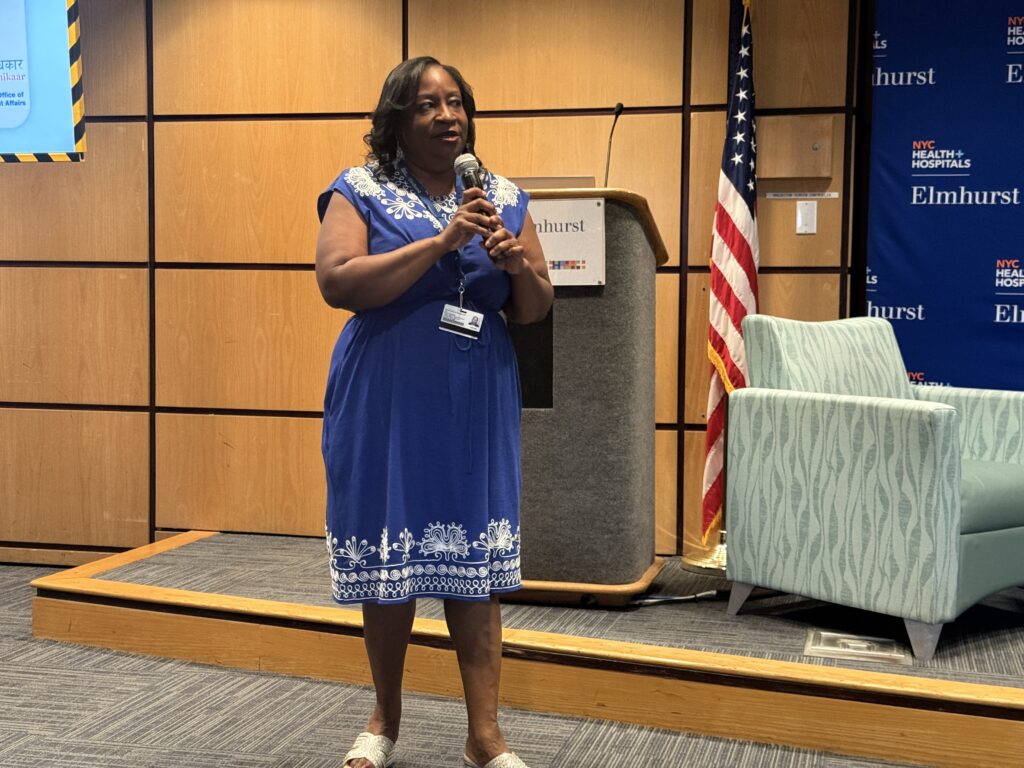
She noted that the hospital system’s elder suicide prevention and youth programs are actively delivering mental health workshops across multiple communities throughout Queens. That work is part of a broader system-wide Community Health Needs Assessment process that tracks where the biggest service gaps remain. The need is real. New York City’s health department reports that immigrant New Yorkers with depression are less likely to receive treatment than United States-born residents with depression, even as many immigrant communities face compounding pressures tied to housing, work, language, and health access.
The Conversation in the Room
Shreeya Tuladhar, Executive Director of the Minority Empowerment Network and the evening’s moderator, framed the purpose of the summit plainly.
“The people closest to the problem are actually the closest to the solution,” Tuladhar said. “We do not just want to talk at you. We want to learn from you.”
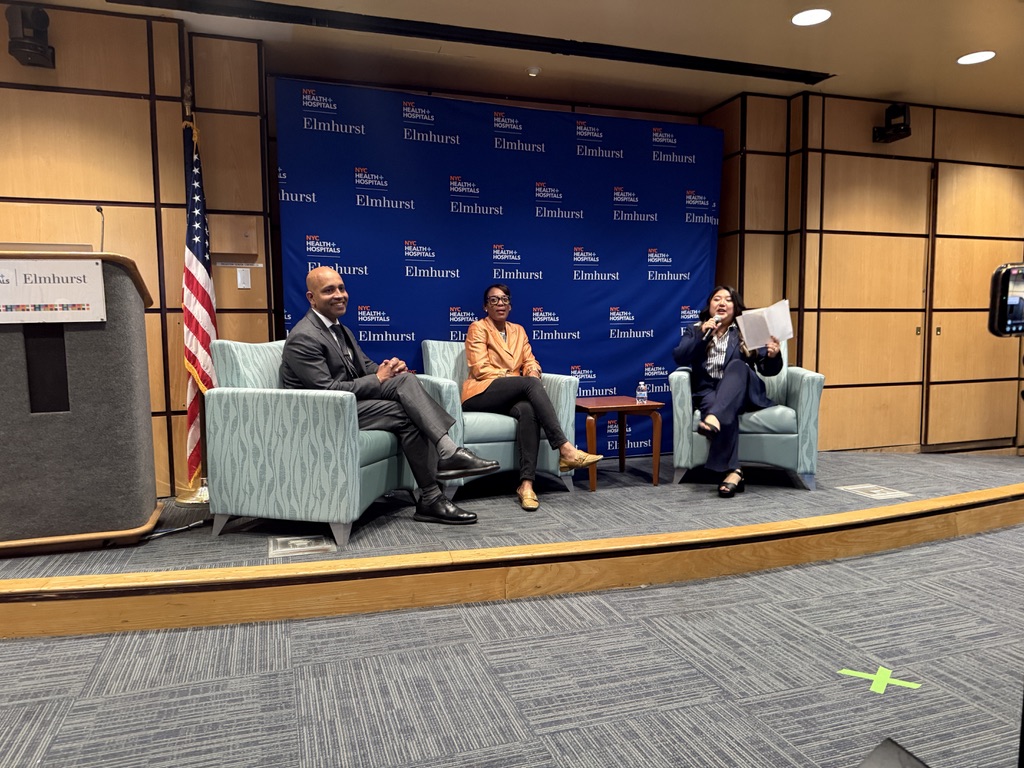
The reverse panel discussion was powerful and engaging. It’s where the audience became the conversation. Community members spoke openly about depression, isolation, domestic violence, and the pressure of survival. One woman shared that she had nearly disappeared into herself earlier in the year, only to be pulled back by two friends. A young man described facing a mental health crisis in silence because his family had no language for what he was experiencing. A recently graduated international student posed the sharpest question: Where do people go when they cannot afford therapy?
The panel included Deputy Queens Borough President Ebony Young and Sibu Nair, Director of Asian and Pacific Islander Affairs from the Governor’s Office. Both have spent years working on mental health access and immigrant community issues, and neither came to the room with easy answers. Nair’s message to the audience was direct.
“Speak up and be there for each other,” Nair said. “That is my message.”
Young’s response drew the loudest reaction of the night.
“Therapy. Boundaries. Patterns,” she said, landing each word separately. “Watch your patterns. The reason we keep repeating is that we do not assess what we are doing. TBP. That is how we break the cycle.”
The Body Is Part of It Too
Dr. Emil Kabir, a physical therapist who has been practicing physical therapy since 1998 and has five clinics serving more than 7,000 New Yorkers, led the room through a seven-minute movement session and connected physical activity directly to mental health. The science behind it is straightforward. Exercise reduces stress hormones, increases serotonin and dopamine levels, and improves mood. He made the point simply.
“Movement is medicine,” Dr. Kabir said. “Even a few minutes each day can improve your mental and physical well-being.”
Where to Turn
If you or someone you know is going through a hard time, these are places that can help.
As of July 16, 2022, 988 is the new three-digit dialing code for the National Suicide Prevention Lifeline, now called the 988 Suicide and Crisis Lifeline. Anyone, anywhere in the U.S., can now call, chat, or text 988 and receive resources and support during a suicide, mental health, or substance use crisis.
The service is available in multiple languages and is supported by state and city resources, including New York State and New York City . More details are also available from the American Foundation for Suicide Prevention.
Adhikaar, meaning “rights” in Nepali, is a women-led community and workers’ center that provides direct services to the Nepali-speaking community and organizes low-income workers and impacted community members to promote social justice and human rights. Visit https://www.adhikaar.org.
NYC Health and Hospitals makes community health planning materials public through its assessment process. Visit nychealthandhospitals.org for more information.
Events like this summit are not a complete solution. They offer something more immediate: a place where silence starts to break, where stigma loses some of its power, and where people can leave with names, resources, and the reminder that reaching out is allowed.
An earlier version of this article featured a photograph that was misidentified as Atiya Butler. The photo has been removed and replaced with the correct image of Ms. Butler.
Baron Carr
View More PostsBaron Carr is an engagement journalist, former corporate VP, and founder of Global Harlem, a community intelligence platform covering diaspora communities and tracking the signals institutions miss. Yoga keeps him steady enough to do it.