




Mamdani, Krishnan Celebrate South Asian Women’s Stories at City Hall Sari Reception

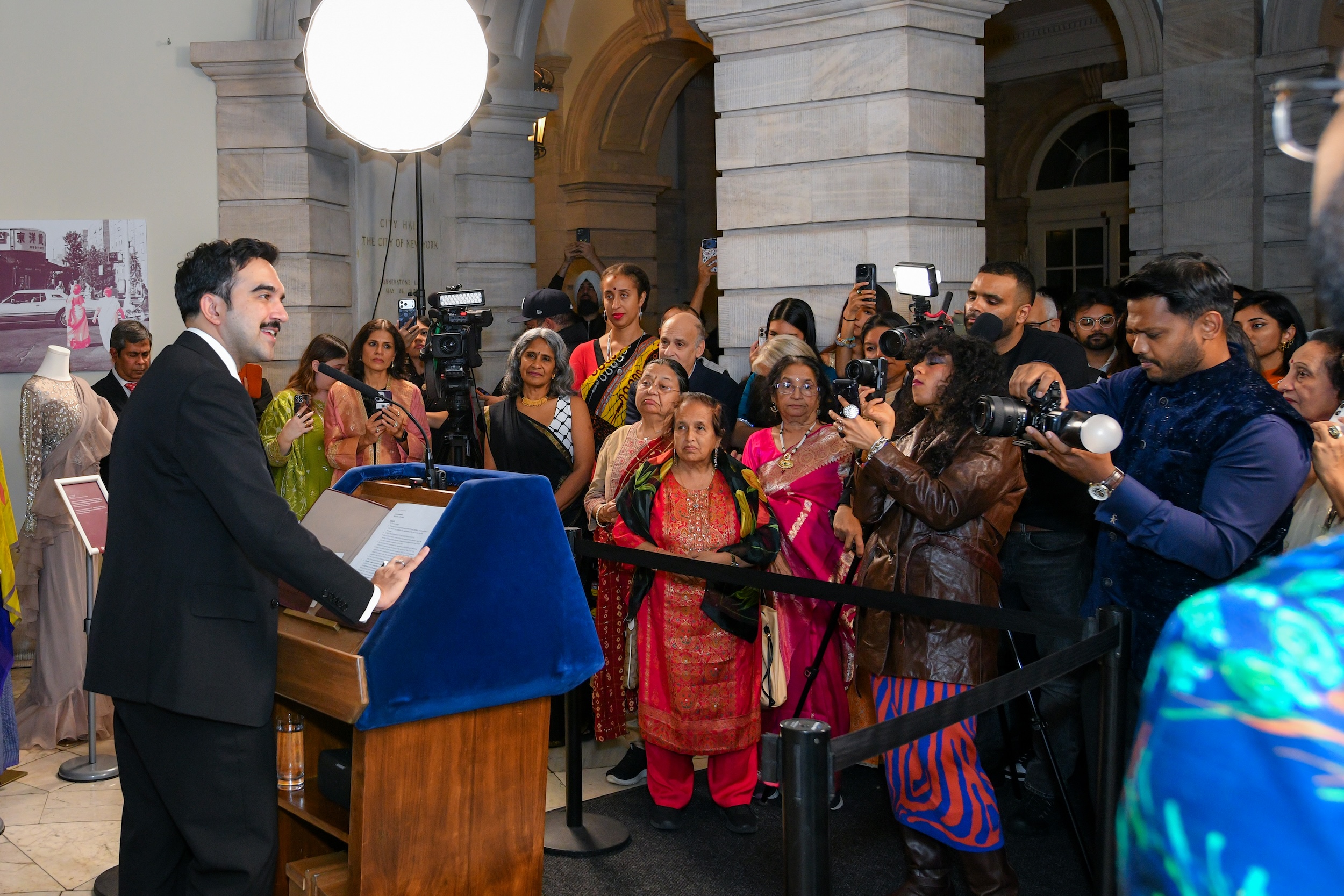
New York City Mayor Zohran Kwame Mamdani speaks at a City Hall reception celebrating South Asian women’s stories and the cultural significance of the sari on Nov. 13. Photo by Rajan Kafle for NepYork.
NEW YORK — Three saris displayed at New York City Hall became symbols of South Asian women’s contributions to public service, science and the arts Friday as Mayor Zohran Kwame Mamdani and City Council members celebrated the women whose achievements have helped shape the city.
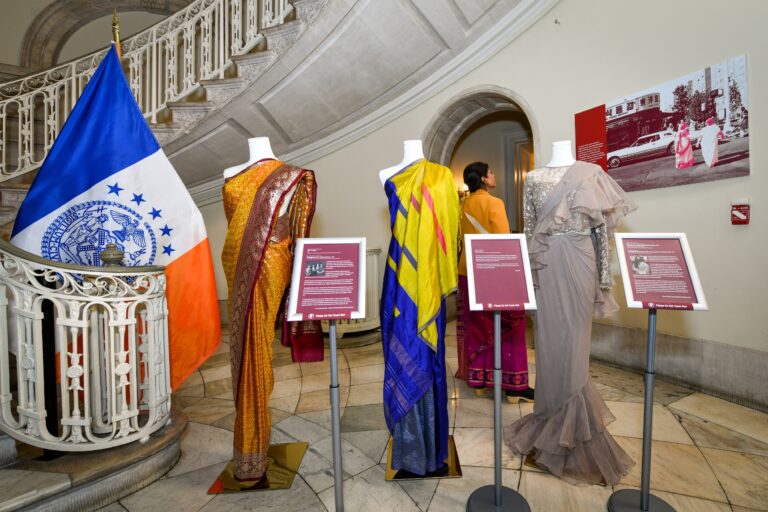
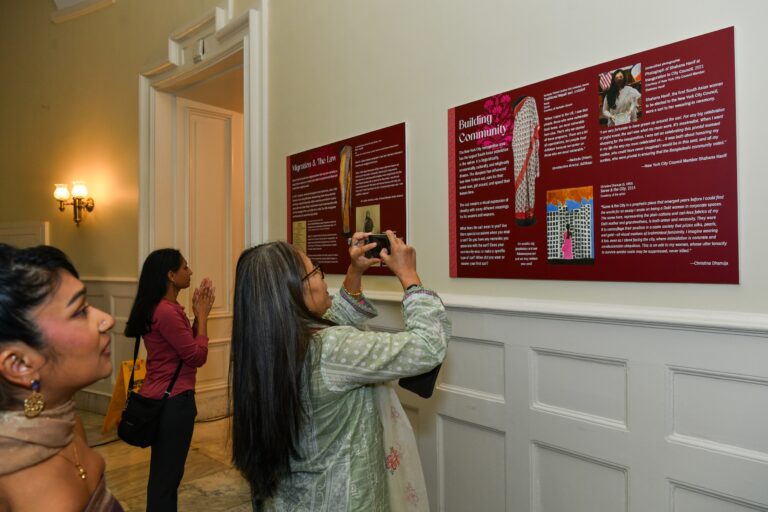
The Nov. 13 reception in the City Hall rotunda celebrated The New York Sari, an exhibition originally presented at the New York Historical. Hosted by Council Member Shekar Krishnan and Mamdani, the event highlighted garments belonging to Council Member Shahana Hanif, filmmaker Mira Nair, the mayor’s mother, and Dr. Lalitha Krishnan, the council member’s mother.
Looking for job?
Click hereThe exhibition explores the sari’s cultural significance and its evolution as part of New York City’s identity. One of the oldest-known garments in the world, the sari, also spelled saree, originated in the Indian subcontinent and is now worn around the world. Typically made from a piece of woven fabric measuring 6 to 9 yards, its draping, patterns, styles and materials vary by region, occasion, cultural identity, religious practice and personal preference.
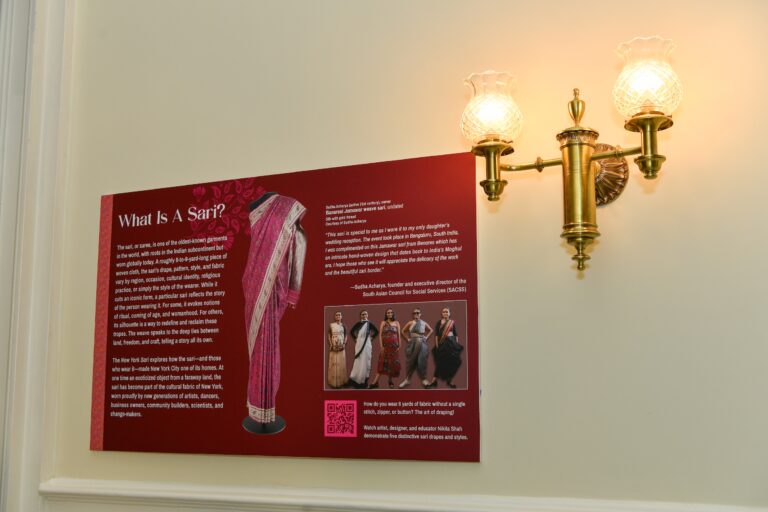
Beyond its distinctive silhouette, each sari can tell a story about the person wearing it. For some, it represents ritual, coming of age and womanhood. For others, it offers a way to redefine and reclaim those traditions. Its fabrics and weaving techniques also reflect connections among land, freedom and craftsmanship.
“The New York Sari explores how the sari and those who wear it made New York City one of its homes,” the exhibition display reads. “At one time an exoticized object from a faraway land, the sari has become part of the cultural fabric of New York, worn proudly by new generations of artists, dancers, business owners, community builders, scientists, and change-makers.”
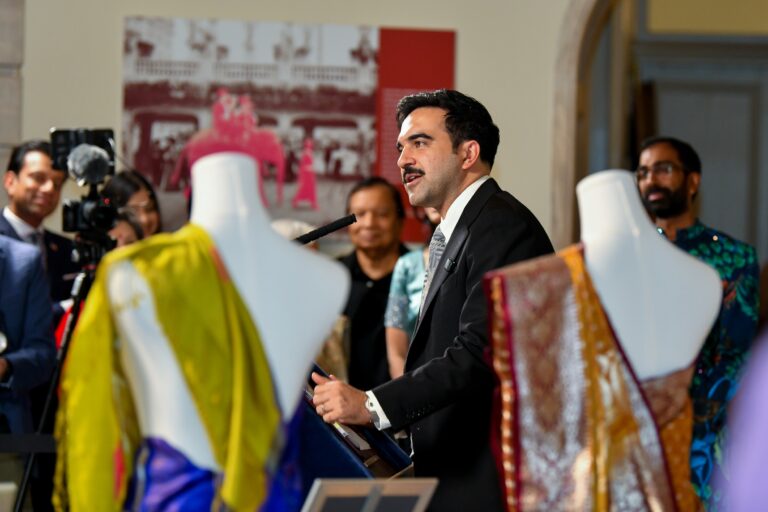
Mamdani, New York City’s first South Asian mayor, said the celebration honored generations of immigrants who built lives in the city without abandoning their cultural heritage.
“I would not have the privilege of leading from City Hall were it not for the many that came before me who refused to accept the fallacy that you could either be a New Yorker or you could be South Asian,” he said.
The mayor traced the sari’s place in New York City, from early public presentations of South Asian culture to its presence in neighborhood businesses, scientific award ceremonies and elected office. He described the garment as an expression of belonging in a city where immigrants have often faced pressure to assimilate.
“While this evening is a celebration of the sari, it is also a recognition of our city’s South Asian community as a whole,” Mamdani said.
Krishnan spoke about the exhibition’s personal significance, describing his mother’s experience as an immigrant scientist whose accomplishments often went unrecognized.
He said she came to the United States from India with a doctorate in chemistry but struggled to find work before securing a position in pharmaceutical development. There, she helped develop a formula for mass-producing a drug used to combat multidrug-resistant infections, he said.
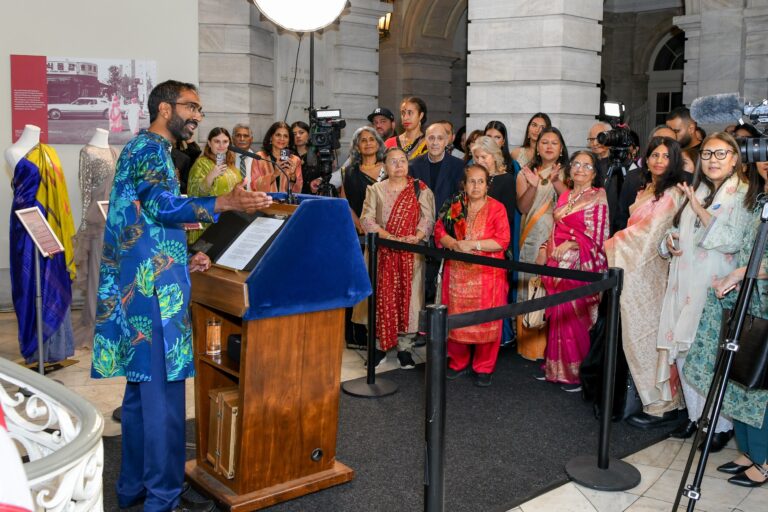
When she was recognized for her work about 30 years ago, she chose to wear a sari to an awards ceremony where others wore suits and ball gowns, he said.
“South Asian women, Indo-Caribbean women have contributed greatly to science and our culture,” Krishnan said. “I think we all can relate to some aspect of that story, standing alone, going unacknowledged, and being underestimated.”
Krishnan said the exhibition grew out of conversations with S. Mitra Kalita, co-founder of Epicenter NYC, and Louise Mirrer, president of the New York Historical, about stories that have been underrepresented. He credited the exhibition’s organizers with documenting women’s contributions through their clothing and personal histories.
He also connected the reception to his and Mamdani’s shared advocacy for taxi drivers, street vendors and immigrant New Yorkers, recalling demonstrations alongside Mamdani and Hanif.
“It’s not just about being a new face in a room,” Krishnan said. “It’s about bringing others into the room with us.”
Hanif, the first Muslim woman elected to the City Council, described the sari as an integral part of her identity as a Brooklyn-born New Yorker.
She said the sari featured in the exhibition, which she wore at her inauguration, combined South Asian tradition with the glamour she associated with New York City.
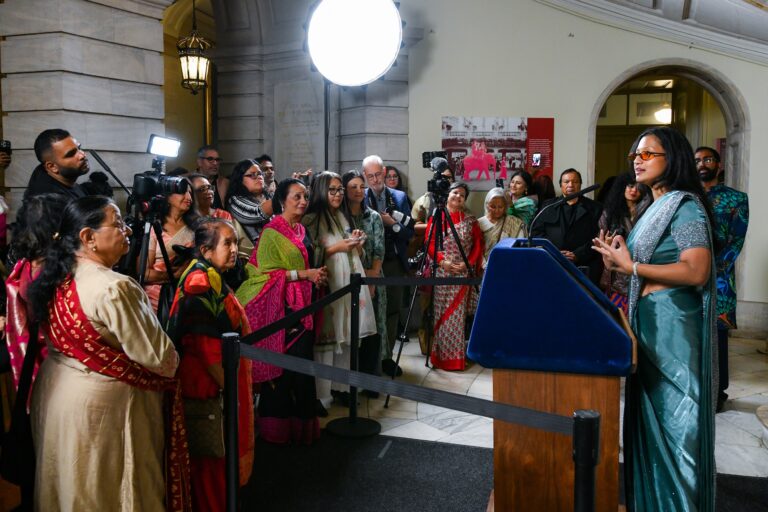
“I can’t talk about being from Brooklyn without talking about wearing the sari,” she said.
Hanif also described the care involved in preparing the embroidered sari she wore Friday, from arranging its pleats to securing the heavy fabric with additional pins. The process, she said, reflected the close relationships and mutual support among women who help one another get dressed.
“The sari requires touch,” she said.
Mamdani praised Nair’s filmmaking, saying her work helped audiences recognize the importance of seeing their own stories represented on screen. He also acknowledged actor Kal Penn, who attended the reception, for helping him feel a sense of belonging while growing up.
The mayor said being the first to hold a political position carried an obligation to recognize those who made that achievement possible.
“Though I am proud to be a first, the only way that anyone becomes a first is because of all those who came before them,” he said.