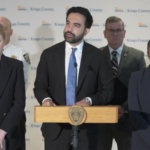
Mayor Zohran Kwame Mamdani on Sunday urged New Yorkers to prepare for heavy rain, thunderstorms, and localized flash flooding expected to begin Sunday evening and continue through Monday. City officials warned that the greatest risk will coincide with the Monday morning commute.
The National Weather Service (NWS) has issued a Flood Watch through 6 a.m. Tuesday, forecasting multiple rounds of heavy rain and embedded thunderstorms. These storms could produce two to three inches of rainfall across much of the city, with isolated areas receiving up to six inches where storms repeatedly track over the same locations, according to a press release from the Mayor’s Office and New York City Emergency Management (NYCEM).
The greatest risk of heavy rain and flash flooding is expected during Monday’s morning commute, particularly between 4 a.m. and 10 a.m., though scattered thunderstorms could still trigger localized flash flooding into Monday evening.
Rainfall rates could reach two to three inches per hour in stronger storms, creating the potential for rapid flash flooding, especially in low-lying neighborhoods and areas with poor drainage, the NWS warned.
In advance of the storm, Mayor Mamdani activated the city’s Flash Flood Emergency Plan, directing city agencies and partners to take proactive steps to reduce flood risks and coordinate emergency operations.
City workers are clearing catch basins, inspecting flood-prone neighborhoods, reaching out to residents in basement apartments, and positioning emergency response teams across the five boroughs, Mayor Mamdani said. Specialized emergency teams, including the Downed Tree Task Force and Tow Truck Task Force, are on standby. Meanwhile, the NYPD is preparing for potential street flooding and will have tow trucks staged in every borough to respond to stranded vehicles.
The New York City Department of Environmental Protection, Department of Sanitation, and Department of Transportation are also inspecting and clearing catch basins in flood-prone neighborhoods. Additionally, NYCEM’s 24/7 Watch Command is monitoring conditions around the clock to coordinate the city’s response in real time.
City officials are urging New Yorkers to limit travel during heavy rain and thunderstorms whenever possible. If travel is necessary, residents should exercise extreme caution and never walk or drive through floodwaters, as water depth can be deceptive and even shallow water can stall vehicles. Taking public transit is highly recommended to reduce exposure to hazardous road conditions.
Residents who live in basement apartments, ground-floor homes, or areas that have flooded before should make an emergency plan immediately. They should decide in advance where they will go if their home starts to flood, such as a neighbor’s apartment on a higher floor, a nearby public building, or the home of a friend or family member. Safe overnight locations are available in every borough by calling 311, and residents can sign up for specialized basement alerts at on.nyc.gov/basements.
During high winds, New Yorkers should stay indoors if possible and avoid downed power lines and trees. Outdoor furniture, trash bins, and other loose items should be secured before winds increase to prevent them from becoming dangerous projectiles. Residents should also clear debris from nearby storm drains, if it is safe to do so, to help reduce street flooding.
Anyone in immediate danger or trapped by rising water should call 911 without delay. New Yorkers can sign up for emergency alerts by texting NOTIFYNYC to 692-692 and should report downed trees, blocked catch basins, and other non-emergency hazards to 311. For additional emergency preparedness guidance, residents can visit nyc.gov/beready.
“Now it’s time for all of us to do our part,” Mayor Mamdani said. “Limit travel if you can, plan for delays, and take these warnings seriously. If heavy rain begins, if the winds pick up, or if you hear thunder—get inside and wait out the dangerous conditions. Check on your neighbors, especially anyone living in a basement apartment, to make sure they have a plan and the information they need to stay safe.”
NYCEM Commissioner Christina Farrell warned that flash flooding can develop rapidly with little warning. “We’re expecting periods of heavy rain to especially impact the Monday morning commute and continue through the day, so New Yorkers should plan ahead, allow for extra travel time, and be prepared for rapidly changing conditions,” Farrell said.
NYCEM reiterated that heavy rain can cause rapid, life-threatening flooding in basements with little to no notice. Residents in basement apartments must be prepared to move to a higher floor during periods of heavy rain and should stay out of flooded basements under all circumstances.
Officials also advised homeowners and renters to install water alarms or flood sensors, clear drains and gutters ahead of the storm, and consider separate flood insurance, noting that standard renter and homeowner policies typically do not cover flood damage.

Kishor Panthi
View More PostsKishor Panthi is the founder and editor-in-chief of Khasokhas and NepYork. He is the author of three books, “Kampan,” "UNTRANSLATABLE" and “Zero Mile.” He writes about social issues, immigration, and politics.