Nepal’s provision for “other” gender identity citizenship, introduced to safeguard the rights of sexual and gender minorities, has marked more than a decade of implementation, showing both progress and persistent legal and administrative challenges.
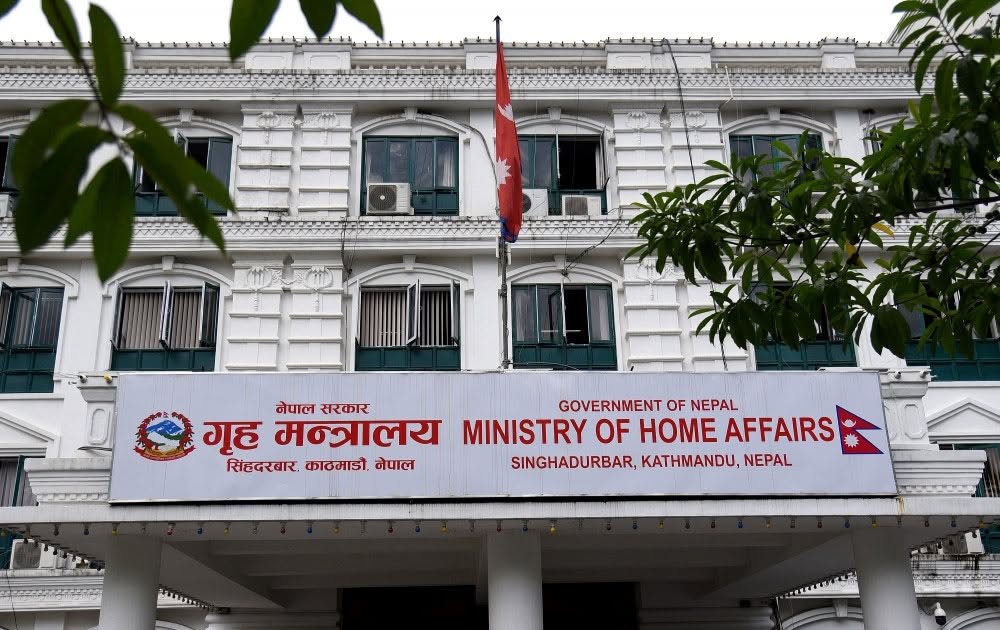
According to the latest data from the Ministry of Home Affairs, a total of 1,635 individuals have obtained citizenship certificates under the “other” gender category so far. Despite this milestone, a significant number of applicants continue to face administrative hurdles in securing citizenship aligned with their gender identity.
The issue has drawn renewed attention following the case of Rastriya Swatantra Party (RSP) proportional lawmaker Bhumika Shrestha, who has obtained citizenship under three different gender identities at different times. Shrestha, who currently serves as a proportional representative under the women’s quota, first received citizenship as a male under the name Kailash Shrestha from the Kathmandu District Administration Office on Oct. 7, 2005.
A decade later, on Sept. 7, 2015, she obtained a second citizenship certificate under the “other” gender category from the same office. Before completing a decade under that classification, she later acquired citizenship as a female following a Cabinet decision based on gender transition, making her eligible under the women’s category according to current law.
Court rulings and “self-identification” debate
Nepal’s legal framework on gender identity has been shaped significantly by landmark court rulings, which have also sparked ongoing debate.
On Dec. 21, 2007, the Supreme Court, in the landmark case of Sunil Babu Pant v. Government of Nepal, issued a directive order recognizing the rights of sexual and gender minorities, including the right to citizenship based on self-identification. Following the ruling, the Ministry of Home Affairs issued guidelines on Dec. 31, 2012, allowing citizenship under the “other” category and recognizing gender changes.
However, more recent judicial interpretations of the principle of self-identification have created friction between the executive and judiciary.
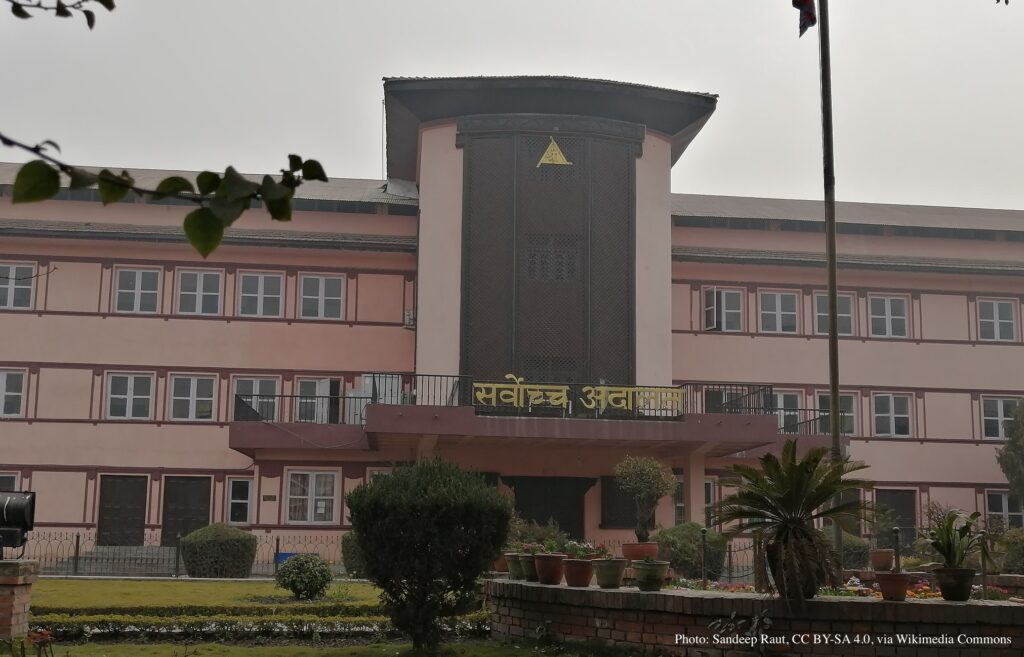
In November 2023, the Supreme Court, in response to a petition filed by Rukshana Kapali, issued a mandamus order allowing individuals to amend birth registration and citizenship based on “brain gender” and self-identification. Kapali, who was assigned male at birth, first obtained citizenship under the “other” category and later as a female.
While government officials have claimed that her case included a demand to allow gender changes in official documents every six months—thereby complicating administrative clarity—Kapali has strongly rejected the assertion.
“The claim that I made a ‘demand to allow gender changes in official documents every six months’ is entirely fabricated, malicious, and completely absent from any court petition, legal brief, or judicial recording associated with this case,” Kapali said. “The litigation in question strictly addresses the right to legal recognition of gender identity based on self-identification, ensuring permanent, dignified alignment of official documents with a person’s lived gender. The assertion of a ‘six-month’ rotation is a baseless falsehood designed to mislead the public and mischaracterize strategic human rights litigation as an administrative absurdity.”
Citing the same precedent, Sang Gurung, assigned female at birth, and Angel Lama, assigned male at birth, filed petitions at the Patan High Court. On Feb. 10, 2025, a joint bench led by Acting Chief Judge Lal Bahadur Kunwar and Judge Prakash Kharel ordered authorities to amend Gurung’s name and gender to male while maintaining confidentiality of the previous “dead name.” The court also ordered that Lama be issued citizenship under the female category.
Government response and legal uncertainty
Government authorities have expressed concern that such rulings could undermine legal stability and social norms. During court proceedings, Lalitpur District Administration and Deputy Attorney General Ratna Keshari Maharjan argued that allowing frequent gender changes without objective verification could have adverse social implications and called for dismissal of the petitions.
After the court rejected the government’s arguments and issued mandamus orders, the government filed a petition for review at the Supreme Court, seeking to overturn the decisions. The upcoming verdict is expected to be decisive.
The Ministry of Home Affairs has also indicated that it is preparing to amend citizenship-related laws to address the issue more comprehensively. Officials say existing court precedents have created practical complications and could increase the risk of misuse of citizenship provisions, including for concealing criminal activity or exploiting state benefits.
The ministry stated it is consulting stakeholders and legal experts to draft reforms aimed at ensuring fairness while preventing abuse.
Allegations of opportunism and inequality
The controversy has also triggered criticism from within the sexual and gender minority community, with some activists alleging misuse of legal provisions.
Manoj Shahi (Monika), a third-gender rights activist and the first person in Nepal to obtain a passport under the “other” category, called for an investigation into cases of multiple citizenships under different identities.
“Some individuals are able to obtain multiple citizenships by leveraging state power and change gender frequently for opportunities, while others cannot even secure a single citizenship. This disparity must end,” Shahi said. “If the state allows multiple citizenships, it should apply equally to all citizens; otherwise, such discriminatory practices must be stopped.”
Advocates also point to disparities in access, particularly in rural areas. In Khotang district, an individual named Babu Dumi Rai has reportedly been unable to obtain citizenship aligned with his identity despite submitting an application with ward-level recommendation. Rights activists say such cases highlight systemic inequality and discrimination based on access.
Concerns from legal experts
Advocate Ronik Aryal warned that inconsistent implementation of court rulings could weaken the broader movement for gender and sexual minority rights.
“The core issue is the failure to implement the rights already granted by the court. Many individuals are still unable to come forward,” Aryal said. “At a time like this, providing special provisions to select individuals risks creating further complications.”
He added that there is a growing risk of misuse not only of citizenship provisions but also of gender-based services and benefits provided by the state. “Most public institutions still offer services based on binary gender categories, and even those with ‘other’ citizenship have not been adequately accommodated. In such a situation, these developments could weaken the overall cause,” he said.
Editor’s Note: This report has been updated to include Rukshana Kapali’s response regarding the administrative claims made in relation to her court petition.

Dipendra Dhungana
View More PostsDipendra Dhungana is a journalist based in Kathmandu with over a decade of experience in photojournalism. His work has been featured in numerous national and international outlets, showcasing the stories and resilience of the Nepali people. He is also a contributing journalist for NepYork.