Gorkhali Nepali Restaurant stands as a testament to resilience, cultural pride and immigrant entrepreneurship in one of the world’s most competitive cities.
Opening a restaurant in New York City is a challenge in itself. For new immigrants, preserving traditional flavors while building a business adds another layer of difficulty. Yet Gorkhali Nepali Restaurant in Jackson Heights, Queens, has emerged as a powerful example of determination and perseverance. More than just a dining establishment, it represents an effort to preserve Nepali taste, culture and identity abroad.
New York City is one of the most multicultural cities in the world, where communities from across the globe contribute to its vibrancy through language, culture and cuisine. Within this diversity, the Nepali community has carved out a distinct presence. Jackson Heights, in particular, has become a hub for Nepali businesses, culture and food. Gorkhali Nepali Restaurant is among the establishments helping introduce authentic Nepali flavors to an international audience.
Located on Roosevelt Avenue in Jackson Heights, the restaurant serves a neighborhood with a large Nepali and South Asian population. Customers can experience traditional dishes such as momo, dal bhat, sekuwa, thukpa and chow mein. The restaurant aims to preserve the authenticity of Nepali spices and flavors while offering a taste of Himalayan culture to a global clientele.
The story behind Gorkhali is not only about business, but also about struggle and perseverance. Owner Gyanu Thapa Magar was born in Syangja, Nepal, and moved to the United States in 2013 with her four children. Just seven months after arriving, she lost her husband, leaving her as the sole provider for her family.
Faced with immense personal hardship, Thapa Magar did not give up. She took on various jobs in restaurants and other sectors, working in kitchens and service roles while raising her children. Managing household responsibilities and her children’s education on her own, she gradually overcame one of the most difficult periods of her life.
Her experience in the restaurant industry eventually inspired her to start her own business. In December 2018, she rented a space in Jackson Heights with plans to open Gorkhali Nepali Restaurant in 2019. However, construction delays and gas connection issues postponed the opening by more than a year, during which she had to pay rent without operating the business.
The restaurant finally opened in February 2020. Within weeks, the COVID-19 pandemic forced it to shut down for two months, along with many other businesses in New York. As a new business, it lacked the documentation and operating history required to access many government relief programs.
Despite the setbacks, the restaurant adapted to survive. It introduced outdoor dining and began accepting online orders through delivery apps, helping revive operations. After obtaining a liquor license, the restaurant also started hosting weekend music events, attracting more customers. Today, Gorkhali is not only a place to eat but also a gathering space for the Nepali community, offering both cuisine and cultural connection.
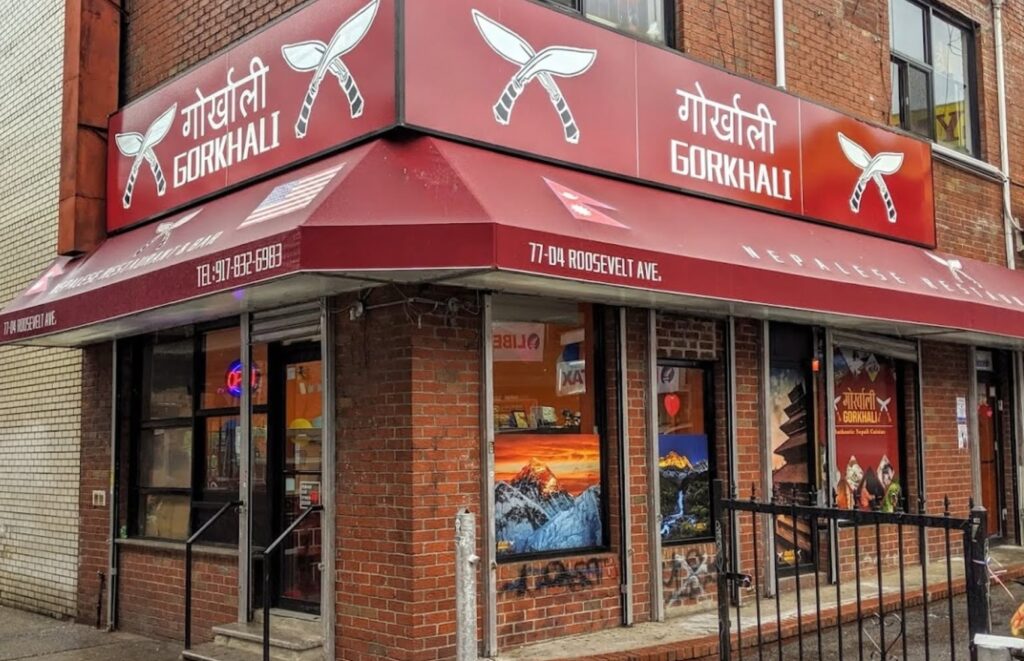
There are now about three dozen Nepali restaurants operating in Queens, but Gorkhali has established its own identity. Its menu features traditional dishes and a variety of momos, thalis, thukpa and sekuwa, which remain especially popular. Many customers say the flavors remind them of Nepal.
The restaurant’s interior reflects Nepali culture, sparking curiosity and interest among non-Nepali visitors. In doing so, Gorkhali plays an important role in introducing Nepali cuisine to one of the world’s largest metropolitan cities.
Today, Gorkhali Nepali Restaurant stands as a symbol of courage, resilience and confidence within the immigrant Nepali community. Building on its success, Thapa Magar expanded in 2023 by opening Gorkhali Brooklyn in Williamsburg, bringing Nepali flavors to another major New York neighborhood.
Reflecting on her journey, Thapa Magar credits the Nepali community for her success.
“I am here today because of the love, support and encouragement from the Nepali community,” she said. “That support has given me the strength to keep moving forward.”

Suresh Shahi
View More PostsSuresh Shahi is the editor of NepYork, the showcase of Nepalis in the USA. He has also been an editor of Khasokhas, the voice of the Nepali diaspora in the USA, since 2012. Currently, he hosts the podcast ‘Community Cornerstone.’ Previously, he served as a host, anchor, and news reporter for ABC TV Nepal.