The Permanent Mission of Nepal to the United Nations and the Consulate General of Nepal in New York, in collaboration with the World Health Organization, co-organized a high-level event at U.N. Headquarters on Friday to mark the first International Wellness Day.
The April 15 observance brought together diplomats, U.N. officials, academics, and experts to advance a vision of holistic wellness encompassing physical, mental, emotional, social, spiritual, and ecological dimensions.
The event followed the U.N. General Assembly’s adoption of Resolution A/RES/80/249. Initiated by Nepal and co-sponsored by dozens of countries, the resolution proclaims April 15 as International Wellness Day. The milestone recognizes wellness as a dynamic state that enables individuals and societies to thrive through preventive, lifestyle-based, and people-centered approaches. Nepal’s leadership in securing support—highlighting the date’s alignment with the Nepali New Year—underscored the day’s significance for global rejuvenation.
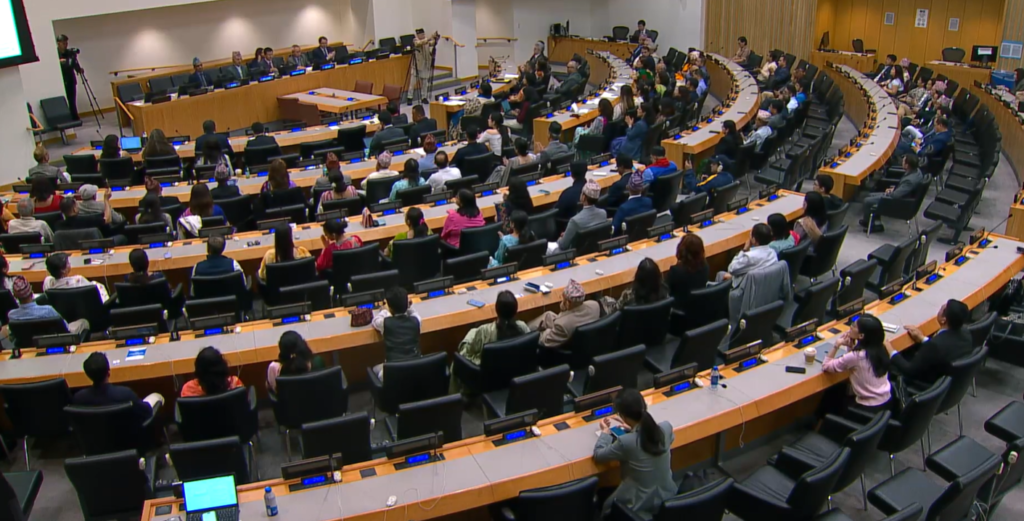
In opening remarks, Nepal’s permanent representative to the U.N., Ambassador Lok Bahadur Thapa, welcomed participants and thanked co-hosts. He said mid-April’s cultural importance makes the day fitting for a global commitment to well-being.
“Wellness becomes more than a personal pursuit,” Thapa said. “It becomes a foundation for collective progress, fostering peace, prosperity, and sustainability.” He linked the initiative to Nepal’s foreign policy of “friendship with all, enmity with none” and its heritage of Ayurveda, yoga, and meditation.
Nepal’s Minister of Foreign Affairs, Shishir Khanal, delivered a video message stressing that wellness is essential for achieving the Sustainable Development Goals. He called on governments and the private sector to actively observe the day.
Li Junhua, U.N. under-secretary-general for economic and social affairs, noted the day’s relevance to SDG 3 (Good Health and Well-Being). WHO Director-General Tedros Adhanom Ghebreyesus, in a video address, reinforced that health is “a state of complete physical, mental, and social well-being,” urging recognition that well-being is created in communities, not just clinics.
Keynote speaker Professor Tyler J. VanderWeele of Harvard University presented data from the Global Flourishing Study of more than 200,000 people across 22 countries. He outlined five domains of flourishing: happiness, health, meaning, character, and relationships. He announced that the Gallup World Poll will expand in 2027 to better track well-being for potential integration into U.N. indicators.
Professor Benjamin Welsh of Morgan State University addressed the global wellness economy, valued between $3.8 trillion and $6.8 trillion and projected to reach $9 trillion. While highlighting its job-creating potential, he cautioned against an elite-focused industry that diverges from broader societal needs amid rising loneliness and inequality.
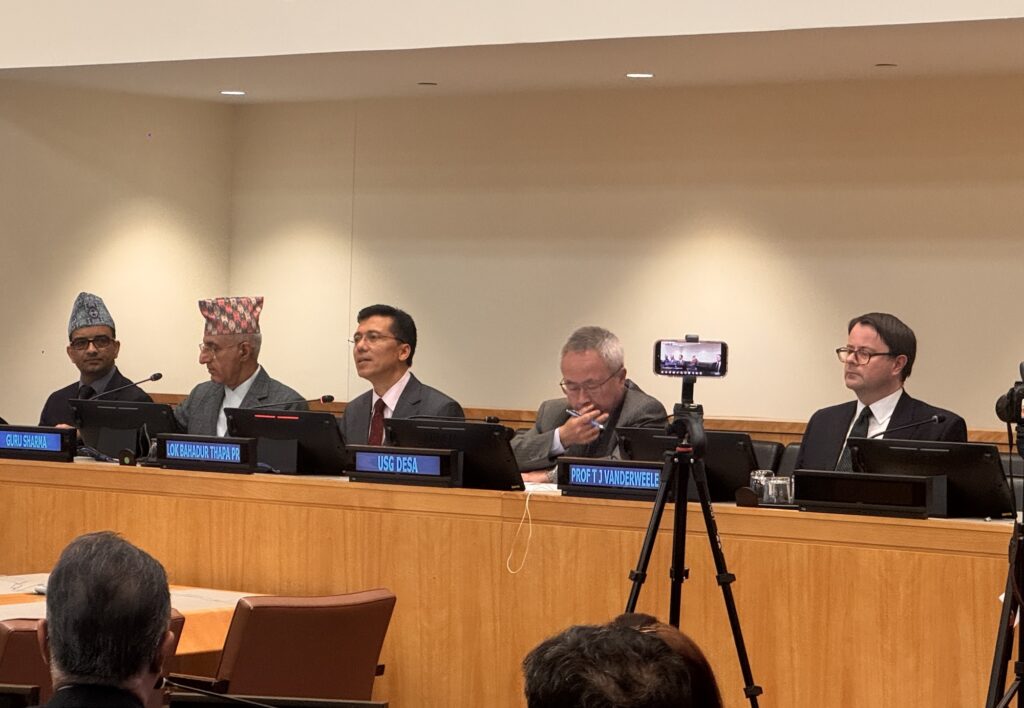
Interventions followed from representatives of Kyrgyzstan, Armenia, Sri Lanka, the Dominican Republic, Portugal, Bhutan, India, and Bangladesh, as well as the U.N. Development Programme. Speakers linked wellness to climate action, traditional systems such as Ayurveda, and Bhutan’s Gross National Happiness index.
Guru L.P. Bhanu Sharma of the Jeevan Vigyan Foundation discussed Nepal’s new 10-year wellness strategy and plans for a Himalayan Wellness Research Hub. The session concluded with a guided group meditation, echoing a nationwide event in Nepal in which 1.5 million people participated on April 15.
Nepali Consul General Dadhi Ram Bhandari reinforced Nepal’s vision to become a global wellness hub, declaring 2027 as Nepal Wellness Year to boost sustainable tourism.
Closing the event, Thapa described the observance as a “starting point” for global action rather than a conclusion, emphasizing wellness as a pillar of international peace and equity.

Kishor Panthi
View More PostsKishor Panthi is the founder and editor-in-chief of Khasokhas and NepYork. He is the author of three books, “Kampan,” "UNTRANSLATABLE" and “Zero Mile.” He writes about social issues, immigration, and politics.