Canada has reportedly denied a significant number of visa applications from Nepalis, citing recent violent protests and a severe deterioration of security and financial conditions in Nepal. This has caused concern among those applying for temporary stays, including students and tourists.
A letter received by applicants from Immigration, Refugees and Citizenship Canada (IRCC) states that the visa refusal was based on “massive violent protests and a severe deterioration of the security and financial situation in the applicant’s country of citizenship” in September 2025.
The decision has caused worry among Nepali applicants, particularly students who dream of studying in Canada. The Canadian visa offices in Bangkok and Singapore, which typically process applications from Nepal, have been citing the country’s current situation in their rejection notes.
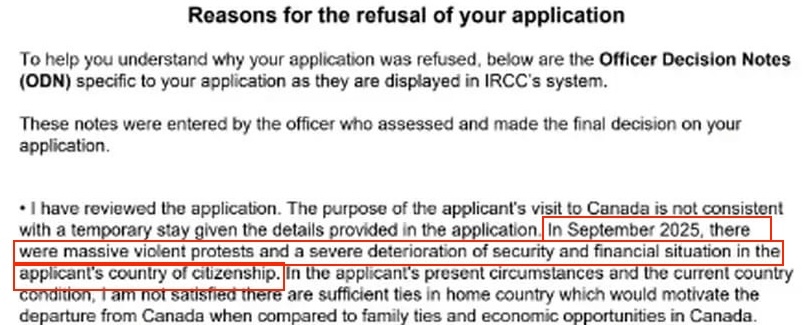
Reports also suggest that other countries have been denying visas to Nepalis based on recent events. The unrest, known as the 2025 Nepali Gen Z protests, began on September 8, 2025, as peaceful demonstrations organized by young Nepalis against government corruption, economic inequality, and a short-lived ban on 26 social media platforms.
The protests quickly escalated into widespread violence, with clashes between demonstrators and security forces resulting in at least 101 deaths and over 1,300 injuries nationwide.
Police fired live ammunition, rubber bullets, and water cannons, killing at least 19 people on the first day alone. Protesters defied curfews to storm and set fire to key symbols of the establishment, including the Federal Parliament building, the Supreme Court, Singha Durbar (the central administrative complex), the president’s residence at Sital Niwas, the prime minister’s home at Baluwatar, and the headquarters of major political parties like the Nepali Congress and Communist Party (UML).
Nepal’s passport continues to rank among the weakest in the world. According to data from Henley Global, Nepal’s passport ranks 100th globally, placing it among the bottom ten weakest passports after countries like Afghanistan, Syria, Iraq, Yemen, Pakistan, and Somalia. Passports from Palestine, North Korea, and Libya are considered stronger than Nepal’s.

Kishor Panthi
View More PostsKishor Panthi is the founder and editor-in-chief of Khasokhas and NepYork. He is the author of three books, “Kampan,” "UNTRANSLATABLE" and “Zero Mile.” He writes about social issues, immigration, and politics.