


Nepal Completes Historic UN ECOSOC Presidency: Key Achievements from Leading a Major UN Organ

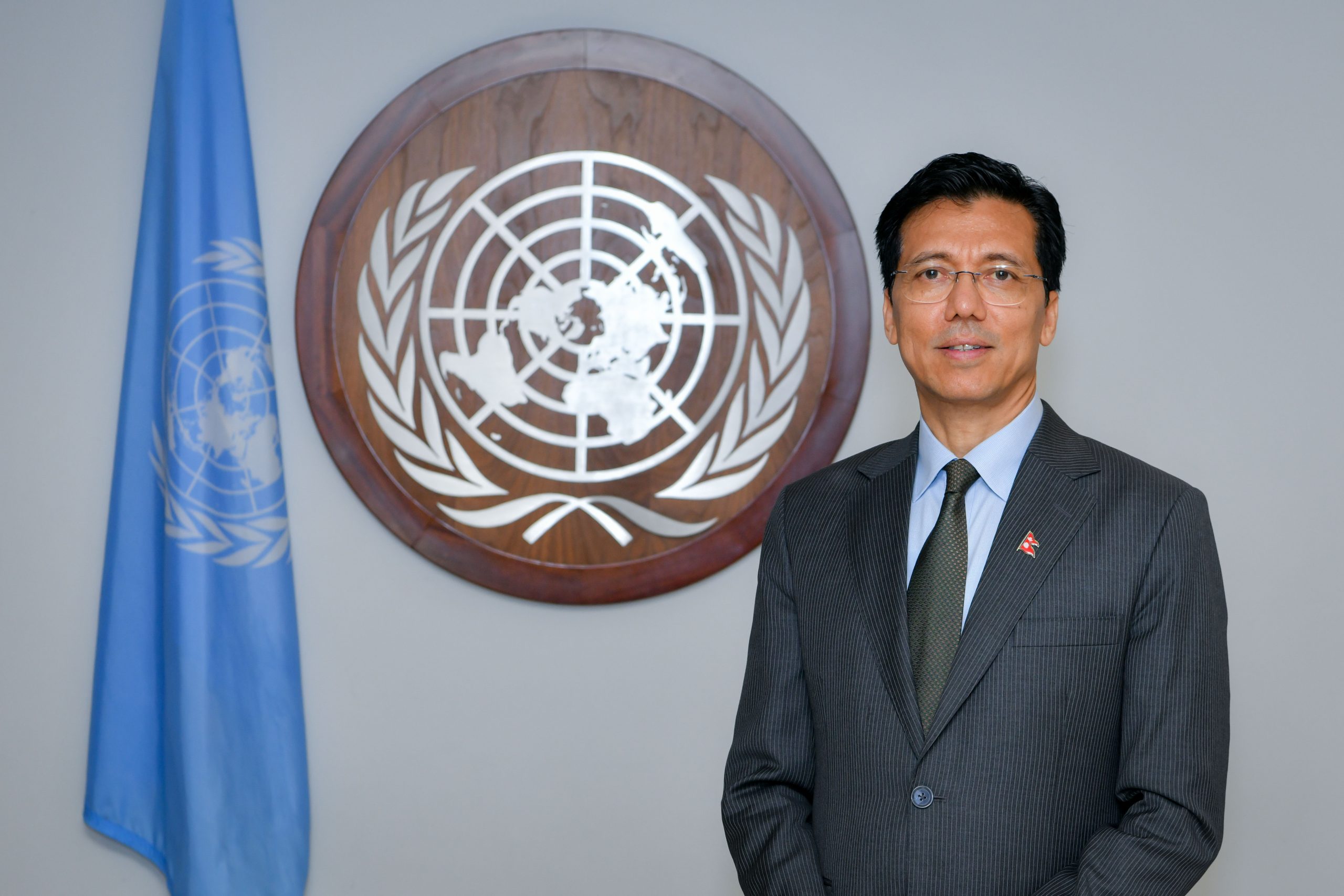
Ambassador Lok Bahadur Thapa, Nepal’s Permanent Representative to the United Nations and President of ECOSOC for the 2025-2026 session, poses for a portrait in New York. Nepal completed its historic ECOSOC presidency on July 23, 2026. (Photo: Rajan Kafle/NepYork)
NEW YORK — Nepal has successfully completed its one-year presidency of the United Nations Economic and Social Council (ECOSOC) for the 2025–2026 session, marking the first time in the 80-year history of the UN body that a Nepali diplomat has held the position. Ambassador Lok Bahadur Thapa, Nepal’s Permanent Representative to the United Nations, concluded the presidency on July 23, 2026, nearly 70 years after Nepal first gained UN membership.
Historic Milestone for Nepal’s Multilateral Diplomacy
The Economic and Social Council, established in 1946—just one year after the founding of the United Nations in 1945—is one of the six principal organs of the UN system and serves as a cornerstone for global development. ECOSOC primarily focuses on poverty reduction, addressing social and economic inequalities, implementing the Sustainable Development Goals (SDGs), and monitoring international development commitments while promoting global peace, economic development, social progress, education, health, employment, and international cooperation.
The council provides a unique platform that brings together governments, UN agencies, civil society, non-governmental organizations, the private sector, the scientific community, and other stakeholders to discuss global development challenges and solutions. It is widely regarded as a crucial forum for inclusive multilateral cooperation.
Under UN rules, the five regional groups rotate the ECOSOC presidency. Nepal assumed the responsibility for the 2025–2026 term when leadership fell to the Asia-Pacific Group, securing support from member states. ECOSOC comprises 54 of the UN’s 193 member states, with members serving three-year terms. Each year, 18 new members are elected while those completing their terms rotate out. Beyond member states, the council maintains active participation from civil society, NGOs, academic institutions, the private sector, youth, women, and the scientific community, with approximately 6,700 accredited organizations affiliated with ECOSOC.
Nepal’s Four Development Priorities During Presidency
According to Ambassador Thapa, Nepal’s presidency elevated the country’s role, capacity, and diplomatic identity on the international stage. “The ECOSOC presidency is a historic opportunity for Nepal. It has increased Nepal’s international visibility and sent a message that Nepal can contribute to and provide leadership in global policymaking,” Thapa said.
Agriculture and Food System Transformation was Nepal’s first priority. With growing food insecurity worldwide and ongoing challenges in poverty reduction, Nepal organized special discussions under ECOSOC to address these issues. The discussions included member states, UN agencies, the private sector, young entrepreneurs, and innovators. Emphasis was placed on attracting youth to agriculture, expanding technology use, ensuring financial access, building capacity, and connecting agricultural production to national and international markets within global and regional value chains.
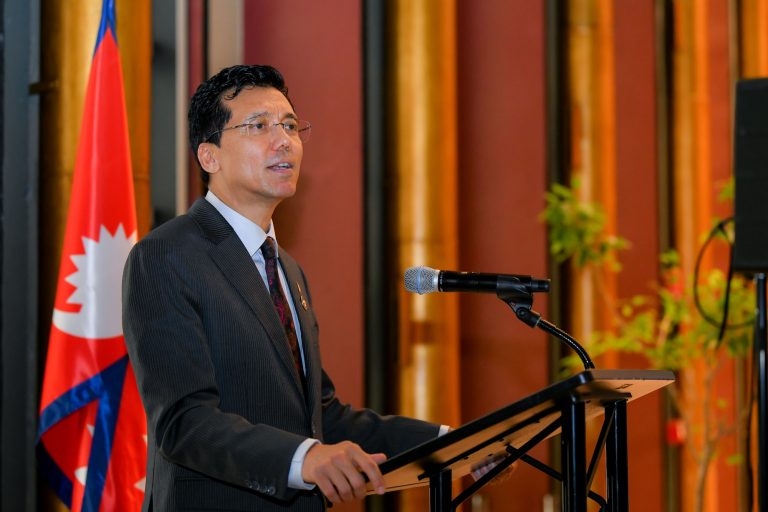
Digital Inclusion and Youth Entrepreneurship constituted the second priority. While digital technology has created new opportunities, a large portion of the global population remains without digital access. Nepal brought this issue to the center of international discussions, focusing on the digital divide, disparities in technology use, and creating opportunities to cultivate youth entrepreneurship in the digital sector. A special meeting on digital inclusion and innovation was jointly organized by the President of the General Assembly and the ECOSOC President, generating significant discussion on making digital technology accessible to all, connecting youth to new opportunities, and supporting SDG achievement through technology.
Climate Resilience was the third priority. With mountainous and developing countries increasingly affected by climate change, Nepal brought highland challenges to the global stage, particularly highlighting the impacts of glacial lake outburst floods, melting glaciers, and climate change on local livelihoods. Nepal organized a special program titled “From Sagarmatha to the Sea: Vanishing Glaciers and Rising Seas in a Warming World” at the Asia-Pacific Forum on Sustainable Development in Bangkok, Thailand, illustrating how climate impacts in mountain regions directly affect coastal and small island nations. Nepal emphasized that climate change is a global challenge requiring international cooperation rather than a isolated problem for a single country or region.
Financing for Development was the fourth priority. The lack of financial resources needed to achieve the SDGs has become a common challenge for many developing and least developed countries. During its ECOSOC presidency, Nepal prioritized mobilizing necessary development resources, expanding international financial cooperation, and increasing financial access for developing nations. ECOSOC played a significant role in implementing and monitoring commitments from the Fourth International Conference on Financing for Development held in Seville, Spain, organizing special meetings on debt assessment, illicit financial flows, and tax cooperation with participation from member states, the World Bank, the International Monetary Fund, and other international financial institutions.
High-Level Political Forum and Major Achievements
During Nepal’s one-year term, various meetings, discussions, forums, and high-level programs were conducted under ECOSOC, with the High-Level Political Forum (HLPF) serving as the most significant event. Held from July 7–15, 2025, the forum featured extensive discussions on the status of SDG implementation, global progress, challenges, and future strategies. More than 120 high-level representatives—including ministers, deputy ministers, vice presidents, deputy prime ministers, and government delegates—participated. The program convened approximately 4,000 delegates, around 500 civil society representatives, and child representatives under 16 years old. During this period, 36 countries presented their Voluntary National Reviews.
A ministerial declaration adopted at the High-Level Political Forum under Nepal’s presidency is considered a major achievement and was later endorsed by ECOSOC. It is viewed as a vital foundational document for the upcoming SDG Summit.
Nepal’s Contribution to Global Policymaking
According to Ambassador Thapa, the most significant achievement of the ECOSOC presidency was establishing Nepal’s effective presence in global policymaking. He stated that Nepal presented balanced and inclusive perspectives on development, climate change, digital technology, agriculture, youth, and financial resource management.
Despite differences among member states on various issues, Thapa noted that Nepal prioritized dialogue, cooperation, and consensus while advancing multilateral processes, thereby strengthening confidence in Nepal’s ability to play a constructive role in international policymaking.
ECOSOC Presidency Expands Nepal’s Diplomatic Influence
Ambassador Thapa stated that the ECOSOC presidency significantly increased Nepal’s visibility, credibility, and diplomatic influence within the UN and the broader international community. “Wherever we led meetings, Nepal was recognized as the ECOSOC president nation. This provided an opportunity to enhance Nepal’s identity and prestige,” he said.
According to Thapa, during its presidency, Nepal successfully brought youth empowerment, women’s participation, mountain region conservation, climate change impacts, digital transformation, and financing for development to the center of global debates.
Thapa noted that the ECOSOC presidency experience has laid the groundwork for Nepal’s role to become even more effective in future UN and international processes. He stated that the presidency demonstrated Nepal’s ability to lead on global issues, find common solutions, and play a positive and significant role in advancing international cooperation and global policymaking.
With the successful conclusion of its ECOSOC presidency, Nepal has further strengthened its position within the UN system. This milestone establishes a new foundation for Nepal’s international identity, diplomatic influence, and active participation in future multilateral initiatives.
This article is based on an exclusive interview conducted by Rajan Kafle with Ambassador Lok Bahadur Thapa, Nepal’s Permanent Representative to the United Nations, following the successful completion of Nepal’s one-year ECOSOC presidency.