A livestock shelter project aimed at supporting a long-term self-sustainability initiative for vulnerable children was launched Sunday at Samsara Ghar, a residential educational home in Parbat district.
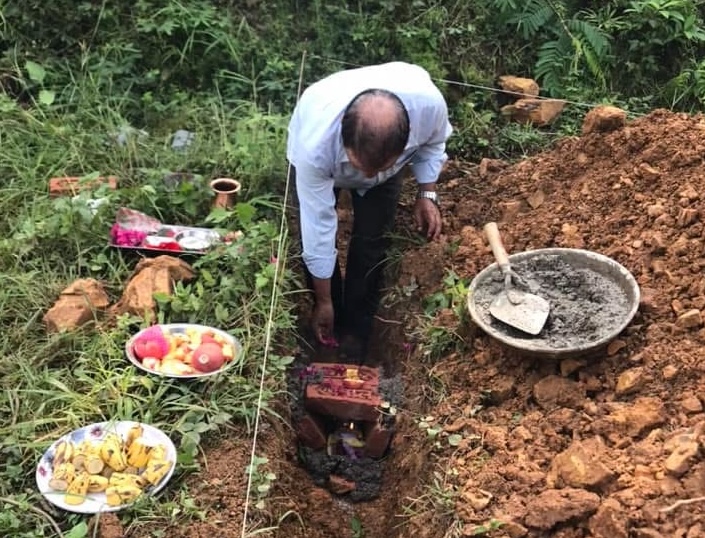
Lok Prasad Shrestha, vice president of the Rajendra Anjana Foundation, laid the foundation stone for the shelters, marking a key step in efforts to provide fresh food, practical skills and economic sustainability for children living at the facility.
Samsara Ghar, jointly established by ARC for Nepal and the Rajendra Anjana Foundation, serves orphaned, underprivileged and marginalized children, including those from Dalit and minority communities across Nepal. The home currently houses 10 children and plans to expand to 50 within three years by enrolling 10 additional children annually between the ages of 5 and 7.
Organizers said the initiative is designed to go beyond basic shelter by offering long-term support, including education through high school and potential assistance for higher education. Children at the home receive care from a team of four staff members, including a teacher, caretaker, chef and assistant.
A new residential facility under construction on about 4 ropani (21,900 square feet) of land donated by the Shrestha family is expected to be completed in the coming months. The project represents an investment of nearly $800,000, according to organizers. A formal opening is planned for February 2027.
The new campus will include a multi-purpose hall with a capacity of about 200 people, intended for educational programs, leadership training, digital learning, cultural events and community activities.
As part of its sustainability model, Samsara Ghar plans to raise buffaloes, goats and poultry and produce organic fruits and vegetables. Organizers say the effort will provide nutritious food while also serving as a hands-on learning environment for children to gain agricultural and environmental skills.
The project has received support from domestic and international partners, including the Fair Lawn Sunrise Rotary Club of New Jersey and Rotary International, which contributed to the development of a library and computer lab.
Rajendra Shrestha, president of ARC for Nepal, has pledged 75% of profits from his businesses to support the initiative, creating a long-term funding stream for the organization’s programs.
Organizers say the broader goal is to break cycles of poverty by equipping children with education, life skills and opportunities to become professionals and community leaders.
For more information, visit www.arcfornepal.org.

Kishor Panthi
View More PostsKishor Panthi is the founder and editor-in-chief of Khasokhas and NepYork. He is the author of three books, “Kampan,” "UNTRANSLATABLE" and “Zero Mile.” He writes about social issues, immigration, and politics.