Rajendra–Anjana Foundation and its U.S.-based partner ARC for Nepal are expanding efforts to support education and social upliftment for marginalized children in Nepal, with plans to scale a residential care initiative that has already drawn international backing.
Founded by New Jersey resident Rajendra Shrestha, the foundation has worked across Parbat, Syangja, Baglung and Chitwan districts, contributing to the establishment of about 21 secondary schools and distributing educational and sports materials. The group has also funded temple construction in Parbat to support cultural preservation and provided financial assistance to improve infrastructure at Huwas Multiple Campus in Paiyun.
Shrestha said the organization is addressing a long-standing trend in rural areas where students leave for foreign employment after completing secondary education. To encourage higher education locally, the foundation provides annual scholarships of approximately $660 (100,000 Nepali rupees) to students progressing through undergraduate levels, with an additional $264 (40,000 rupees) awarded to those who pass all subjects in their final year. The initiative has helped increase enrollment at local campuses, he said.
To date, the foundation and ARC for Nepal have invested approximately $99,000 (15 million rupees) in the education sector. Land for the flagship residential project, known as “Sansara Home,” was contributed by Shrestha and his three brothers from their ancestral property.
ARC for Nepal, a U.S.-registered nonprofit, has supported fundraising and outreach efforts, including an event held in New Jersey in 2025 that raised nearly $25,000 for the construction of the residential facility.
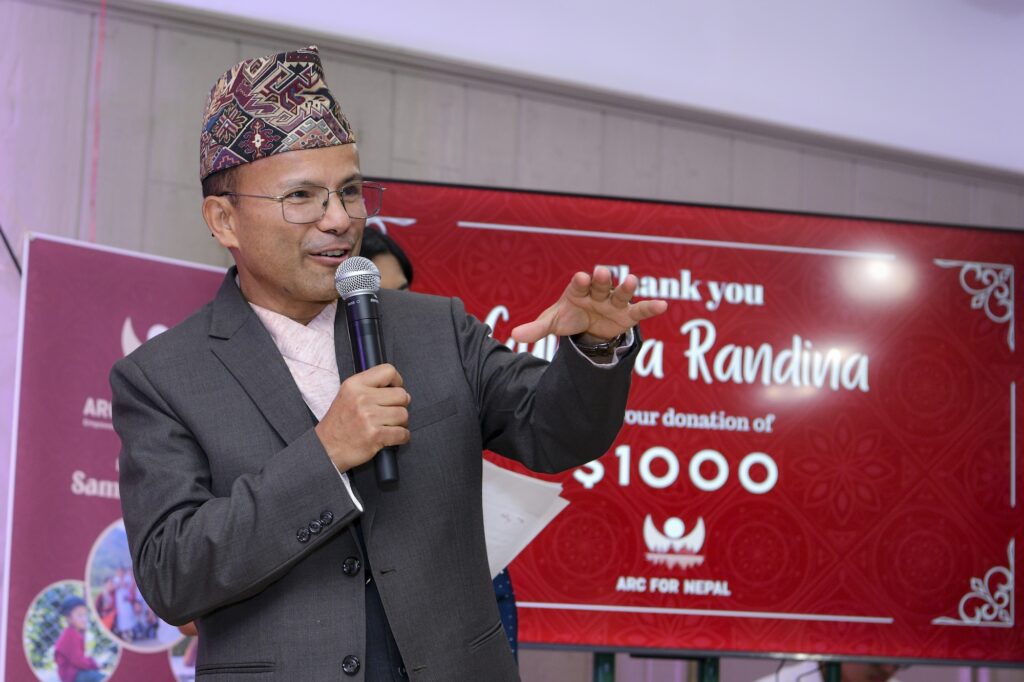
Currently, Sansara Home houses 10 children from marginalized communities, including three from the Chepang community in Chitwan and others from Gulmi and Parbat. Many of the children previously faced barriers to education, including long travel distances to schools and limited Nepali language proficiency. With structured support, the children are now enrolled in primary grades and achieving strong academic results, according to Shrestha.
The organization plans to expand the facility to accommodate up to 50 children from primary through secondary levels. The project is expected to cost about $660,000 (100 million rupees), with 50 to 60 percent of funding already secured. Construction is expected to be completed next year.
In addition to academic support, the foundation aims to integrate technical training, leadership development and life skills education. Plans are also underway to develop a small-scale agricultural initiative on newly acquired land, where livestock farming will help provide organic food for the children while reducing operational costs and creating local employment opportunities.
Shrestha said long-term sustainability will rely on partnerships with nonprofit organizations and Rotary clubs. He emphasized that philanthropic work often faces bureaucratic hurdles and public scrutiny, but expressed optimism that government processes will become more supportive.
He encouraged members of the Nepali diaspora to collaborate with credible organizations when contributing to social causes in Nepal, noting that patience and trust are essential for meaningful impact.

Kishor Panthi
View More PostsKishor Panthi is the founder and editor-in-chief of Khasokhas and NepYork. He is the author of three books, “Kampan,” "UNTRANSLATABLE" and “Zero Mile.” He writes about social issues, immigration, and politics.