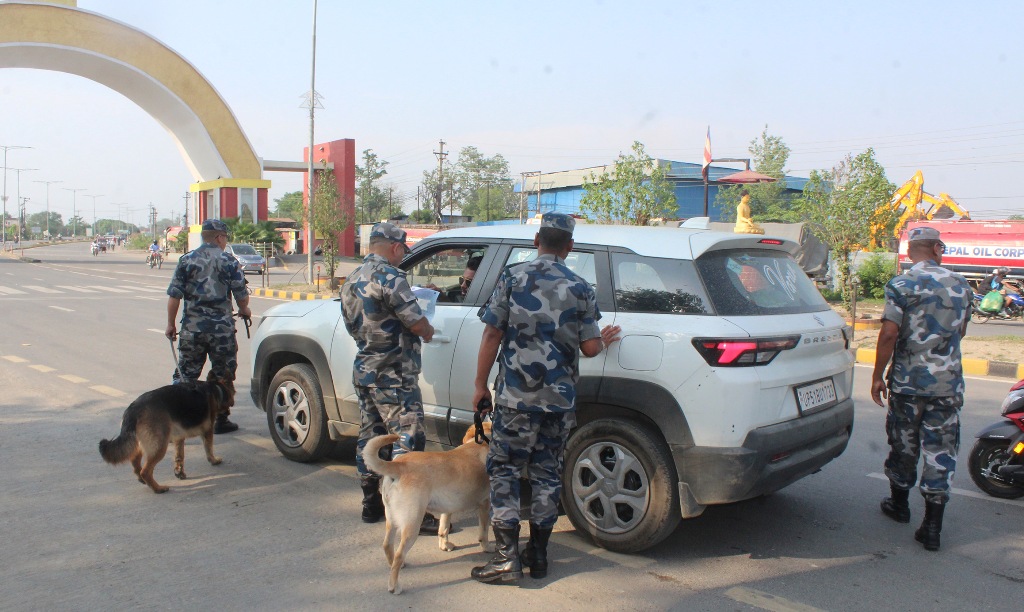
Security agencies have increased surveillance at the Belahiya-Sunauli border crossing, a key gateway between Nepal and India, to combat human trafficking, drug smuggling, illegal currency exchange and other unlawful activities while protecting tourists.
Officials say they are trying to strike a balance between easing travel and reducing security risks at one of Nepal’s busiest border points.
Major Land Route
The Belahiya-Sunauli checkpoint links Belahiya in Rupandehi district with Sunauli in India’s Uttar Pradesh state. It is among Nepal’s busiest international land crossings, with thousands of Nepali, Indian and third-country nationals passing through each day.
The crossing supports trade, tourism, jobs, education, health care and social ties between the two countries. But its open nature also creates space for illegal activity.
Security Has Been Increased
Rupandehi Police Chief Janak Bahadur Shahi said police have stepped up operations to reduce border-related risks. He said tourists entering Nepal through Belahiya have been kept safe and that no security complaints have been received so far.
Security measures include walk-through gates, sniffer dogs, plainclothes police, CCTV monitoring and regular coordination between Nepali and Indian security agencies. The Armed Police Force, Nepal Police, immigration officials and customs officers work together to maintain 24-hour monitoring.
Tourist Flow Through the Border
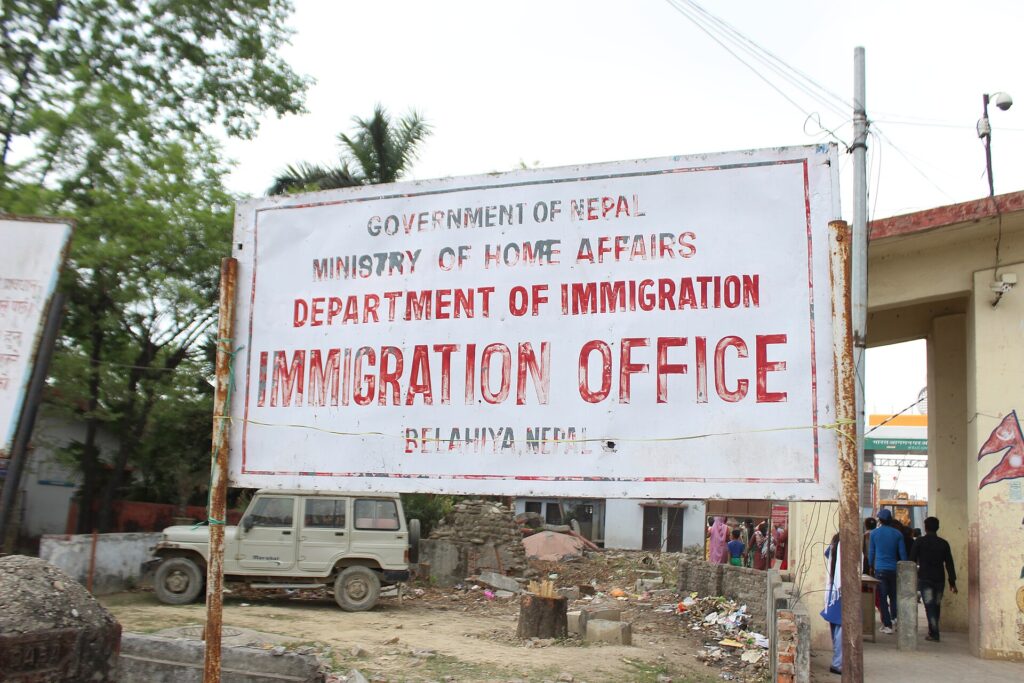
According to the Immigration Office in Belahiya, 45,308 tourists entered Nepal through the checkpoint from January to March 2026. Of them, 18,035 were from Sri Lanka and 14,648 were from Myanmar.
During the same period, 42,632 tourists left Nepal through the same border point. The figures show the crossing’s importance for both tourism and border management.
Gateway to Lumbini
Foreign tourists traveling to major destinations such as Lumbini, Pokhara, Kathmandu, Chitwan, Palpa and Muktinath mainly use this border route. It is especially important for Buddhist pilgrims heading to Lumbini, the birthplace of Buddha.
Tourism entrepreneurs say visitors who enter through Belahiya often continue on to Palpa, Pokhara, Kathmandu and Muktinath after visiting Lumbini. Rupandehi has about 1,500 hotels and restaurants, which contribute significantly to the local economy through tourism.
Visa-on-Arrival System
Basuram Paudel, chief of the Immigration Office in Belahiya, said third-country nationals can obtain visa-on-arrival services there. Visas for 15, 30 or 90 days are issued quickly through online or direct application.
Foreign travelers entering via India must first clear the Armed Police Force’s screening process, then undergo Nepal Police checks, and finally complete visa processing at the immigration office. Officials say the system has made travel easier for tourists.
Open Border, Bigger Risks
The open border has made social, cultural and economic exchange easier, but it has also created serious security challenges. Authorities are treating human trafficking, drug smuggling, illegal currency exchange, theft, smuggling and possible terrorist activity as sensitive threats.
Because large numbers of travelers and vehicles cross daily, border management has become difficult. Officials have prioritized identity checks, vehicle inspections and monitoring of suspicious individuals.
Human Trafficking Risk
Recent rescues of Nepalis from India’s Kushinagar have again highlighted the risks tied to the Belahiya crossing. Traffickers are said to lure women and children through the border with promises of opportunity before trapping them in trafficking networks.
Police said they keep watch on suspicious people and detain them for questioning when needed.
Civil Groups Help Victims
Groups working against human trafficking have set up assistance centers at the border to help rescue, counsel and shelter people at risk.
Maya Kshetri, chief of Maiti Nepal’s transit home in Rupandehi, said victims are given safe shelter until they can be handed over to their guardians. She said such groups play a vital role from rescue to rehabilitation.
Calls for Better Infrastructure
Tourism operators say Belahiya needs better infrastructure and management. Madhav Kumar Khanal, chairman of the Hotel and Restaurant Entrepreneurs Association Rupandehi, said modern facilities, tourist information centers, multilingual signs, digital visa processing and smoother immigration services would improve the visitor experience.
He said stronger services would broaden the benefits of tourism and support local businesses more effectively.
Lessons From COVID-19
During the COVID-19 pandemic, the Belahiya crossing was completely closed, leaving thousands of Nepalis unable to return home. Trade stopped and tourism was badly affected.
When the border reopened, maintaining health protocols remained difficult. The experience showed how sensitive open-border management can be.
International Concern
Madhes rights activist Rabindranath Thakur said Belahiya is not just a border crossing but also an economic, social and cultural bridge between Nepal and India. He said border management must balance security, service delivery and human rights.
The U.S. State Department’s 2021 terrorism report described the open Nepal-India border as a security concern. It said Nepal shares an open border with India that is about 1,000 miles long, with some checkpoints but limited security control and, in some cases, only one immigration officer on duty.
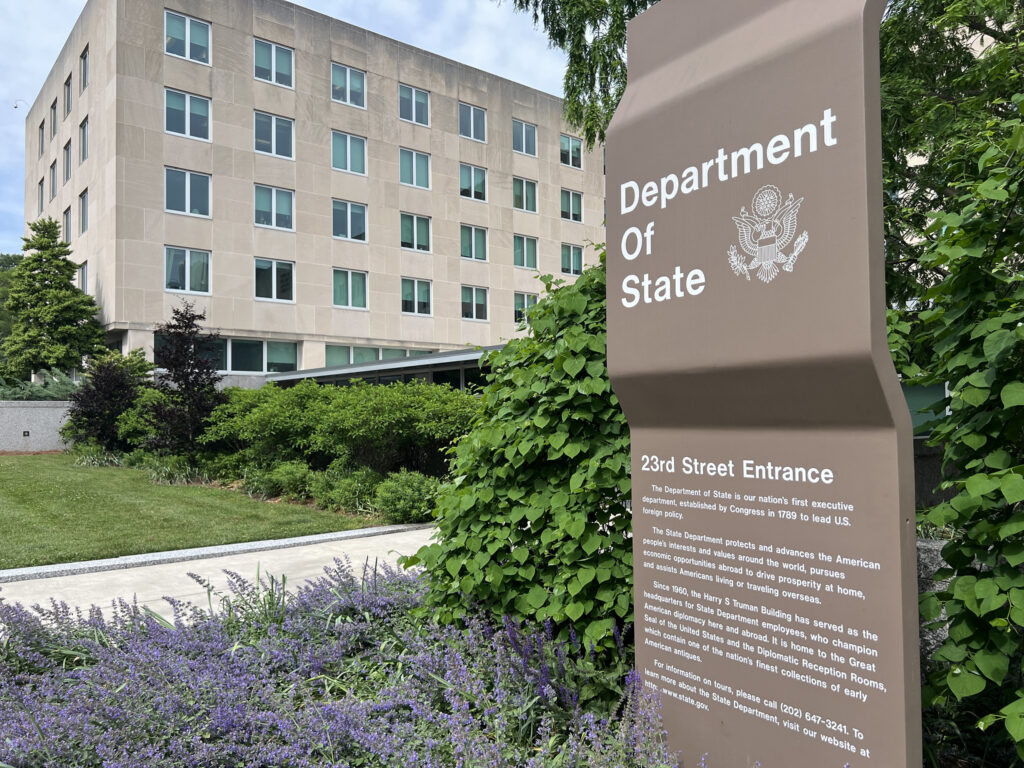
The report said most people crossing the border are not stopped or checked and that crossings can be easily bypassed to avoid surveillance. It cited shortages of resources, weak information sharing, lack of political will, manpower gaps, limited technology, poor training and corruption as major border management challenges.
A separate U.S. State Department trafficking report also identified the open border as a major route for human trafficking. It said traffickers use children to transport drugs across the Nepal-India border.
The report said the government trained law enforcement officers on trafficking issues and held joint sessions with Indian counterparts on cross-border trafficking. But it also said the government had still not passed draft amendments criminalizing all forms of labor and sex trafficking for the 10th straight year.
It added that Nepal Police lacks sufficient personnel, resources and training for border patrol and that surveillance and checking in border areas remain limited. The report also noted rising cases of irregular migration and fraud through social media, while the National Human Rights Commission estimates that about 1.5 million Nepalis are at risk of trafficking.
The U.N. Office on Drugs and Crime has issued standard operating procedures to help fight cross-border trafficking among India, Nepal and Bangladesh. It has said stronger cooperation among border security forces, police and civil society is needed.
UNODC said trafficking and organized smuggling of migrants are complex crimes that often involve cross-border networks and vulnerable communities. It said clear investigative procedures are needed to identify victims, preserve evidence and improve coordination among agencies.
Other studies have warned that open borders can also increase the risk of terrorist infiltration, counterfeit currency, arms smuggling and organized crime.
Security and Tourism
The tighter security at Belahiya comes against that backdrop. But keeping tourism unaffected while strengthening security remains a major challenge.
Unless traveler convenience, safety and crime control are balanced in a single system, Belahiya will remain both an opportunity and a risk.
Toward Modern Border Management
Experts say a multi-layered approach is needed so the crossing does not become a center of both economic opportunity and security vulnerability.
They suggest modern infrastructure, digital screening, adequate parking, comfortable passenger facilities, biometric checks, AI-based surveillance, shared databases, regular bilateral meetings, joint patrols, information sharing and multilingual information centers.
They also say cooperation among local communities, nongovernmental groups, police, immigration offices and local governments must be strengthened to curb human trafficking. Stronger women- and child-focused protection campaigns, risk identification systems and counseling services could help reduce illegal activity significantly.

Bhawani Prasad Panday
View More PostsBhawani Prasad Panday is a Nepali journalist based in Butwal, a thriving commercial center in Lumbini Province, Nepal. Renowned for his engaging coverage of local issues, Panday explores topics such as economic growth, social challenges, and cultural events. Currently, he writes for NepYork, addressing a broad spectrum of subjects ranging from community concerns to international developments.