After spending 10 years pursuing higher education in the United States, 38-year-old Sushil Khadka returned to his ancestral village of Saatbise in Mangala Rural Municipality-3, Myagdi, Nepal, and embarked on a successful venture in commercial banana farming.
Khadka, who currently resides in Baglung and runs a business in Kathmandu, transformed his family’s ancestral land—once left fallow due to migration and foreign employment—into a thriving agricultural enterprise under the banner of Mangala Venture Company. His efforts not only revitalized barren farmland but also created income and employment opportunities in rural Nepal.
Reflecting on his journey, Khadka shared, “Two hundred years ago, my ancestors bought this fertile land in Saatbise for rice farming. But with migration and foreign employment, it started turning into a wasteland. Two years ago, when I planted bananas, many laughed at me. Now that the venture is succeeding and others are following suit, I feel proud.”
Khadka’s academic credentials are impressive—he holds a master’s degree in economics and business from Vanderbilt University in the USA, along with a bachelor’s degree in engineering.
After returning to Nepal in 2015, following a decade abroad that began in 2005, he settled in Kathmandu with his wife, Silsila, where they operate a company focused on recycling non-biodegradable waste.
However, his ties to Saatbise—where his great-grandparents had settled after migrating from Baglung and purchasing land for just 20 rupees per plot two centuries ago—remained strong. The area earned its name “Saatbise” (meaning “seven twenties”) from this historical transaction, according to local lore.
Once renowned for its aromatic Gauriya rice and blessed with irrigation facilities, the Saatbise land gradually turned into a jungle as agricultural labor dwindled and costs rose due to foreign employment trends. It was during the COVID-19 lockdown that Khadka conceived the idea of reviving his ancestral property through agriculture.
Starting modestly with 150 Hazari banana plants across three ropani (approximately 1.5 acres), he has since expanded by planting new saplings on an additional ropani, encouraged by his initial success.
Khadka’s mother, Man Kumari, assists him in tending the banana orchard. He is now preparing to diversify into dragon fruit farming while also planning to modernize traditional Gauriya rice cultivation using advanced equipment to reduce costs.
His vision extends beyond personal success—he aims to inspire unemployed youth, including returnees from abroad and locals, by forming a group to collectively pursue agricultural entrepreneurship.
“Through this, I want to send a message that something meaningful can be done in our own country,” Khadka said. “It’s our duty to preserve and promote traditional crops that can withstand climate change and shifting weather patterns.”
Bananas are a cornerstone of Nepal’s agricultural landscape, grown across 68 of its 77 districts. According to the Ministry of Agriculture and Livestock Development, Nepal’s banana production reached 254,161 metric tons from 16,699 hectares in 2019/20, with an average productivity of 15.22 metric tons per hectare—higher than the earlier recorded 13.2 tons per hectare in 2012/13.
The crop accounts for 21% of the nation’s summer fruit area and 37% of its summer fruit production, making it a vital contributor to food security and rural economies. Districts like Chitwan have emerged as hubs for commercial banana farming, supported by government initiatives like the Prime Minister Agriculture Modernization Project’s Banana Zone.
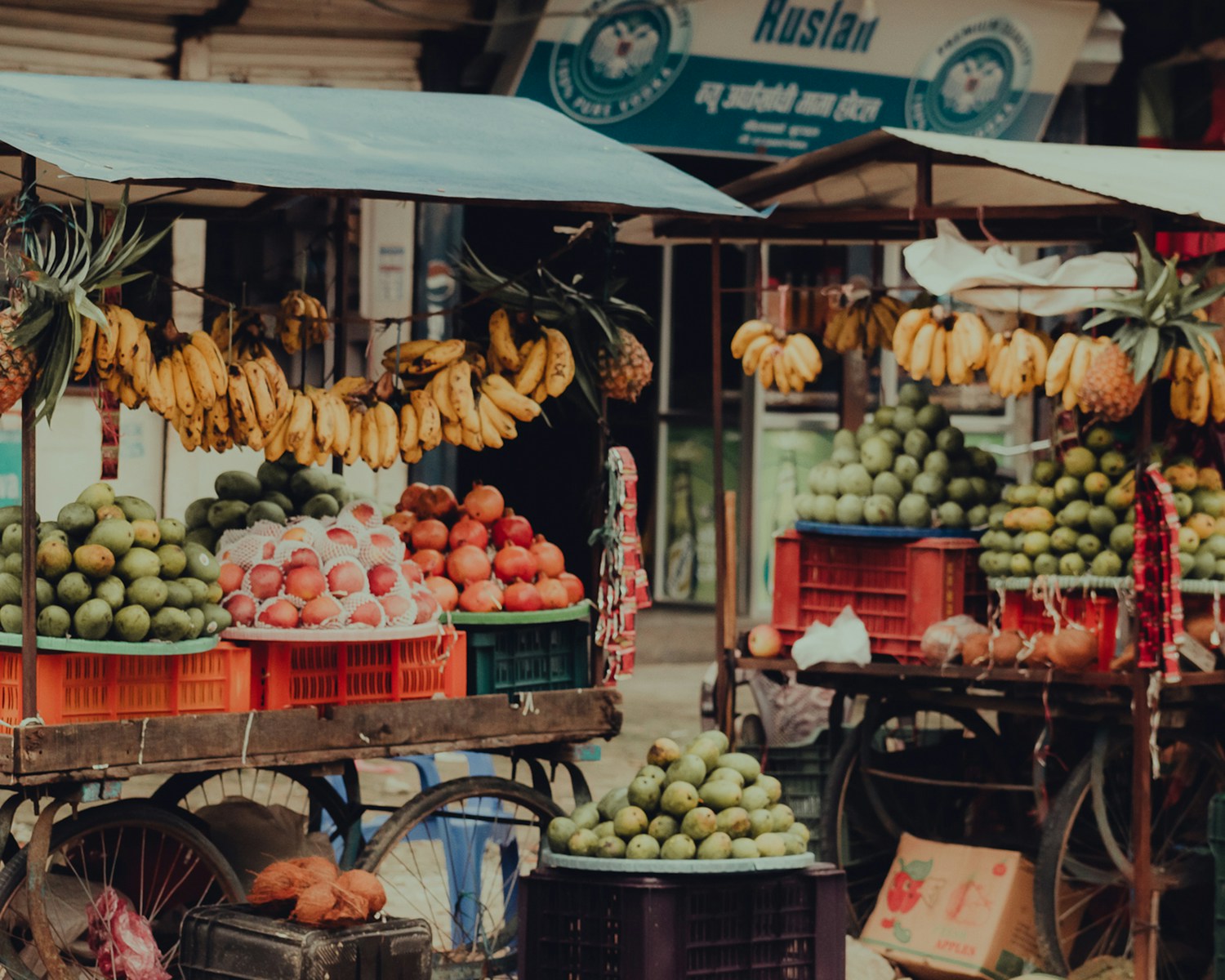
Despite this growth, Nepal’s banana sector faces hurdles. Productivity remains below its potential of 20 tons per hectare, and commercial plantations are still limited. Migration and labor shortages have left much arable land, like Khadka’s, underutilized, while climate change poses risks with shifting suitability zones and pest pressures. Nevertheless, ecological niche modeling studies, such as those by ICIMOD, highlight bananas as a resilient crop adaptable to future climate conditions, particularly in Nepal’s lowlands and mid-hills.
Nepal’s banana production falls short of its soaring domestic demand, driven by urban and peri-urban consumption. In 2011/12, the country imported 27,878 metric tons of bananas from India, a figure that ballooned to 50,651 metric tons by 2019/20, according to the Ministry of Finance.
Imports primarily come from India due to proximity and cost advantages, with negligible exports recorded—highlighting a stark trade imbalance. Nepal’s total exports in 2023 were valued at $1.21 billion, dominated by carpets, yarn, and spices, while imports reached $13.74 billion, including significant agricultural goods like bananas. This trade deficit, pegged at NPR 1.454 trillion in FY 2022/23, underscores the need for import substitution through domestic production.

Susan Shrestha
View More PostsSusan Shrestha is a Europe-based journalist. He covers a wide range of topics, from local matters to global affairs. Shrestha previously worked as a reporter for Khasokhas in Nepal.