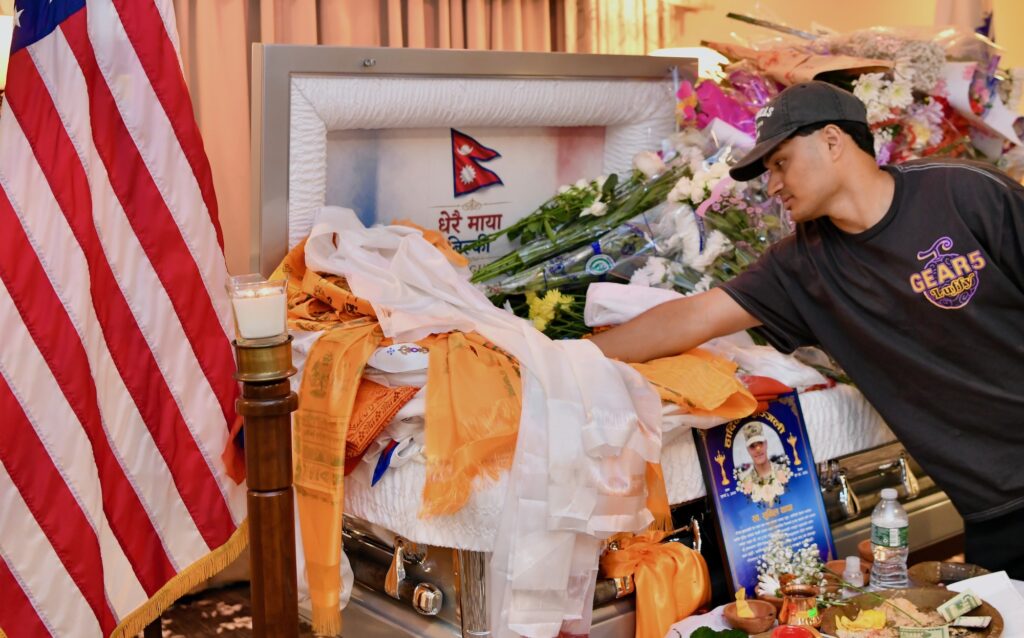
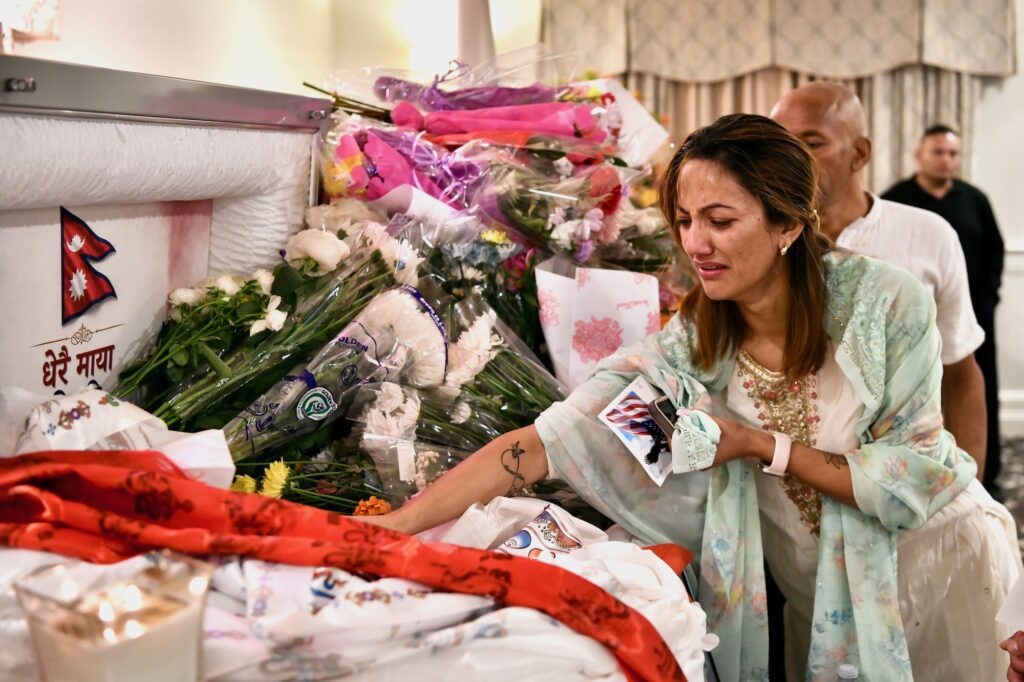
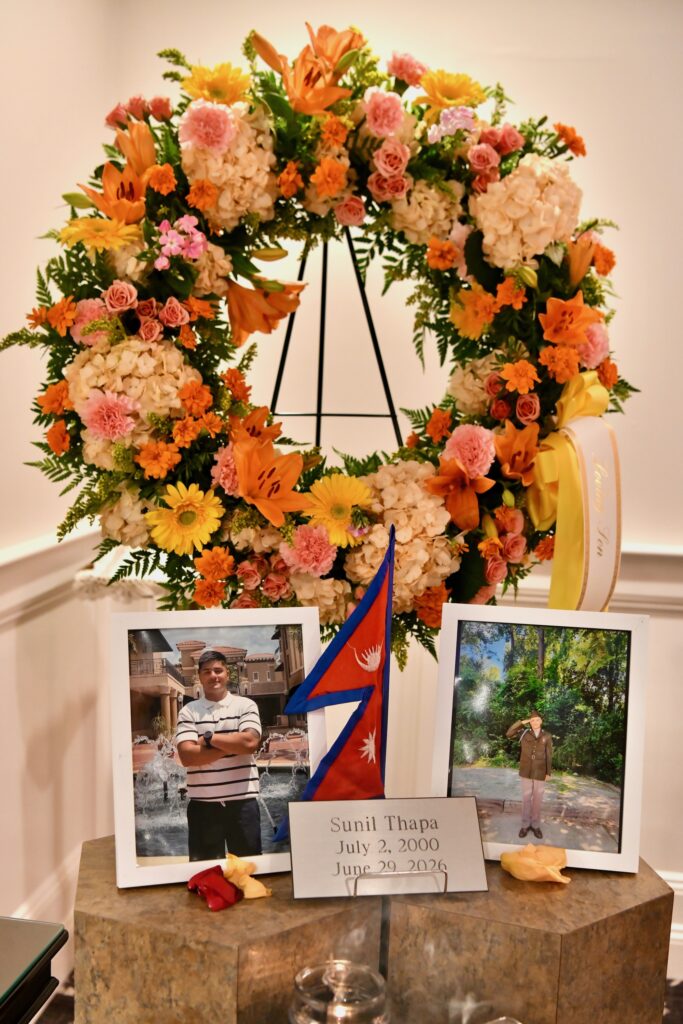
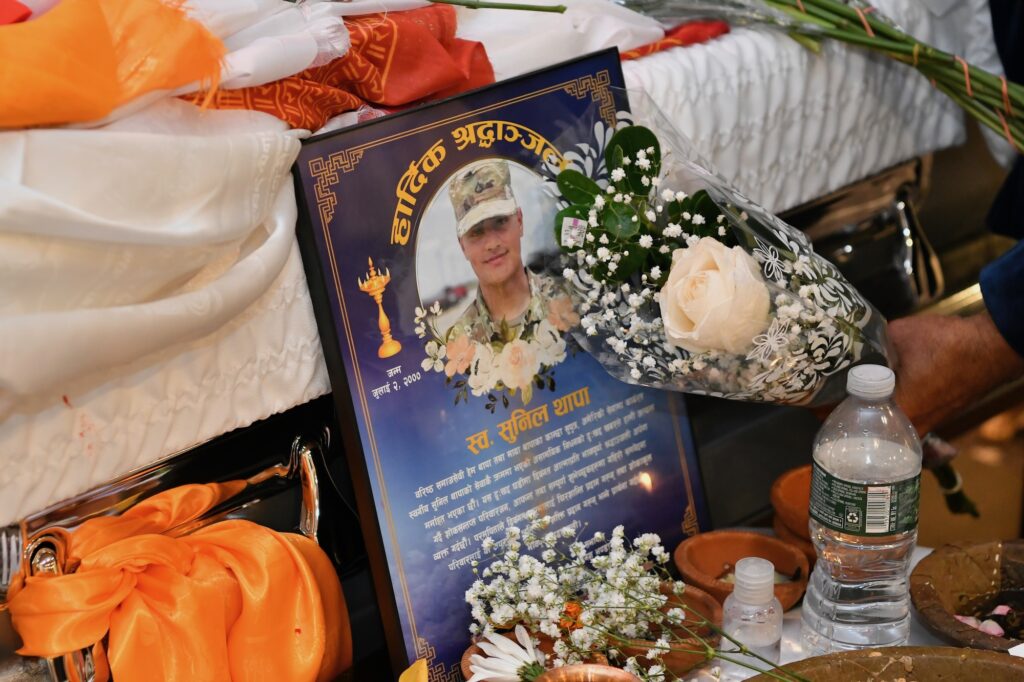
More than 200 mourners gathered Monday in New York to honor Sgt. Sunil Thapa, a 24-year-old U.S. Army soldier of Nepali descent who died from a gunshot wound to the head during a military training exercise in Texas, according to family members.
Thapa died on June 29, 2026, just three days before his 24th birthday. His sudden death has drawn widespread grief across the Nepali-American diaspora, particularly in New York, where his family resides.
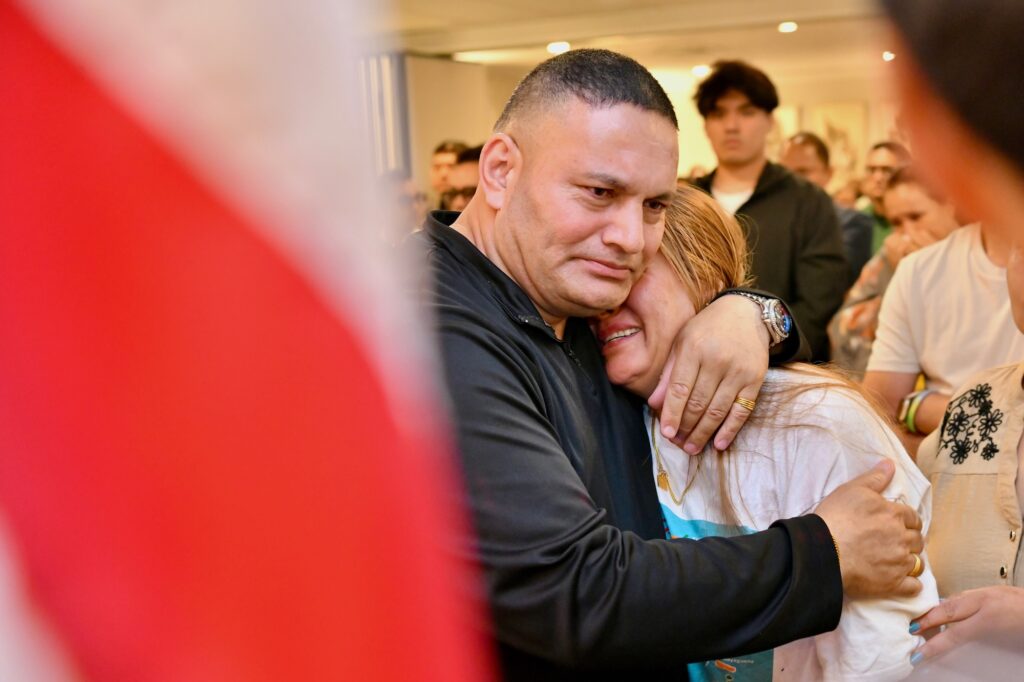
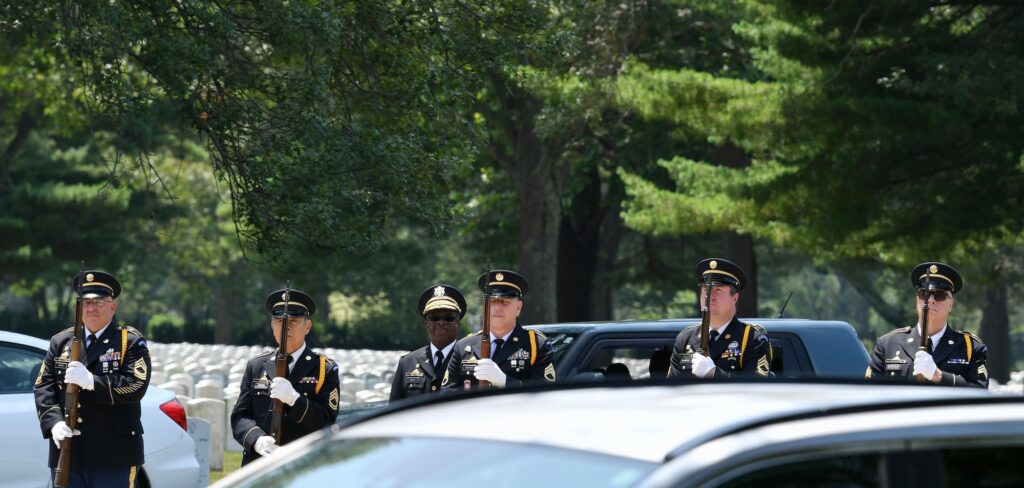
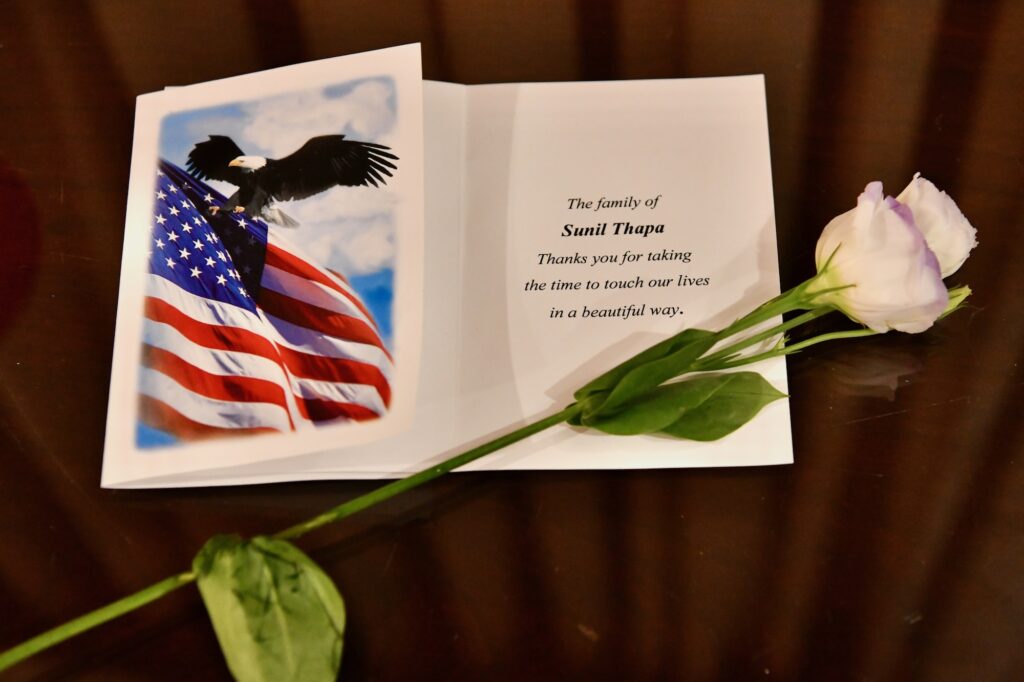
The final rites began Monday morning at a funeral home on Wantagh Avenue in Wantagh, New York. Family, friends, and community members gathered from 9 a.m. to 11 a.m. to pay their respects. Following the viewing and tribute service, Thapa’s remains were transported for cremation, with military honors rendered at Long Island National Cemetery.
The solemn military tribute was a collaborative effort by multiple service units. The New York Army National Guard Honor Guard, the 42nd Infantry Division, and personnel from the New York Guard state defense force participated in the ceremony. They were joined by the U.S. Volunteers Joint Veterans Corps, whose ceremonial team delivered the traditional rifle salute and sounded “Taps.”
While the incident is believed to have occurred at a U.S. Army training facility in Texas, the specific location has not been officially confirmed. Family members noted that Thapa had recently been promoted and was participating in advanced training at the time of his death.
His father, Hem Thapa—a prominent community figure and co-founder of the Hem & Maya Foundation alongside his wife, Maya Thapa—said the family is still waiting for a clear, official explanation of the fatal incident.
“We have still not been able to obtain a clear account of what happened,” Hem Thapa said, adding that while Army officials met with the family in New York, the meeting provided few details.
According to the family, military officials estimated that the investigation could take up to nine months to complete. The inquiry is expected to be conducted by the Army Criminal Investigation Division and the U.S. Army Combat Readiness Center, which typically review training-related fatalities to assess whether safety protocols were followed.
Key details regarding Sgt. Thapa’s specific unit assignment and the exact nature of the training program have not yet been publicly disclosed, and the circumstances surrounding the gunshot wound remain under investigation.
As of Monday, the U.S. Army had not issued a formal public statement regarding the incident. Meanwhile, condolences have flooded social media from Nepali artists, writers, and community leaders, many of whom highlighted the Thapa family’s decades of philanthropic work.

Rajan Kafle
View More PostsRajan Kafle is a Nepali photojournalist now based in New York. He began his career in video journalism during Nepal's 2006 democratic movement. Kafle has worked for various media outlets in Nepal, including Nepal Television and Kantipur Television. He served as the official photographer for the office of the Prime Minister of Nepal from 2019 to 2021. He has been recognized for his contributions to the field with several awards.