
During Dalit History Month, New York lawmakers joined caste-impacted New Yorkers, civil rights advocates, and community organizations at Diversity Plaza in Jackson Heights on Monday to announce and advance a landmark bill that would explicitly prohibit caste-based discrimination under New York state law in employment, housing and public accommodations.
Assembly Bill A6920, sponsored by Assemblymember Steven Raga, and Senate Bill S6531, sponsored by Sen. James Sanders Jr., would make caste a protected category under New York’s Human Rights Law, addressing discrimination in workplaces, housing and public accommodations.
Currently, caste is not explicitly protected under state law, leaving individuals vulnerable and limiting enforcement. The legislation seeks to close this gap by formally recognizing caste as a protected category, ensuring clear protections and consistent enforcement across New York state.
If enacted, New York would become the first state on the East Coast — and the third jurisdiction in the nation, after Seattle and California — to explicitly outlaw caste discrimination, reaffirming that equality for all remains a cornerstone of American civil rights.
Assemblymember Raga, who represents one of Queens’ most diverse districts, called the proposal a long-overdue response to growing reports of caste-based inequities in New York.
“Our strength comes from our diversity, but our responsibility comes with it,” Raga said. “We cannot praise inclusion while permitting exclusion. This bill ensures that no one is denied opportunity, dignity, or safety because of the circumstances of their birth.”
“No one in New York should face discrimination, exclusion, or humiliation because of caste. From our neighbors in Queens to communities across the state, people are facing discrimination in housing, in the workplace, and in public life without clear protection under the law. That is why we are helping lead this fight, bringing together a broad coalition, and pushing this bill forward in Albany. Everyone deserves to be treated with dignity and equal protection under the law. New York should lead on civil rights, and we will keep fighting until caste discrimination is explicitly banned in our state,” said Raga.
Councilmember Shekar Krishnan, who is sponsoring companion legislation at the city level, expressed his support and highlighted the lived realities of caste discrimination in New York. He tied the movement to the global struggle for equality, noting that the event came on the eve of Dr. B.R. Ambedkar’s birthday, the social reformer and architect of India’s Constitution.
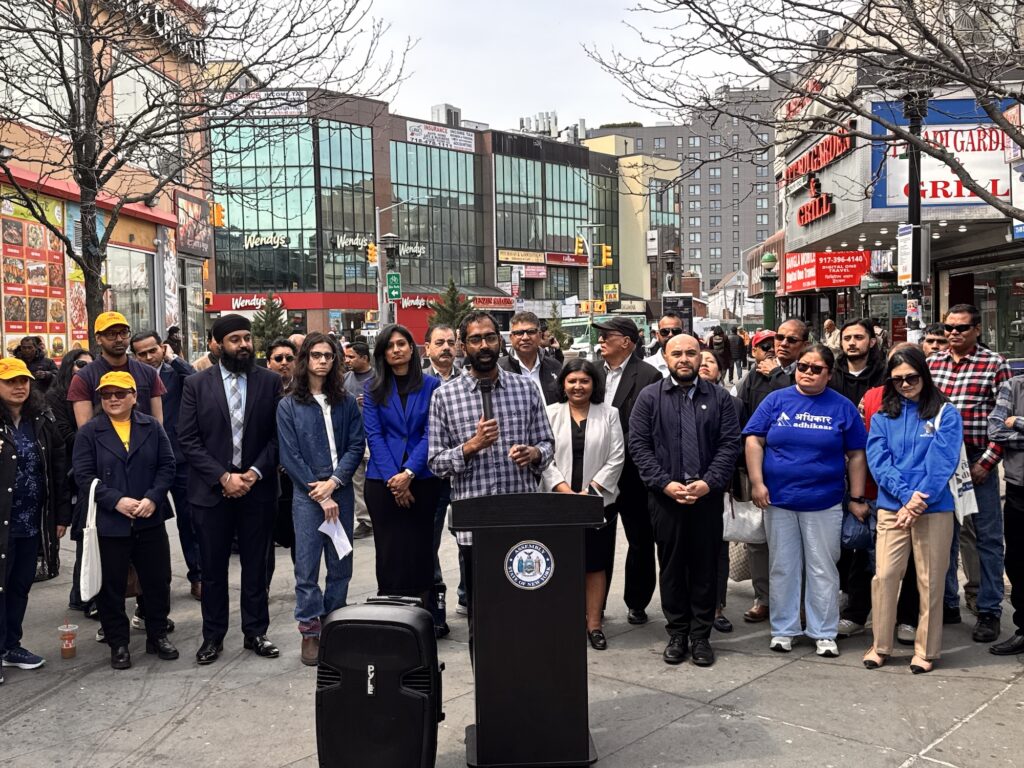
“Caste discrimination happens every single day — not only in South Asia but here in America,” Krishnan said. “Our civil rights laws are not complete until they end caste discrimination. We will not rest until we annihilate caste in New York state.”
“I’m proud to support Assemblymember Steven Raga’s legislation to ban caste discrimination in New York. Caste discrimination is a pervasive and horrible stain in our society. I’ve heard horrific stories of caste discrimination while applying for housing and in the workplace. It’s unacceptable, and I’m thankful that we will finally ban this discrimination in our state,” Krishnan said.
Sen. James Sanders Jr., the Senate sponsor of S6531, emphasized the legal clarity and civil rights foundation of the bill.
“There is no place for unjust discrimination in New York or anywhere else. This is why I am the Senate chief sponsor of S6531. The bill makes it clear that a person cannot be discriminated against based on caste regarding employment, housing, and access to public accommodations. Equality under the law is the foundation of a democracy,” Sanders said.
Speakers shared vivid accounts of discrimination — from tech workplaces to private homes — showing how caste hierarchies persist even in immigrant and professional contexts.
Tanuja Jain Gupta, a former Google employee, described facing retaliation after supporting a Dalit rights talk at her company.
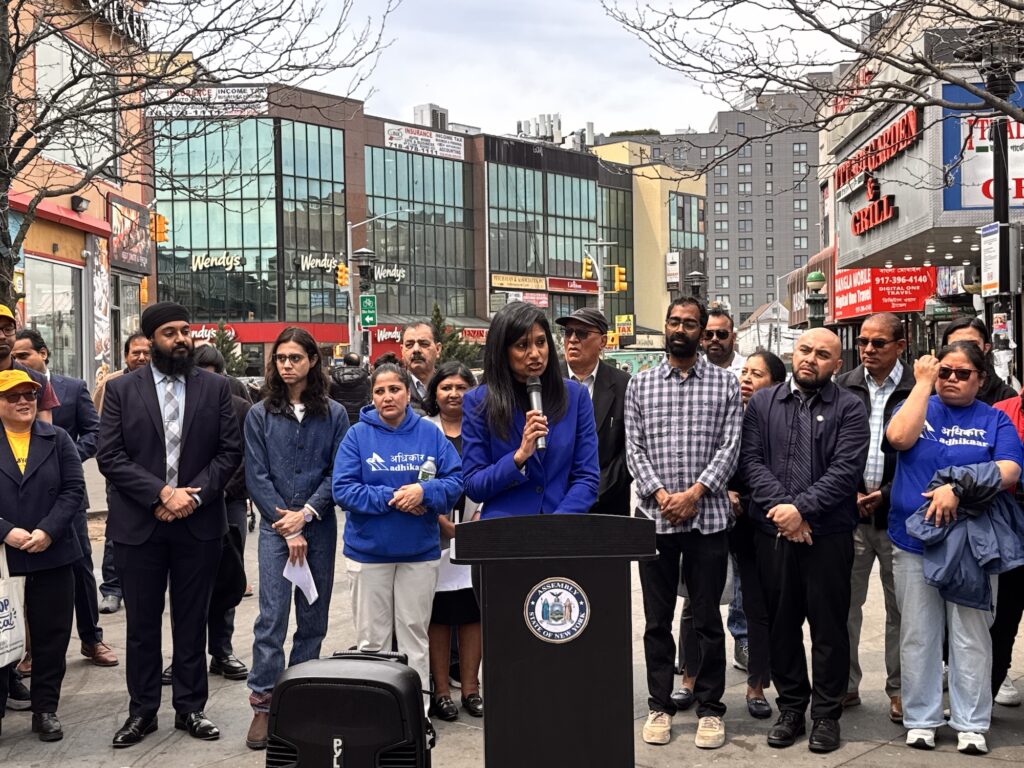
“When I spoke out against Google’s decision to block a Dalit civil rights speaker, my pay was cut, my rating was lowered, and my promotions were blocked,” Jain Gupta said. “Caste discrimination is real, and the need for this bill is urgent.”
Hardev Sahay, a representative from the Begampura Cultural Society of New York, invoked Ambedkar’s warning that caste is “a disease that spreads if not controlled.”
“People come from India with two suitcases — one to work hard, and one carrying caste,” Sahay said. “We need to leave that second suitcase behind.”
Representing Adhikaar, a Nepali women-led community organization, Pabitra Das shared a firsthand story from member Deepa Sunar, a domestic worker in Queens who was denied employment because of her caste.
“When Deepa told an employer she was Dalit, the woman said she could not touch prayer water and turned her away,” Das read on Deepa’s behalf. “Deepa felt hurt and humiliated. She never thought this would happen in America.”
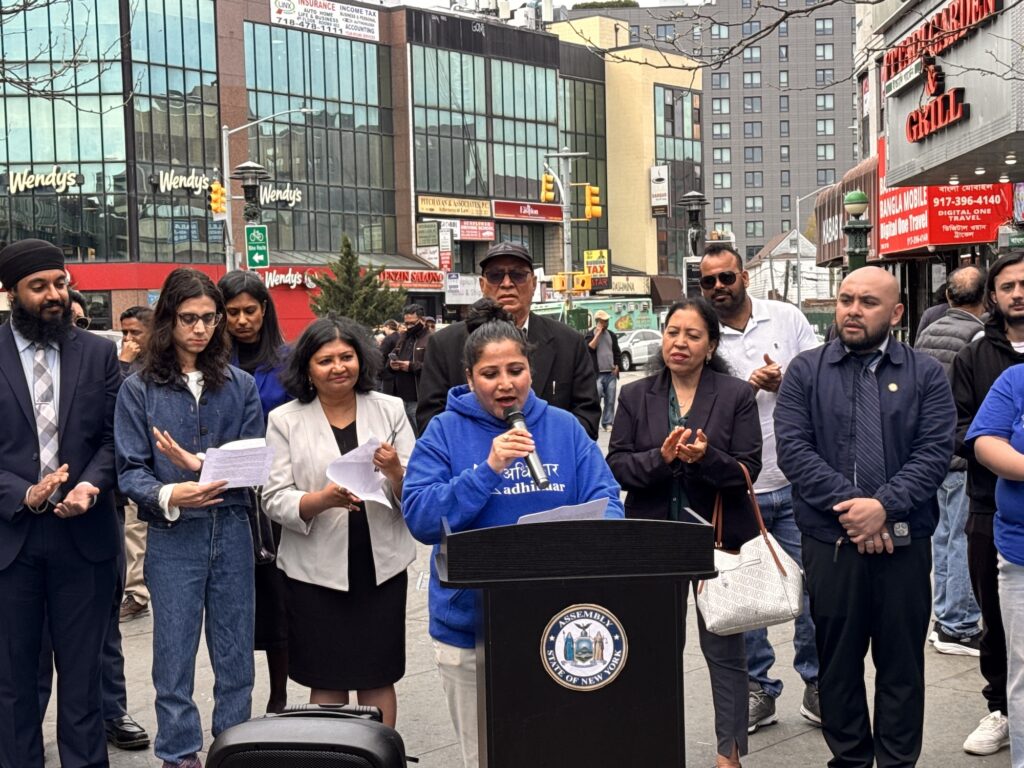
Das emphasized that caste discrimination transcends borders.
“This bill will protect people like Deepa — so that no one loses a job or dignity because of caste,” she said.
Anuraag, a Hindu trans person and yoga teacher, said caste oppression contradicts the core of Hindu philosophy.
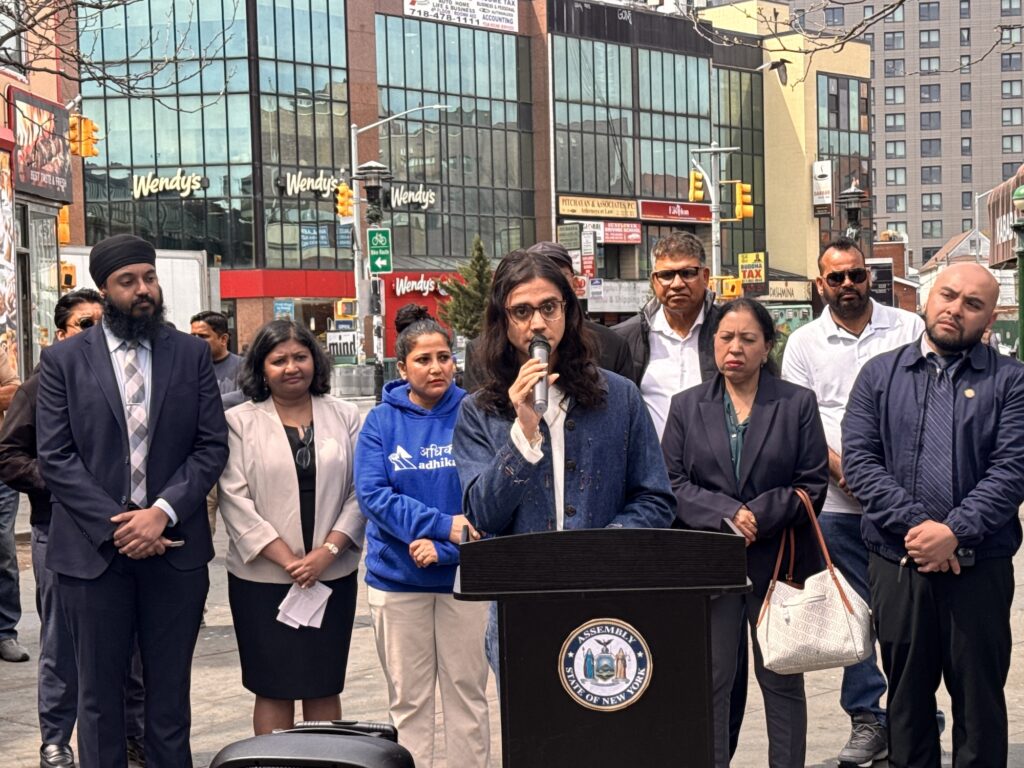
“Each of my identities has shown me the same truth — hierarchies are built to make some people believe they were born less,” Anuraag said. “Caste discrimination is not Hinduism; it is a betrayal of it. The bill protects our people and our faith.”
“In workplaces, schools, restaurants, temples and housing, individuals have faced bias, harassment, and exclusion due to their caste identity — often without any legal recourse. This bill closes a critical gap in New York’s civil rights framework, much like past efforts to add protections for sexual orientation, gender identity, or national origin. We urge the Legislature to pass this historic bill and the Governor to sign it into law without delay,” said Annetta Seecharran, executive director of Chhaya CDC.
Gurvir Singh Sidhu, state policy manager at the Sikh Coalition, offered a Sikh perspective on the legislation.
“Sikh teachings are clear on caste — the Gurus rejected hierarchy based on birth and affirmed dignity for all,” Sidhu said.
“When discrimination is explicitly named, it ensures everyone can access protections they deserve,” he said. “New York has a long tradition of strengthening civil rights laws when gaps appear — and this is one of those moments.”
Sidhu emphasized the importance of explicitly naming caste discrimination in law.
“Caste-based discrimination continues to affect people’s access to opportunity in workplaces, in housing, in education, and in everyday interactions — right here in New York. And when that harm occurs, the law should be able to recognize it for what it is. When discrimination is clearly named, it ensures that everyone can access the protections they deserve under the law. This effort has been led by Dalit advocates and community members, and our role, as Sikhs and as an organization, is to stand in solidarity, grounded in those principles,” Sidhu said.
Attorney Swati Sawant, who co-drafted the legislation with Raga and Sanders, said explicit legal language is essential for enforcement. She recalled filing a caste discrimination complaint in 2018 that was dismissed because caste was not recognized under law.
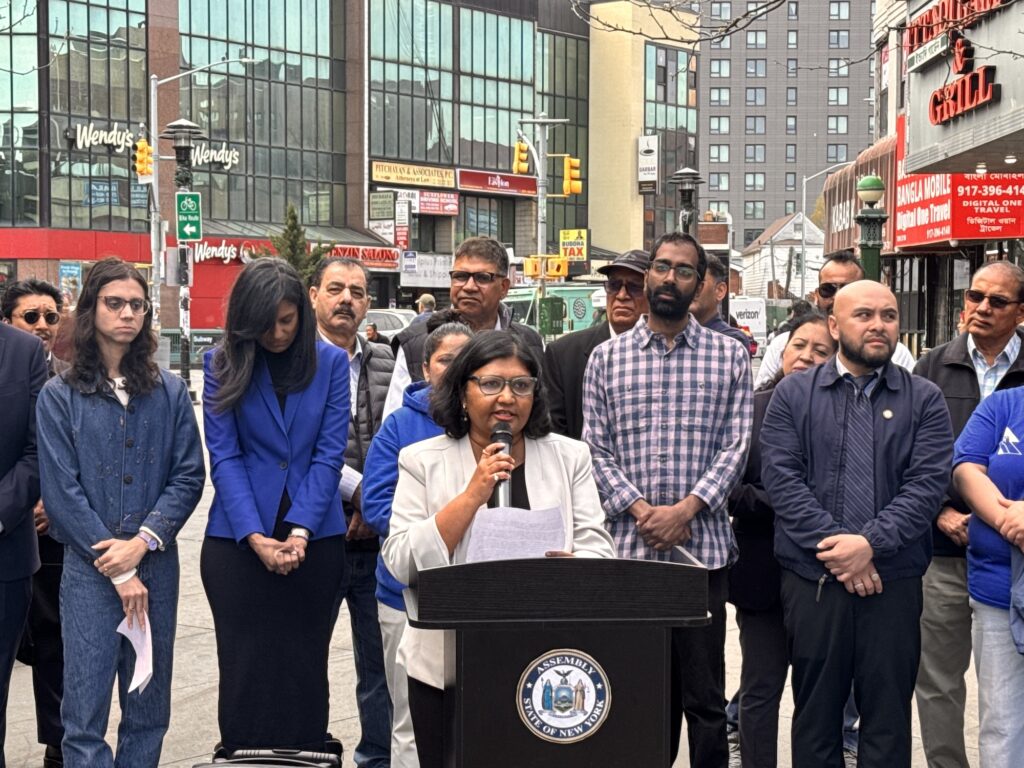
“That’s exactly why this bill is needed,” Sawant said. “It makes protections clear and enforceable for all.”
Sawant also announced the next stage of advocacy.
“Please join us for Lobby Day in Albany on April 21,” she said. “We already have 16 Assembly co-sponsors and seven in the Senate. Call your legislators and ask them to support this bill so it can move forward.”
Speaking on behalf of the Begumpura Cultural Society of New York, Chairman Pinder Paul highlighted the global persistence of caste-based discrimination and the need for legal recognition.
“Dr. B.R. Ambedkar, our leader, predicted more than 100 years ago that caste would cross borders and become a global problem. We faced caste discrimination in India because we belonged to lower castes, such as Chamar and Valmiki, and when we came to other countries, we continued to face the same discrimination. Many people are victims of caste discrimination, but they do not come forward because they often do not know how to proceed. If people are protected from discrimination based on race, then they should also be protected from discrimination based on caste,” Paul said.
Faith-based and civil rights organizations emphasized that caste protections align with broader principles of equality and justice.
Other advocates and organizations voiced strong support for the legislation and the need to close enforcement gaps in New York law.
“We reject discrimination in all forms, and it is important that caste discrimination is accounted for in our New York State laws,” said Fahd Ahmed, executive director of Desis Rising Up & Moving (DRUM).
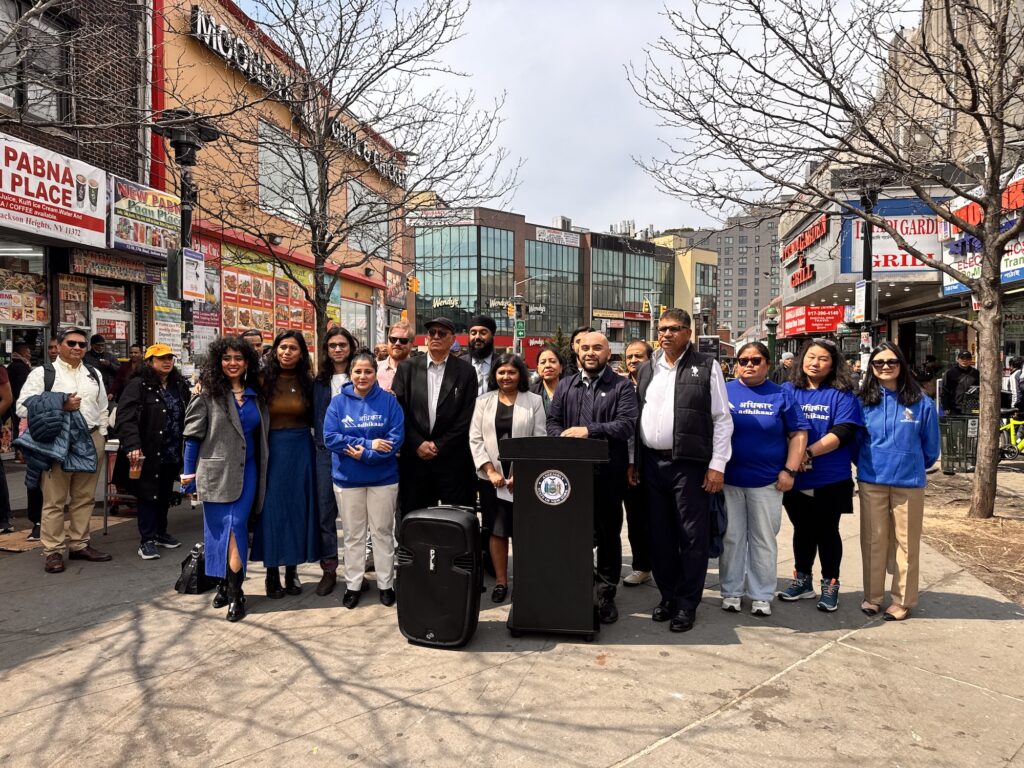
“In workplaces, schools, restaurants, temples, and housing, individuals have faced bias, harassment, and exclusion due to their caste identity — often without any legal recourse. This bill closes a critical gap in New York’s civil rights framework, much like past efforts to add protections for sexual orientation, gender identity, or national origin. We urge the Legislature to pass this historic bill and the Governor to sign it into law without delay,” said Annette Seecharran, executive director of Chhaya CDC.
“Equality is a fundamental human right and not a privilege. Caste discrimination must be addressed through legal protection,” said Naresh Kumar, president of AR Helping Hands.
“Caste-based discrimination is a deeply rooted injustice that continues to impact the lives of millions of people and demands visibility, accountability, and urgent action,” said Project Hajra.
During the press conference, advocates and lawmakers called on the state Legislature to pass the bill this session, emphasizing that no New Yorker should face discrimination based on inherited social status or identity.
Correction: A previous version of this article misidentified the representative from the Begampura Cultural Society of New York. The name has been corrected to Hardev Sahay, and all subsequent references have been updated.

Deepak Pariyar
View More PostsJournalist Deepak Pariyar is the editor of Khasokhas, a publication amplifying the voices of the Nepali diaspora in the USA since 2012. A champion against discrimination, he has held leadership roles in journalist organizations.

