
At a hearing yesterday in the Northern District of California, U.S. District Judge Trina L. Thompson presided over arguments in a high-profile lawsuit filed by the National TPS Alliance and several individual Temporary Protected Status (TPS) holders against Secretary of Homeland Security Kristi Noem, the Department of Homeland Security (DHS), and the United States. The case challenges the Trump administration’s decision to terminate TPS for citizens of Honduras, Nepal, and Nicaragua. The hearing focused on cross-motions for summary judgment, as well as disputes over the admissibility of extra-record evidence and expert testimony.
Judge Thompson began by emphasizing the need for clarity regarding referenced documents and exhibits, instructing the parties to specify ECF numbers and exhibit identifiers. She reassured both sides that her initial questions would not count against their allocated argument time, stating, “My preamble or questions are not… part of your time.”
The judge outlined the order of proceedings: the court would first address issues related to evidence and expert testimony (the Daubert motion), and then move into arguments on the summary judgment motions after a brief break.
Plaintiffs’ Arguments
Plaintiffs’ counsel clarified that their summary judgment motion did not rely on expert declarations, except for the testimony of Professor Young regarding racism in immigration history, which was used solely in response to the government’s summary judgment motion. Plaintiffs asserted, “Plaintiffs contend that the motion to strike the expert declarations is improper or premature at this stage. It may be relevant at some point in the future if the expert declarations are relied on at some other stage of this litigation.”
Regarding the evidence dispute, plaintiffs argued for the consideration of extra-record material, invoking “well-recognized exceptions” outlined by the Ninth Circuit—specifically in cases of bad faith or when such evidence is necessary for the court to determine whether the agency failed to consider all relevant factors.
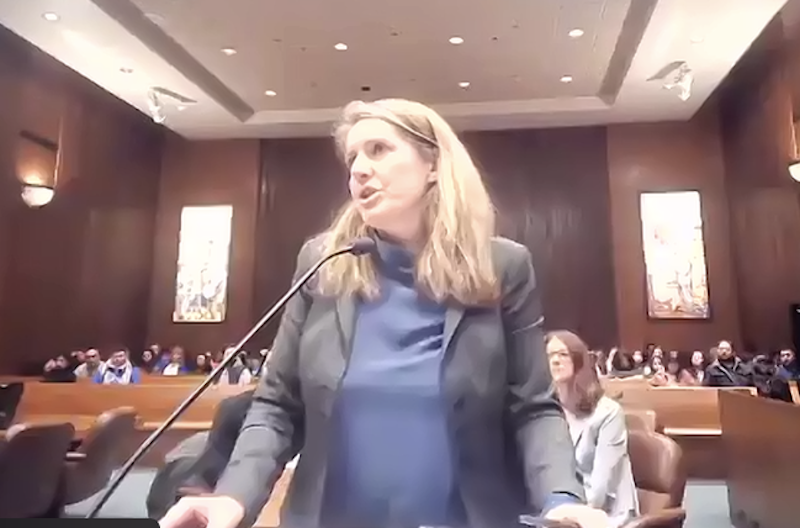
According to plaintiffs’ counsel, “Plaintiffs easily meet two of the recognized exceptions here and ask the Court to exercise discretion to look beyond the administrative record.” They categorized the extra-record evidence as (1) documents related to agency decision-making, (2) testimony about past agency practices, and (3) public statements by Secretary Noem and others.
Plaintiffs further argued that discovery revealed a “politicized decision to end TPS across the board as inconsistent with the President’s immigration policies,” and cited statements labeling TPS holders as “illegal criminal invaders.” They referenced multiple exhibits and identified a timeline suggesting the agency made termination decisions before fulfilling statutory requirements, such as consulting with the State Department or reviewing up-to-date country conditions.
Counsel highlighted “undisputed public statements and actions showing a commitment to terminate before consultation and review… undisputed that we have draft termination notices before consultation and review”—framing these as evidence of predetermination.
On statutory interpretation, plaintiffs argued that the government “misinterpreted the TPS statute and broke with past practice by refusing to consider country conditions if they determined those conditions were unrelated to the original crisis.”
They referred to decades of Federal Register notices and prior DHS decision memos reflecting a broader consideration of intervening conditions, not solely those tied to the original crisis. According to co-counsel, “Nothing in the statute forbids the Secretary from considering intervening conditions for the reasons discussed earlier today.”
DHS and Government’s Response
The government, through DHS counsel, insisted that the case should be decided strictly on the administrative record, asserting, “It is the government’s assertion that this case should be decided… on the administrative record.” The government contended that plaintiffs were seeking judicial intervention beyond the limits established by the Administrative Procedure Act (APA).
DHS attorneys objected to both the inclusion and scope of Professor Young’s testimony, arguing it “doesn’t add anything to this court’s robust understanding of the history of immigration and race in this country,” and that “his opinions go beyond what his proffered testimony appears to be,” questioning its relevance and foundation for discussing specific country conditions.
Regarding the plaintiffs’ summary judgment motion, the government maintained: “The statute does not mandate any particular form of consultation. It does not mandate that it come in any particular letter or template. It merely says, generically, that consultation should occur…” The Secretary’s obligation, they argued, was to review “the basis for designation,” and nothing in the statute required a comprehensive or continually updated country conditions report.
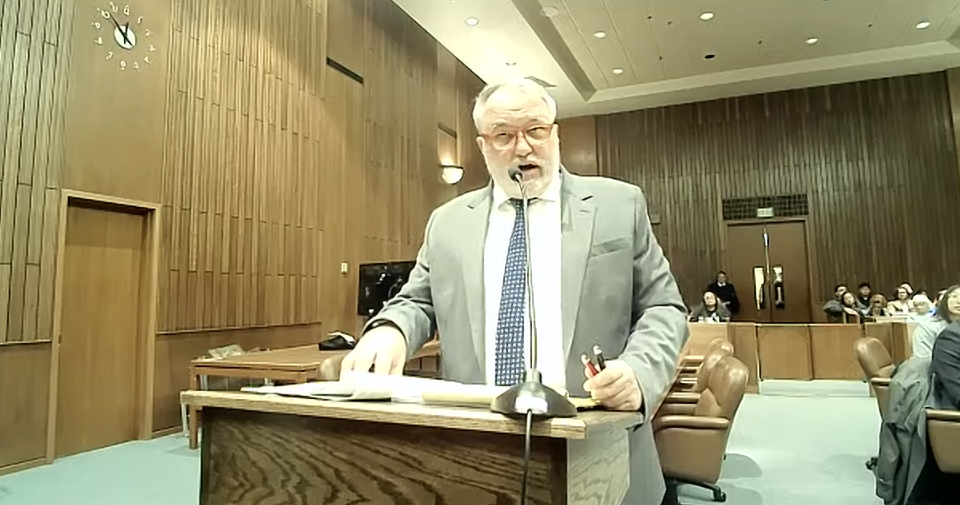
On the issue of predetermination, the government claimed there was nothing improper about the administration’s intent to “take a hard look at the statute, at the designations, and determine whether or not they continue to comply with… the intent of Congress that this be temporary protection, temporary safe harbor.” The government also stated, “There is nothing inappropriate about her staff working on the problem. This is one of the reasons the deliberative process privilege exists—so they can have these conversations.”
When questioned by the court about the timing of consultations, government counsel acknowledged that in some cases, such as Nicaragua, the letter was received after the decision had been signed, but pointed to staff-level discussions and ongoing interagency communications as evidence that consultation still occurred.
Regarding alleged deviations from past agency practice, the government argued there is “no published requirement for how the process will work. It is the Secretary’s determination and her decision,” and minimized any effects of changes in practice, asserting it was within the Secretary’s discretionary authority.
Judge’s Interventions and Observations
Judge Thompson actively questioned both sides, probing issues of predetermination, procedural omissions, and implications for APA review. She repeatedly asked for documentation or explicit categorical denials from the government regarding predetermination, stating, “Are you comfortable categorically saying there’s nothing in these documents that have been proffered in this record… that supports a position there was a predetermination to either repeal or revoke TPS before these decisions were being made?”

The court issued procedural warnings about courtroom conduct but also engaged with the substantive debate, signaling skepticism toward government motions to dismiss and expressing openness to Professor Young’s testimony “to have information that would be relevant to the court,” while planning to assess the proper scope of the expert report.
Closing Proceedings
The hearing concluded with a continued case management schedule, and all arguments—including those related to statutory interpretation and relief under the APA—were taken under submission. Judge Thompson remarked, “Tentatively, the motion to dismiss will be denied, but I will have to state all grounds in a written order… Tentatively, the court finds Professor Elliot Young to have information that would be relevant to the court, but… the court will go through the exercise of determining the scope by which… that expert’s report can be considered.” She also reserved discussion of the impact of the Supreme Court’s Loper Bright decision and the major questions doctrine.
The matter is set to continue with a case management conference in January, with final rulings on the motions and scope of evidence to follow a comprehensive review of all arguments and evidence presented.
Background and Scope
In June, the Department of Homeland Security (DHS) announced the termination of Temporary Protected Status (TPS) for Nepal, affecting approximately 7,500 Nepali immigrants in the United States. On July 7, 2025, the National TPS Alliance (NTPSA), along with seven individual plaintiffs, filed a lawsuit against the Trump administration, contesting DHS’s decision to end TPS for nationals of Honduras, Nepal, and Nicaragua. Among the Nepali plaintiffs are SK, a 33-year-old San Francisco resident married to a U.S. citizen and working in theater, and Sandhya Lama, a 43-year-old single mother in Virginia, whose child requires special medical care.
On July 31, 2025, the U.S. District Court for the Northern District of California granted a postponement of the TPS termination until November 18, 2025, while litigation continued. However, on August 20, 2025, the Ninth Circuit stayed this order, allowing the termination to take effect. The appeals court’s panel granted the government’s motion to end protections while the appeal proceeds. As a result, DHS confirmed that TPS and related work permits for Nepalis became invalid as of August 20, 2025.
TPS is a humanitarian program permitting certain nationals to live and work legally in the U.S. when returning home is unsafe due to armed conflict, natural disaster, or “extraordinary” conditions. Nepal was granted TPS on June 24, 2015, following the catastrophic April 25, 2015 earthquake, which killed thousands and severely damaged infrastructure. At that time, approximately 15,000 Nepalis became TPS beneficiaries.
Over the years, the number of Nepali TPS holders has declined, with 8,525 in March 2023, 8,100 in September 2023, 7,875 in March 2024, and 7,505 by December 2024. This reflects transitions to other legal statuses or voluntary program departures.
The effort to end Nepal’s TPS is not unprecedented. The Trump administration also sought to terminate TPS for Nepal, El Salvador, Haiti, Honduras, Nicaragua, and Sudan in 2017–2018. Lawsuits, particularly Ramos v. Nielsen, produced a nationwide injunction in 2018 that preserved TPS for affected countries for nearly five years, with groups like Adhikaar supporting that litigation.
In 2023, the Ninth Circuit vacated the injunction, making terminations possible again. The Biden administration later reversed these decisions for Nepal, extending TPS until June 24, 2025, which led to the dismissal of the Ramos suit as moot in December 2023.

Kishor Panthi
View More PostsKishor Panthi is the founder and editor-in-chief of Khasokhas and NepYork. He is the author of three books, “Kampan,” "UNTRANSLATABLE" and “Zero Mile.” He writes about social issues, immigration, and politics.

