Nepal deported 287 foreign nationals in the first seven months of 2026, including 219 who had overstayed their visas and 68 convicted in serious criminal and legal cases, according to the Department of Immigration.
The figures, covering Jan. 1 to July 22, suggest a growing challenge for Nepal’s immigration system as the country faces a steady rise in illegal stays and foreign nationals involved in criminal activity. The number of people deported on legal and criminal grounds in just over six months already exceeds the full-year total of several previous years.
Deportations on the Rise
From 2021 through 2025, Nepal deported 2,270 foreign nationals, including 2,049 overstayers and 221 people removed for criminal or other legal violations, department data show.
The annual total stood at 218 in 2021, when travel was still restricted due to the pandemic. That number rose to 570 in 2022, 458 in 2023, 501 in 2024, and 523 in 2025.
Officials say the trend reflects both a rise in visa overstays and a growing number of foreign nationals linked to cyber fraud, financial crimes, illegal business activity, and other offenses.
Criminal Cases Climbing
The number of foreign nationals deported after being convicted or involved in legal cases has increased every year over the past five years.
In 2021, 25 people were deported on criminal or legal grounds. That number rose to 36 in 2022, 46 in 2023, 50 in 2024, and 64 in 2025. By July 22 of this year, that figure had already reached 68.
Authorities say the increase points to a deeper security concern, with foreign nationals becoming increasingly active in illegal activities such as online scams, financial fraud, cryptocurrency-related offenses, and organized crime.
Chinese Nationals Top the List
Chinese nationals accounted for the largest share of deportations in recent years, according to the data.
In 2021, 34 Chinese nationals were deported. The number surged to 191 in 2022, before reaching 209 in 2023. In 2024, 141 Chinese nationals were deported, followed by 120 in 2025.
Authorities say many of these cases involved online cyber fraud, illegal call centers, cryptocurrency dealings, unlawful networking schemes, and gold smuggling.
Bangladeshi nationals have also appeared in increasing numbers. Nepal deported 19 Bangladeshi nationals in 2023, 51 in 2024, and 75 in 2025. Officials say some entered Nepal on tourist visas and later joined human trafficking networks linked to third-country travel, while others simply remained in the country after their visas expired.

American and British nationals have also been deported in notable numbers. In 2025, Nepal deported 35 Americans and 22 Britons, according to the data. Officials say some Western nationals were found working without authorization, engaging in religious proselytizing, or overstaying visas under the cover of non-governmental, spiritual, or tourist activity.
Penalty Revenue Falls
Despite the rise in deportations, revenue from immigration penalties has fallen steadily over the past six fiscal years.
Under the revenue heading “administrative penalties and confiscation,” the Department of Immigration collected a total of 138.38 million rupees over the period, according to official figures.
The department collected 33.88 million rupees in fiscal year 2019–20, 24.92 million rupees in 2020–21, 20.77 million rupees in 2021–22, and 26.31 million rupees in 2022–23. Revenue then fell to 18.11 million rupees in 2023–24 and 14.37 million rupees in 2024–25.
That represents a penalty revenue drop of roughly 57.6% compared to 2019–20, even as deportations remained steadily in the 400 to 500 range each year. Officials attribute the decline to waivers granted on humanitarian grounds and a shift toward sending convicted foreign nationals directly to prison and then deporting them, rather than relying primarily on fines.
The department has projected 28.25 million rupees in penalty revenue for fiscal year 2025–26, signaling a potentially tougher crackdown on overstayers and unauthorized foreign workers.
Where the Money Goes
Immigration officials emphasize that money collected from visa fees, trekking permits, and administrative penalties does not remain with the department or individual field offices.
By law, funds are deposited directly into Nepal’s federal consolidated fund through the Nepal Rastra Bank. The money is subsequently allocated through the annual budget approved by parliament.
Authorities note that this revenue supports border security, immigration technology upgrades, digital visa systems, and staff training, alongside the direct costs of investigating, detaining, and deporting foreign nationals. It also contributes to broader public spending on infrastructure, public services, health, education, and administration.
Weak Monitoring and Open Borders
Immigration officials and security analysts link the rise in overstays and illegal activity to Nepal’s lenient visa system, weak monitoring capacity, and open border with India.
Nepal offers visas on arrival at Tribhuvan International Airport to citizens of most countries. While this policy supports tourism, officials acknowledge that it is frequently exploited by individuals with criminal intent.
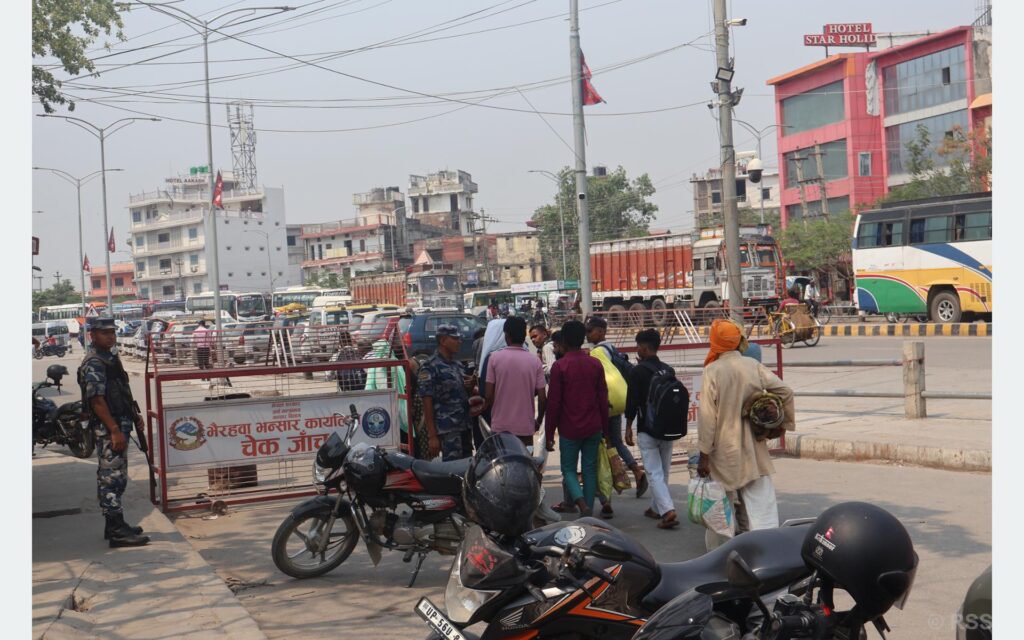
Foreign nationals entering on tourist visas have been caught secretly teaching, preaching, running unauthorized businesses, or leveraging information technology to execute financial scams. Bangladeshi and Pakistani nationals have also used Nepal as a transit hub to enter third countries or remained illegally after their visas expired.
Security Concerns Grow
Immigration control is widely regarded as a fundamental component of national security. However, officials acknowledge that Nepal still lacks a fully integrated central system to track where legally admitted foreign nationals reside and what activities they engage in.
While the government has improved tourist tracking systems over the past year, authorities stress that further measures are needed. The latest figures suggest that immigration administration must rely more heavily on tech-driven monitoring, joint inter-agency investigations, and stricter enforcement.
Officials recommend that the Department of Immigration and the Central Investigation Bureau (CIB) of the Nepal Police coordinate more closely to track down overstayers and dismantle illicit foreign-run operations. They also advise that the government revisit fine-waiver provisions and strictly enforce permanent blacklisting for foreign nationals convicted of illegal activity.

Dipendra Dhungana
View More PostsDipendra Dhungana is a journalist based in Kathmandu with over a decade of experience in photojournalism. His work has been featured in numerous national and international outlets, showcasing the stories and resilience of the Nepali people. He is also a contributing journalist for NepYork.