As the 2026 election season moves toward the June 23 primaries, Nepali-origin candidates in Maryland and New York are working to translate community visibility into political power. Their campaigns center on pressing issues such as affordability, housing, language access, and immigrant representation. The slate includes both challengers and incumbents, underscoring how Nepali Americans are increasingly seeking seats in mainstream politics rather than remaining on the margins.
This political push comes on the heels of a massive demographic shift. The Nepali American electorate has grown exponentially over the last decade, with more than 100,000 naturalized citizens eligible to vote across the United States.
In Maryland, Satish Chapagain is running in the Democratic primary for House of Delegates District 7A, while Del. Harry Bhandari is seeking another term in neighboring District 8. In New York, Somnath Ghimire is campaigning for State Assembly District 30 in Queens, and Sarahana Shrestha is running for reelection in the 103rd Assembly District, where she previously became the first Nepali American woman elected to a state legislature.
Chapagain Aims for Firsts
Chapagain, who is listed as an active Democratic candidate for District 7A, has framed his campaign around everyday concerns faced by working families, including food prices, fuel costs, education, and long-term economic stability. In remarks shared through his campaign, he noted that Maryland families are focused on fundamental issues that directly shape daily life and deserve serious attention from public officials.
“Families across Maryland are currently thinking about the basic issues that directly affect their daily lives,” Chapagain said, referring to food, fuel, schooling, and the future. “These are the main concerns shaping our community, and they require real attention from those in public service.”
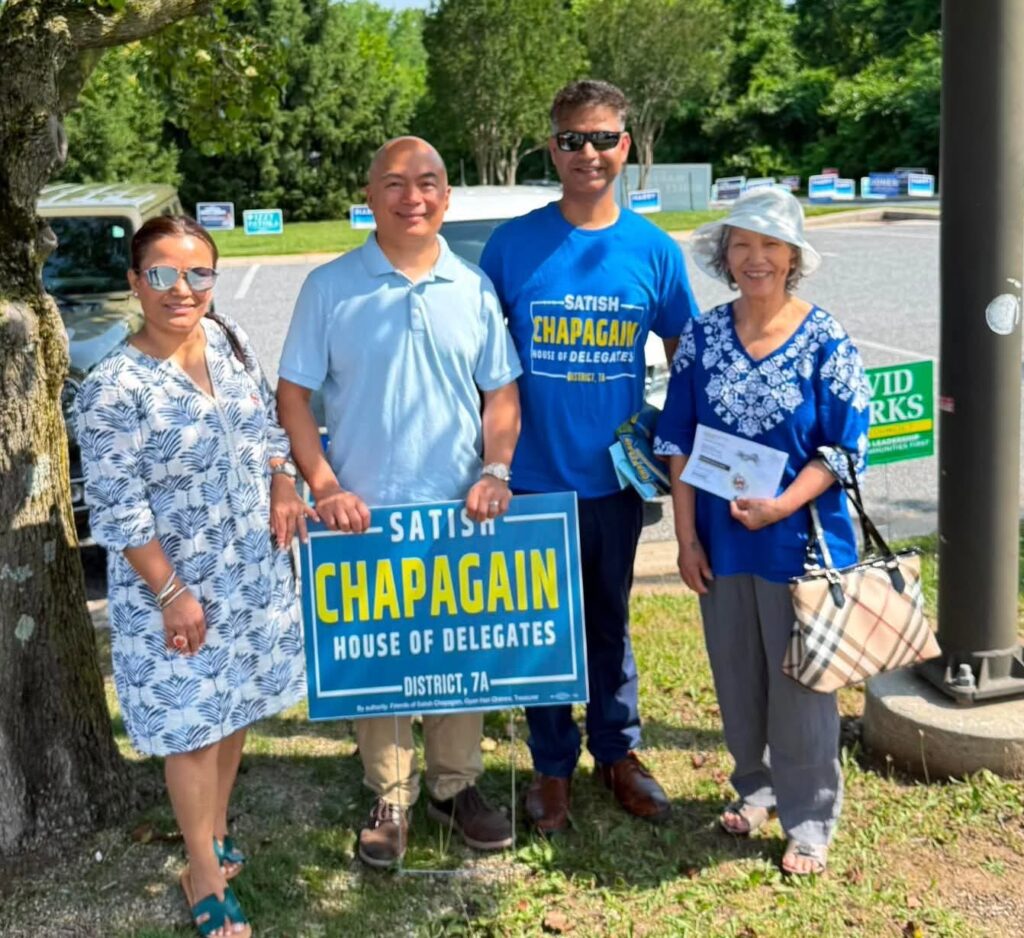
He added that his bid reflects a deep belief in public service and accountability.
“My decision to run for state representative is driven by a deep commitment to service and the belief that public leadership must be based on honesty, responsibility, and respect for the people of Maryland,” he said.
Chapagain emphasized his desire to support “opportunity, responsible development, and the resources families, students, and local businesses need to succeed.” Maryland’s candidate filing list identifies him as a business owner and a member of the Baltimore County Democratic Central Committee, which aligns with his community-focused platform.
Bhandari Leans on Legacy
Bhandari, who made history as the first Nepali American elected to the Maryland House of Delegates, is once again asking voters to return him to Annapolis. His political identity has long been tied to education, healthcare access, and advocacy for working families—themes that have resonated deeply within Maryland’s Nepali community and beyond.
“The Nepali American community in the U.S. may be small in number, but it is one of the fastest-growing immigrant communities,” Bhandari said. He noted that many Nepalis came to the United States with hopes for education, opportunity, or freedom, and that their common goal remains building a better future for their families.
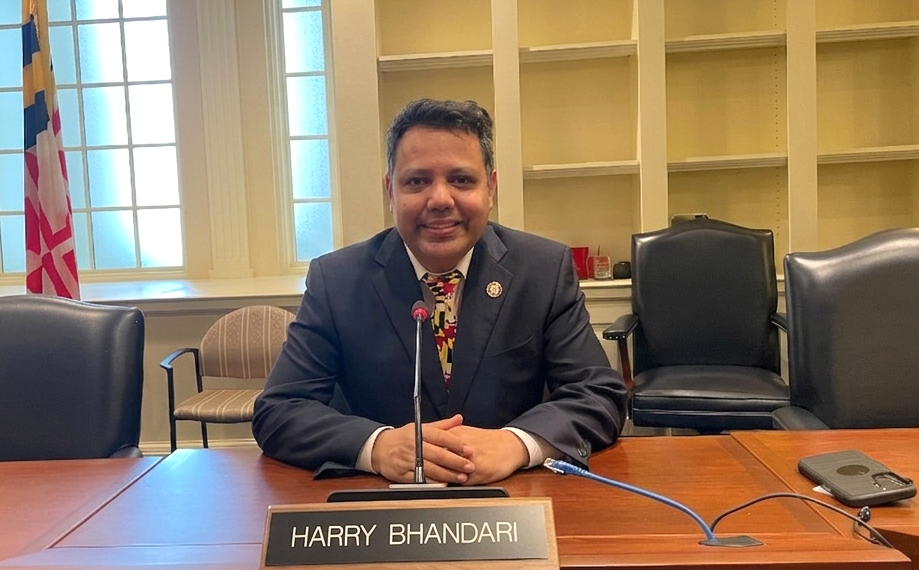
Bhandari also tied representation directly to civic participation. “When Nepalis vote, organize, volunteer, and run for office, our community becomes visible,” he said, arguing that political engagement is essential if the community wants its voice heard on critical issues like education, immigration, healthcare, public safety, housing, and language access.
He described state politics as the arena where budgets and policies are ultimately decided, noting that he has helped secure more than $150 million in budget priorities for his district, including approximately $950,000 earmarked for the Nepali community in the Baltimore area.
Ghimire Enters Queens Contest
In Queens, Ghimire is running in Assembly District 30, casting himself as a community organizer seeking to translate neighborhood experience into state policy. He stated that his campaign is about driving change and bringing state resources from Albany back to Woodside and neighboring areas, particularly for low- and middle-income residents.
“In reality, I have put forward my candidacy for transformation—for actual change,” Ghimire said, emphasizing his goal to support working families and secure a fairer share of state funding for the district.
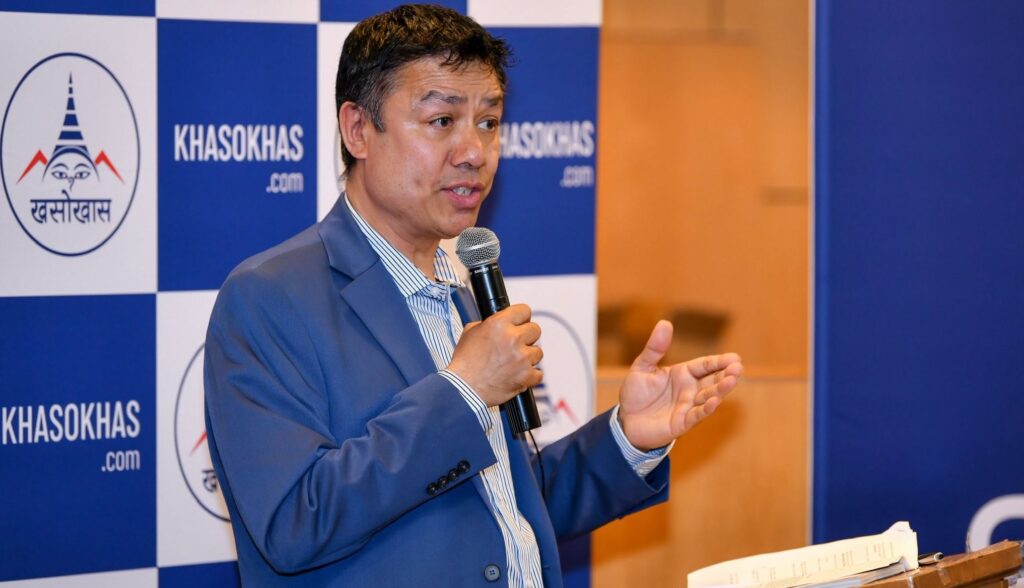
Ghimire pointed to his multilingual background and his prior work on the 2020 Census as practical strengths in a district home to numerous immigrant communities. “The Nepali community is among the minority communities that have been left behind in the state’s mainstream,” he said, highlighting language access as one of his top priorities.
He plans to advocate for the publication of Nepali-language outreach materials for the 2030 Census to ensure the community is accurately counted. Additionally, Ghimire pledged to fight for stronger tenant protections, stricter oversight of negligent landlords, improved school support for South Asian students, and expanded mental health education in public schools.
Shrestha Seeks Another Term
Shrestha, first elected in 2022, remains one of the most prominent Nepali-origin lawmakers in the country. According to the AAPI History Museum, she moved to the United States from Kathmandu in 2001 and became a citizen in 2019. Her political career has centered heavily on defending working families, expanding affordable housing, and addressing climate issues.
Her reelection campaign continues to champion a progressive agenda that includes energy reform, consumer protection, and technology regulation. She has actively backed legislation addressing data centers, artificial intelligence transparency, broadband access in temporary housing, and robust anti-discrimination protections.
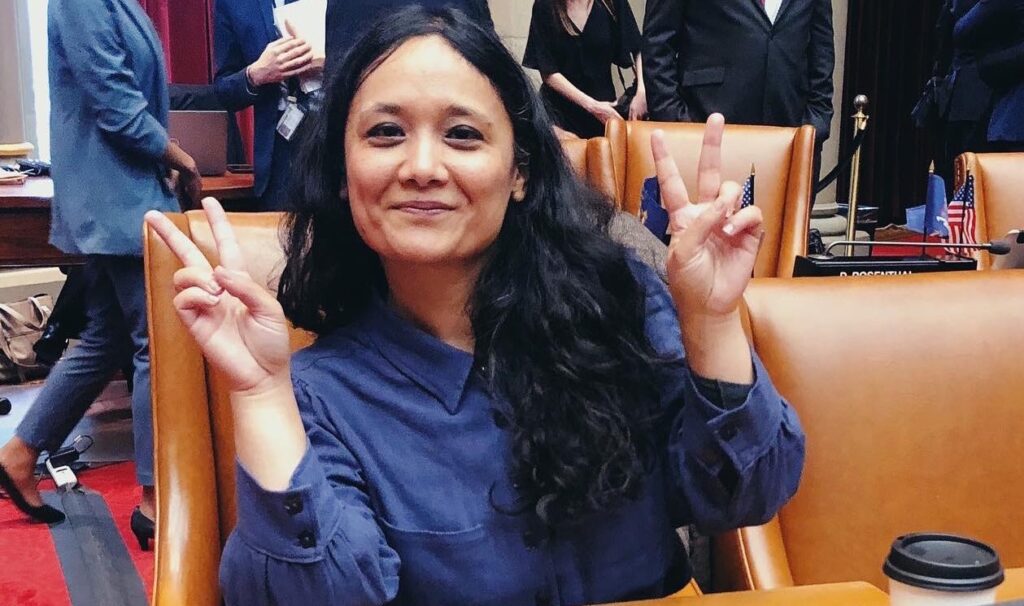
Shrestha’s political rise has made her a symbol of what Nepali political participation can achieve as a community transitions from grassroots advocacy to elected office. Her campaign reflects both the power of incumbency and political continuity, carrying the broader message that representation at the state level yields tangible policy outcomes.
Rapid Demographic Growth Reshapes Electorate
According to Department of Homeland Security (DHS) data compiled by NepYork, only 20,926 Nepali Americans had obtained U.S. citizenship by 2014.
Over the next decade, an additional 67,000 Nepalis became U.S. citizens. Official data indicates that 48,933 Nepalis were naturalized between 2015 and 2022, followed by 9,300 in fiscal year 2023, and 8,910 in fiscal year 2024. This brought the verified naturalization total to 88,069. When adding estimated naturalization data from 2025 and 2026 so far, the number of naturalized citizens alone clears the 100,000 threshold.
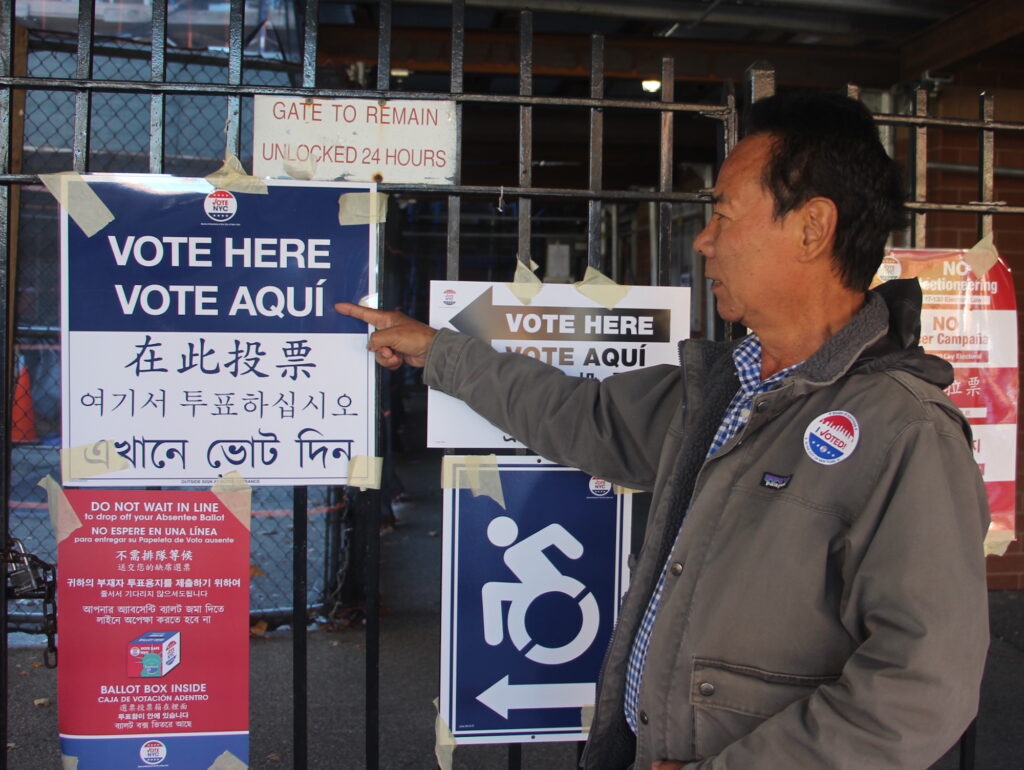
These naturalization statistics do not include second-generation Nepali Americans born in the United States. According to demographic estimates analyzed by the Pew Research Center, the U.S.-born Nepali population reached approximately 50,000 in 2023. This burgeoning second-generation cohort is further expanding the community’s long-term electorate as younger citizens reach voting age.

Kishor Panthi
View More PostsKishor Panthi is the founder and editor-in-chief of Khasokhas and NepYork. He is the author of three books, “Kampan,” "UNTRANSLATABLE" and “Zero Mile.” He writes about social issues, immigration, and politics.