Large age-gap marriages between foreign nationals and Nepali citizens are increasingly drawing attention, raising questions about whether such unions are driven by genuine relationships or immigration motives.
At Nepal’s Department of Immigration in Kalikasthan, Kathmandu, officials say they routinely encounter couples with significant age differences. In one recent case, a 72-year-old Australian man arrived to extend his stay, accompanied by a Nepali woman in her early 20s. The couple presented an official marriage registration certificate from the Kathmandu District Court.
While marriage is a personal matter, immigration officials note that age gaps of 30 to 35 years have become common, with some cases showing differences of up to 50 years.
Rising numbers
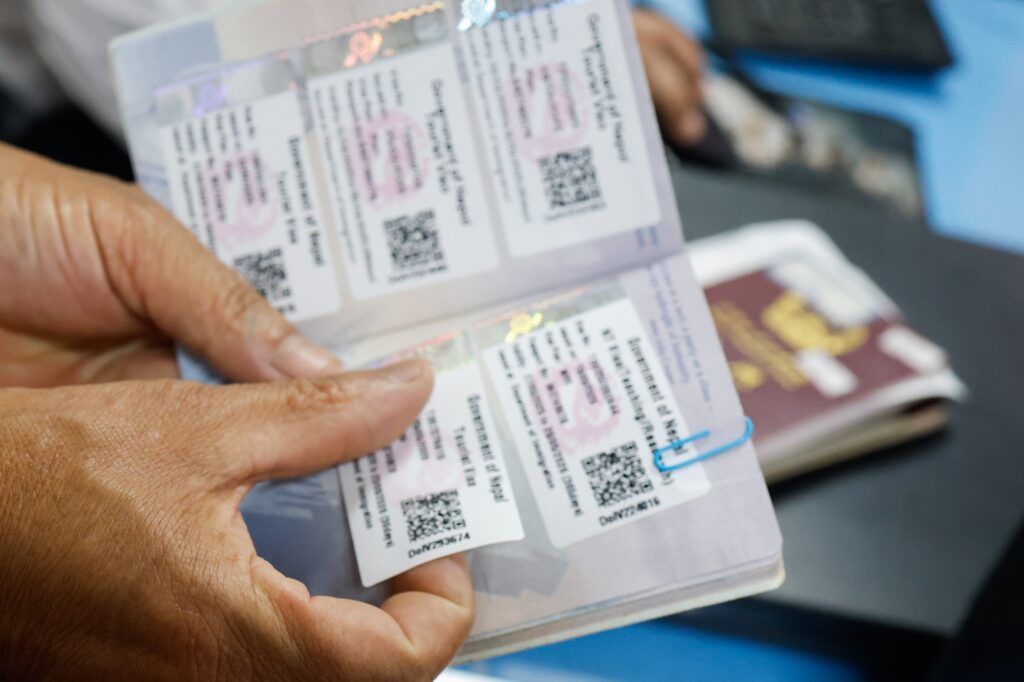
According to the Department of Immigration, 1,606 Nepali citizens married foreign nationals in 2025. The highest number of marriage visas was issued to U.S. citizens, totaling 185.
Other major countries included Japan (98), the United Kingdom (87), China (56), the Philippines (48), Australia (38), Canada (32), Germany (28), and Thailand (25). Smaller numbers were recorded from South Korea, Russia, France, Indonesia, Myanmar, Taiwan, New Zealand, Pakistan, Singapore, Bangladesh, Spain, and Poland.
The trend has continued into 2026. As of the early months of the year, 611 marriage visas have already been issued, with the United States again leading at 108, followed by the United Kingdom (68), Japan (48), and the Philippines (45).
Legal framework and data gaps
Nepal’s Civil Code (2017) does not impose a legal limit on age differences between spouses. To register a marriage, foreign nationals must submit a no-objection letter from their embassy, a certified passport copy, proof of at least 15 days’ residence in Nepal, and notarized translations of relevant legal documents.
Supreme Court spokesperson Arjun Prasad Koirala said marriages are registered based on submitted documentation, but acknowledged that Nepal lacks a centralized system to track foreign–Nepali marriages. Poor data-sharing among courts makes it difficult to determine exact figures nationwide.
Social and economic factors
Officials say most cases involve foreign men aged between 55 and 75 and Nepali women aged 22 to 35.
Lawyer Bhagwati Pandey said the removal of legal limits on age differences in 2015 may have contributed to the rise in such marriages. She added that economic challenges, limited opportunities in Nepal, and aspirations to settle abroad may influence decisions. Cultural differences and mismatched expectations could also increase the risk of divorce, she said.
Sociologist Tikaram Gautam noted that earlier marriage norms in Nepal and later marriage trends among foreigners partly explain the age gap. While such unions are personal choices, differences in language, culture, and family background may affect long-term stability.
Love or immigration motive?
Although some couples appear to share genuine relationships, officials suspect that in many cases, visas and overseas migration are key motivations. Such marriages are more frequently seen with citizens from the United States, Australia, the United Kingdom, Japan, and Germany.
Under Nepali law, a marriage visa must be issued once a marriage is legally registered. The visa is initially granted for six months and can be renewed upon payment of a monthly fee. Foreign nationals on marriage visas are not permitted to work in Nepal. Violations can result in fines, visa cancellation, and deportation.
Immigration authorities say a small number of cases have been identified where individuals engaged in work or business activities while on marriage visas.
Growing concern
Officials say marriages between Nepali citizens and foreign nationals are increasing each year. While love is a personal choice, unusually large age gaps and possible immigration motives are prompting broader social and administrative concerns.
Authorities and experts say closer monitoring and further study of this trend are needed to better understand its long-term impact.

Dipendra Dhungana
View More PostsDipendra Dhungana is a journalist based in Kathmandu with over a decade of experience in photojournalism. His work has been featured in numerous national and international outlets, showcasing the stories and resilience of the Nepali people. He is also a contributing journalist for NepYork.