Following the political shifts in Nepal on September 8 and 9, several Nepali missions abroad have been operating under the leadership of a “Chargé d’Affaires” after the government recalled various ambassadors. With a new government formed under the leadership of Balendra Shah following the national elections, all eyes are now on upcoming diplomatic appointments. There is particularly high interest regarding who will represent Nepal in global powerhouses like the United States.
Recent developments—including an increase in deportations of Nepalis from the U.S., the termination of TPS, the suspension of immigrant visas for Nepalis, stricter non-immigrant visa regulations with bond requirements, the suspension of the Diversity Visa (the primary legal route for Nepalis to move to the U.S.), and the revocation of tax exemptions on several Nepali goods—have raised serious questions about Nepal’s diplomatic initiatives. Have Nepal’s diplomatic efforts weakened?
Below is an edited excerpt of a conversation with Sharad Raj Aran, the Acting Ambassador (Chargé d’Affaires) of Nepal to the United States, focusing on these issues.
Do the strict immigration policies adopted by the U.S. toward Nepal affect the diplomatic relationship between the two countries?
Sharad Raj Aran: These matters are not directly linked to the broader bilateral relationship between Nepal and the U.S. Regarding visas, it comes down to the history of issued visas, the individuals who received them, and whether they complied with visa laws. If violations of visa regulations become excessive, some form of control must be implemented to rectify the situation. That is all the U.S. is doing right now. What we are seeing today is the result of how visas were utilized in the past.
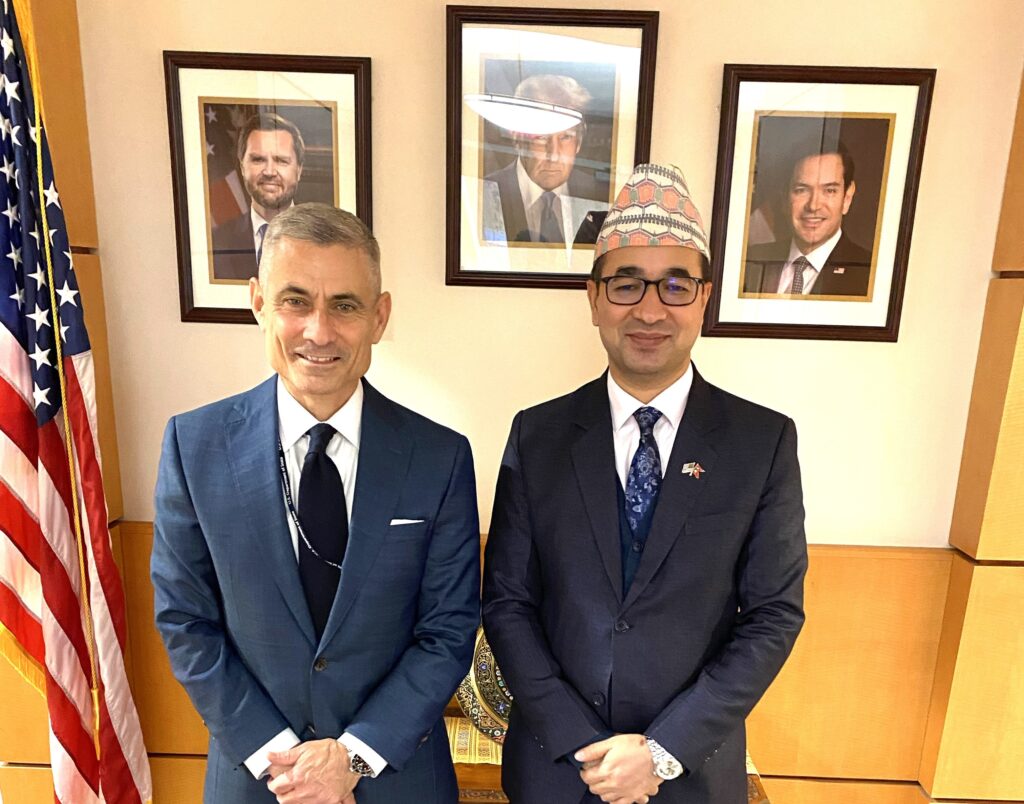
For instance, the U.S. has imposed a visa bond on 75 countries, not just Nepal. These are nations identified as having high rates of visa rule violations, and they have been under screening for some time. We should not view this as a reflection of Nepal-U.S. relations.
Rather than reconsidering the U.S.-Nepal relationship, visa holders need to focus on improving their conduct. The current situation arose because many people arrived and claimed immigration benefits, overstayed, filed for asylum, or entered for recreational purposes but stayed permanently without regard for their legal status. We must fully comply with U.S. visa provisions. We should not engage in fraud or provide false information. This message is more vital now than ever: use the visa for its intended purpose. There is no need to overthink the Nepal-U.S. relationship in this context; visa compliance is a separate matter.
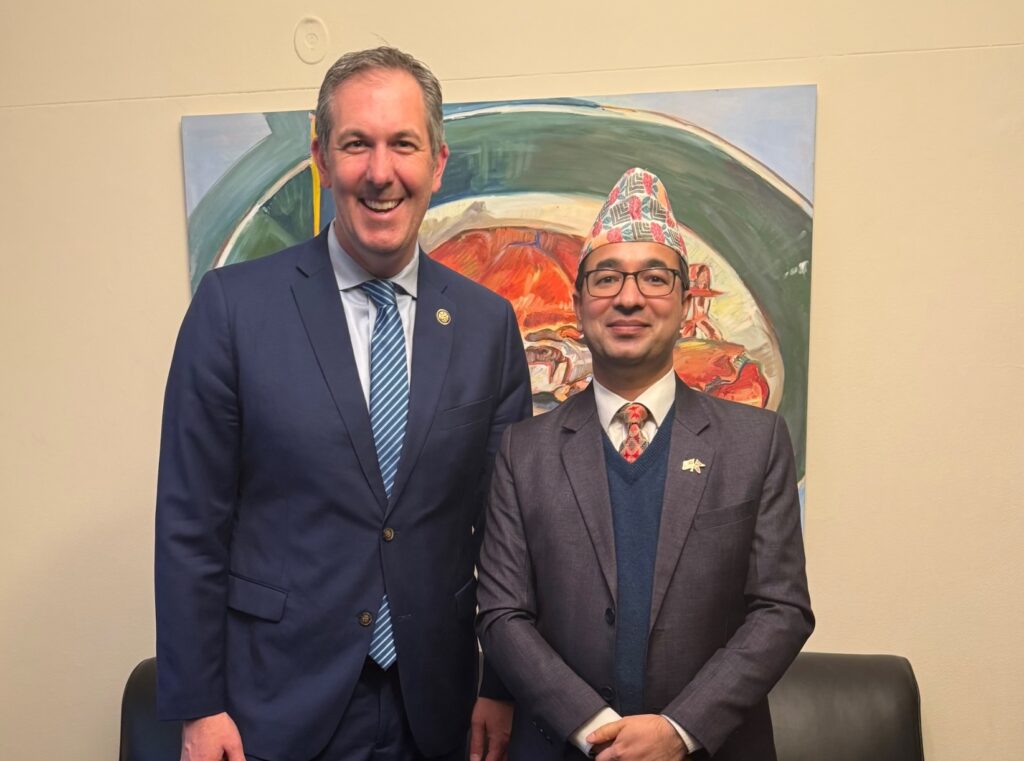
A new government has been formed in Nepal, but ambassadors are yet to be appointed. As the Acting Ambassador, how do you see U.S.-Nepal diplomacy moving forward?
Aran: It will continue to progress as it is now. We are promoting Nepal’s national interest. When we speak of national interest, what are we promoting? We are advocating for those interests within this government, the Congress, and among other stakeholders.
The relationship between Nepal and the U.S. has lasted nearly 78 years; it is deeply historical. Furthermore, the U.S. was the first country to provide aid to Nepal. Major challenges, like malaria, were eradicated with American support. Even today, while MCC project grants have been cut in many other countries, ours is moving forward, which will lead to significant achievements in electricity and road infrastructure. As one of the world’s most powerful nations, the empathy the U.S. shows and the policies it issues carry great weight. In that sense, all our activities are directed toward promoting Nepal’s national interest and the rights of Nepalis. I believe we will continue to move forward in this direction.
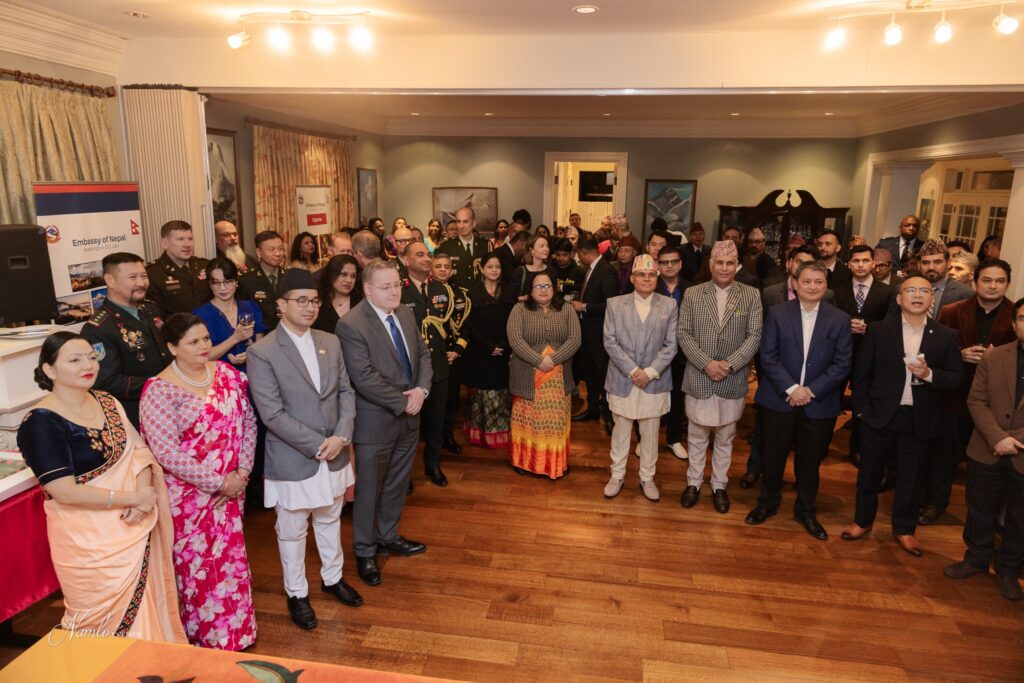
The number of American tourists in Nepal has increased, but data suggests many of them are Nepali-Americans. What is the role of the Embassy in Washington, D.C., in increasing the number of non-Nepali American tourists?
Aran: The Embassy is sending a clear message to everyone here: “What does Nepal have to offer? Why is Nepal a must-visit destination?” Another message is that “Nepal is safe and stable.” Today’s environment makes Nepal even more inviting. To understand this, one must visit. The Embassy is taking diplomatic steps and utilizing other methods to ensure people don’t miss this opportunity. We are lobbying for this. Our domestic environment is moving in a positive direction, which creates a favorable atmosphere for engagement in trade, tourism, investment, IT promotion, and people-to-people relations. It is becoming more effective than in the past.
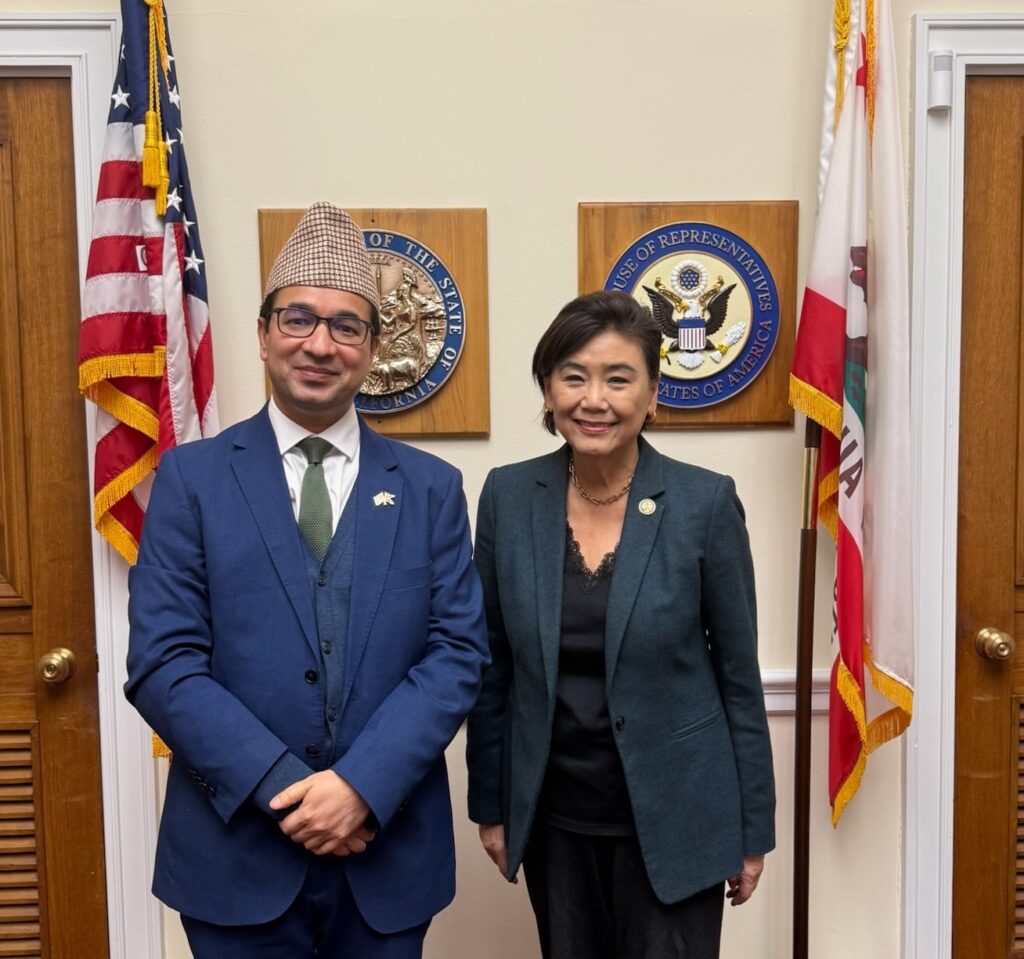
In terms of the relationship, how “close” is the distance between the Nepali Embassy in D.C. and Capitol Hill or the White House?
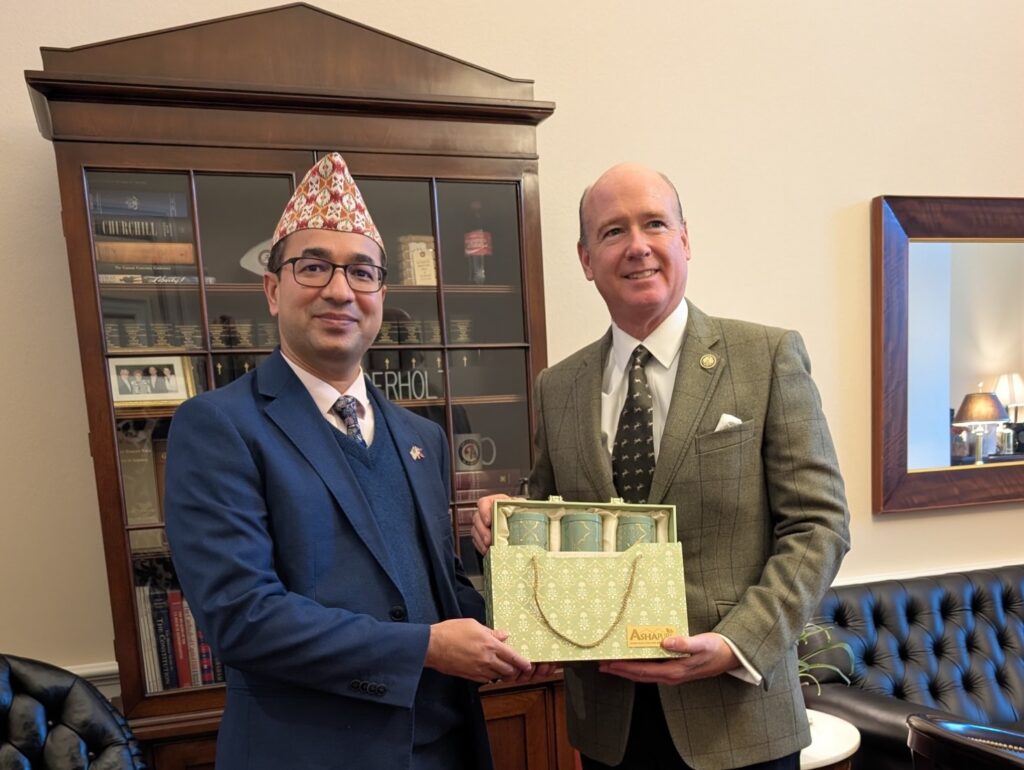
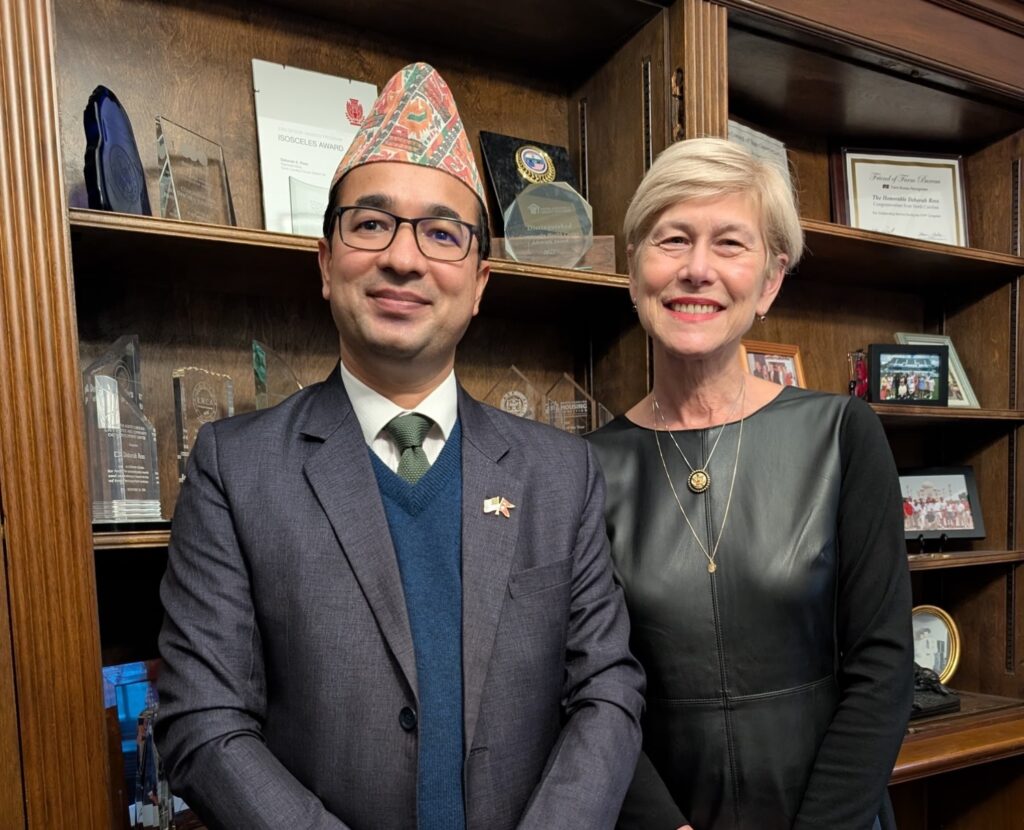
Aran: In the past five months, I have met with six U.S. Members of Congress. These are the individuals who draft policies and strategies related to Nepal. The fact that I was able to meet six members of Congress in five months as an Acting Ambassador speaks to the proximity of our relationship. We are emotionally close. We are not physically distant either, because the U.S. is a “neighbor in the sky” for Nepal. Just as China and India are important and strategic by land, the U.S. is equally close and strategic. Therefore, we are close in all sectors and aspects.
Looking at Nepal from Washington, D.C., how does the U.S.-Nepal relationship appear?
Aran: It is very good. I would say this is a very historic relationship—both politically and at the people-to-people level. The bond is extremely deep. The U.S. perspective toward Nepal is also very positive.
MCC projects are ongoing in various countries, including Nepal. Without building cross-border transmission lines, we cannot sell electricity. Therefore, if these lines are completed on time, Nepal can export electricity and increase its economic resilience—a vision supported by the U.S. government. In this regard, the relationship is strong and will only improve.
What exactly can Nepal give to the U.S. in return for the assistance provided?
Aran: The Nepali diaspora in the U.S. has contributed significantly to the socio-economic development of this country. We Nepalis are peace-loving people. There is no sector here where Nepalis are not involved. We are sending the message that the Nepali diaspora makes a massive contribution, which the U.S. highly values. This means Nepal is indeed contributing back to America.
What is your suggestion for the Nepali diaspora?
Aran: My message is: no matter where you go, you remain a Nepali. Therefore, your contribution should be not just to the U.S., but also to Nepal. If anything happens tomorrow, Nepal is your home. Furthermore, the Government of Nepal will create an environment to connect you with those living in Nepal. Your focus should now be on Nepal as well as the U.S. We are encouraging the diaspora to increase their involvement in Nepal’s socio-economic development across all sectors.
Secondly, whichever country you live in—whether it is your host country or your motherland—you must fully obey the laws. Following prevailing laws is how we establish our identity as civilized citizens. We must not engage in any illegal activities.
Thirdly, an individual’s identity is tied to their culture. There are many beautiful aspects of Nepali culture; you should continue to promote them in America. We will support that endeavor. Likewise, you should engage more deeply with American society, which helps increase people-to-people relations and cooperation. In short, we are encouraging the diaspora in a positive and constructive way.

Dipendra Dhungana
View More PostsDipendra Dhungana is a journalist based in Kathmandu with over a decade of experience in photojournalism. His work has been featured in numerous national and international outlets, showcasing the stories and resilience of the Nepali people. He is also a contributing journalist for NepYork.