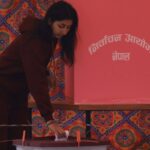
Millions of Nepali voters are heading to polling stations Thursday in a high-stakes general election seen as a definitive test for the country’s aging political establishment following a year of seismic youth-led unrest.
The vote, which began at 7 a.m., is the first since the “Gen-Z” protests of September 2025 that toppled the previous government. The Election Commission reported a steady turnout of approximately 4.5 million voters by 1 p.m., with officials noting particularly long queues of young and first-time voters among the 18.9 million eligible to cast ballots. While polling has been largely peaceful under heavy security, four regions have emerged as the primary battlegrounds likely to dictate the composition of the next government.
In the eastern district of Jhapa-5, a generational clash has taken center stage. Former Prime Minister and CPN-UML Chairman KP Sharma Oli is facing an unprecedented challenge from Balendra (Balen) Shah, the former Kathmandu mayor and now the prime ministerial face of the Rastriya Swatantra Party (RSP).
Shah, who cast his vote in Kathmandu-2 this morning, has campaigned on a platform of radical systemic change, directly targeting Oli’s decades-old stronghold. Local analysts describe the race as a “litmus test” for whether the country’s traditional “old guard” can survive the rising tide of alternative politics.
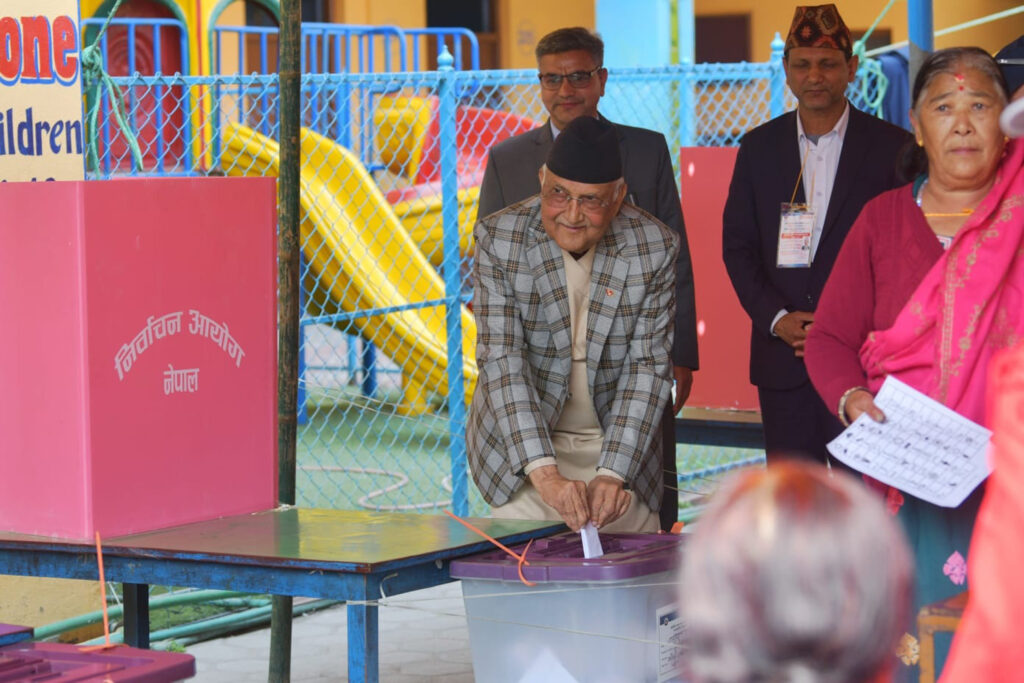
Further west in Madhesh Province, Sarlahi-4 has become a flashpoint for the Nepali Congress. Party President Gagan Kumar Thapa relocated his candidacy to this constituency to demonstrate a national, rather than just urban, mandate.
However, the morning was marred by a brief suspension of voting at the Jabdi polling center following a dispute over assistance provided to an elderly voter. Security forces were deployed to mediate the argument between supporters of Thapa and RSP candidate Amaresh Kumar Singh, with officials confirming that voting resumed shortly after noon.

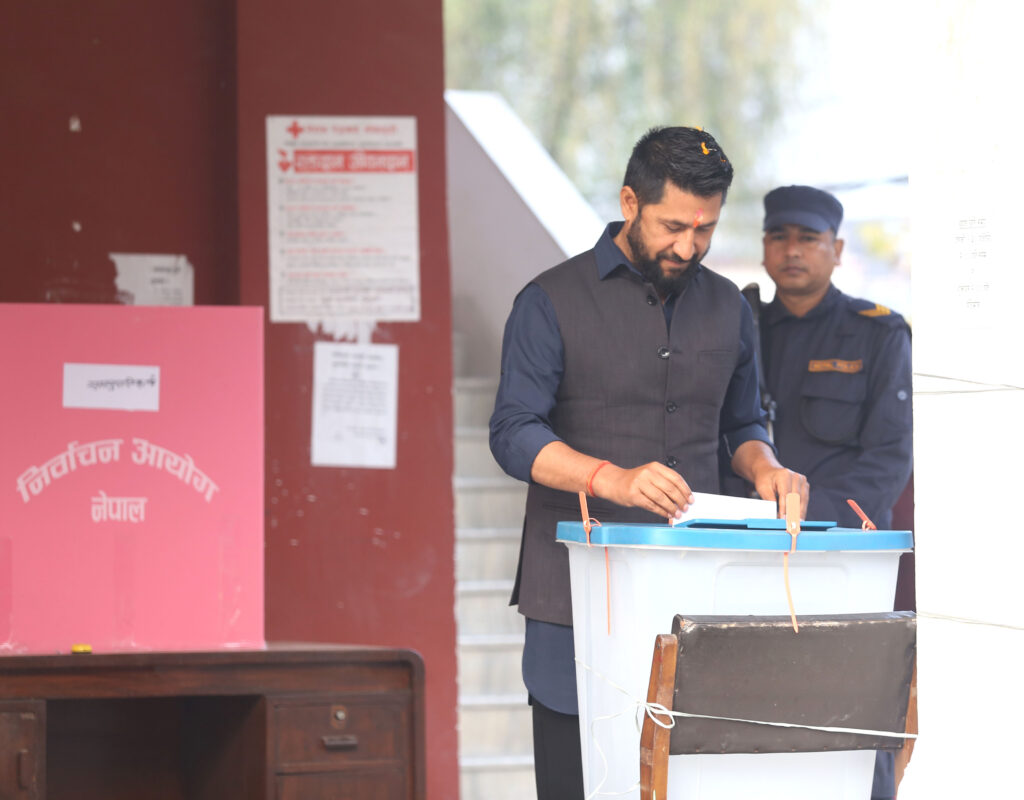
In Chitwan, the RSP’s spiritual home, Chairman Rabi Lamichhane is defending his seat in Chitwan-2 amid a surge of support for his “Bell” (Ghanta) symbol. The district is witnessing a multi-pronged contest as Renu Dahal, daughter of Maoist leader Prachanda, attempts to maintain her family’s influence in neighboring Chitwan-3 against RSP challenger Sobita Gautam. Observers suggest the results here will indicate whether the “RSP wave” from the 2023 by-elections has solidified into a lasting political shift.
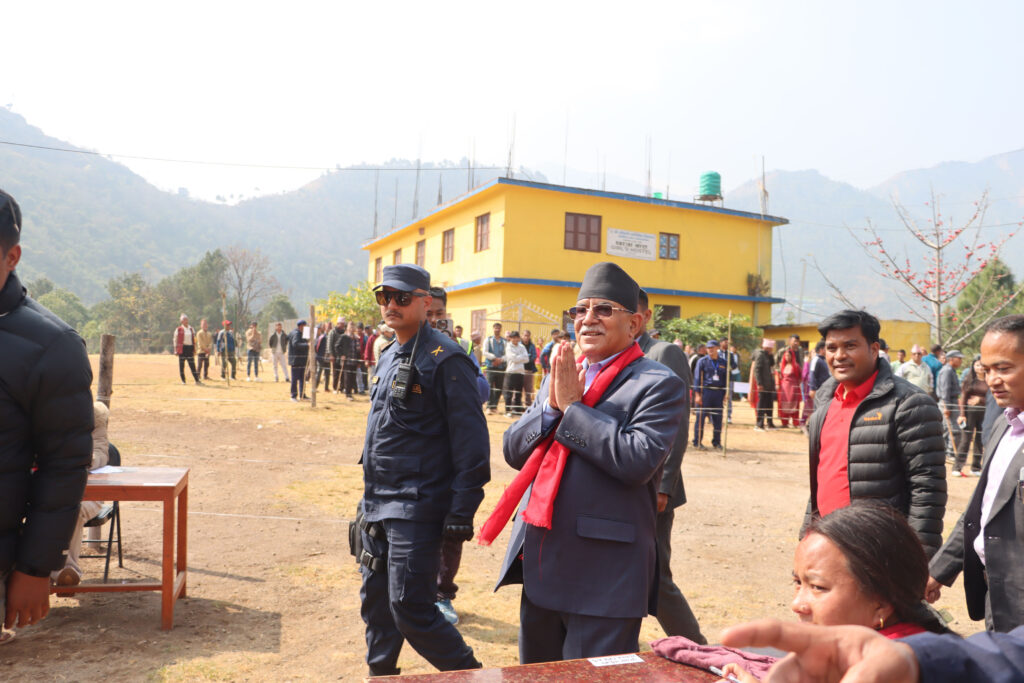
Meanwhile, in the rugged hills of Rukum East, former Prime Minister Pushpa Kamal Dahal (Prachanda) is attempting a political homecoming. Having moved his candidacy to this Maoist heartland, Dahal is banking on his historical base to secure a “safe” seat after his party’s influence waned in urban centers during last year’s protests. However, even in this traditional bastion, young voters have expressed a growing desire for fresh faces, making the outcome less certain than in previous elections.
Voting is scheduled to continue until 5 p.m., with the Election Commission planning to begin counting immediately after ballot boxes are secured. Given the mixed electoral system—where 165 seats are decided by direct vote and 110 through proportional representation—final results are not expected for several days.

Susan Shrestha
View More PostsSusan Shrestha is a Europe-based journalist. He covers a wide range of topics, from local matters to global affairs. Shrestha previously worked as a reporter for Khasokhas in Nepal.